Malt liquor

Definition and stakes

John Bickerdyke The Curiosities of Ale & Beer: An Entertaining History

We have heard brewers, who thought themselves no fools, assert that the hops alone give the ale its flavour; and that the difference between pale and high dried malt is only in colour. They might as well have argued that the lemon gives all the flavour to punch! We, Christopher North, aver, that upon the degree of dryness which has been given to the malt, the distinguishing flavour of malt liquor mainly depends. The bitter principle of the hop is only the ground or substratum upon which the skilful brewer builds his peculiar flavour of beer.
Source: Gutenberg

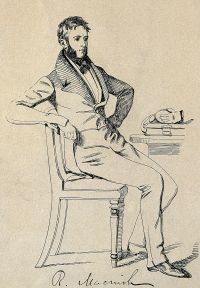
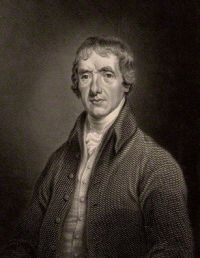
Portrait of Robert Macnish Robert Macnish The anatomy of drunkenness (1836)

The malt-liquor drunkard should, as a general rule, prefer porter to strong ale. Herb ale and purl are very pernicious, but the lighter varieties, such as small beer and home-brewed, are not only harmless, but even useful. The person who indulges in malt liquor should take much exercise. If he neglects this, and yields to the indolence apt to be induced by these fluids, he becomes fat and stupid, and has a strong tendency to apoplexy, and other diseases of plethora.
Source: Gutenberg

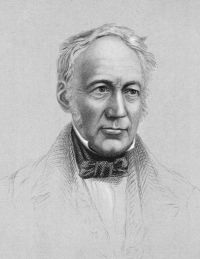
Alexander Hamilton Report on Manufactures (1791)

It is ascertained that by far the greatest part of the malt liquor consumed in the United States are the produce of domestic breweries. It is desirable, and in all likelihood attainable, that the whole consumption should be supplied by ourselves.
The malt liquors at home, though inferior to the best, are equal to a great part of those which have been usually imported. The progress already made is an earnest of what may be accomplished. The growing competition is an assurance of improvement.
Source: Wikisource

Get perspective with Kwize: daily news enlightened by great literature