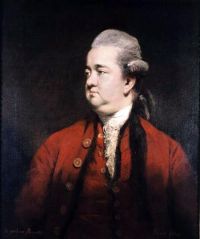
“ Warfare was the art of life, so far surpassing all the other arts that it was regarded not so much as an accidental state but rather as a vital function, as necessary to existence as breathing, sleeping, eating, and drinking. It would accept what help the other arts could give: athletics made a soldier nimble and supple; medicine kept him in health; the music of the flute was useful in marching; the lyric poet and the dramatist could foster and elevate the martial spirit ”
Martial arts
Definition and stakes
The theme of “martial arts” has been addressed by authors such as F. A. Wright, Thomas Frederick Tout , of Samosata Lucian, A. Hamilton and Kate Norgate. It is often associated with terms like fencing, sword, wrestling, combat and boxing.
Quotes about “martial arts”
Thomas Frederick Tout , Dictionary of National Biography… (1889)
“ But though well fitted to excel in martial exercises, he never showed any real inclination for a warlike life, or even for the tournament. As soon as he was his own master he avoided fighting as much as he could, and when compelled to take the field his conduct was that of an absolute craven. ”
The Best Short Stories of 1920…
“ Up the road rose a cloud of dust and the sound of determined feet, and presently a martial figure came in sight, clad in bronze and leather helmet and cuirass, and carrying an oblong shield and a short, broad-bladed sword of double edge. Short yet agile, a soldier every inch, he looked neither to the right nor to the left, but marched steadily and purposefully upon his business. ”
of Samosata Lucian, The Works of Lucian of Samosata…
“ If you really want to be free and happy, you must have other exercises than these; your training must be a genuine martial one; no toy contests with friends, but real ones with enemies; danger must be an element in your character- development. Never mind dust and oil; teach them to use bow and javelin; and none of your light darts diverted by a puff of wind; let it be a ponderous spear that whistles as it flies; to which add stones, a handful each, the axe, the shield, the breastplate, and the helmet. ”
Excellent old song intitled Young Beichan and Susie Pye (1821)
“ Bright in future glory, Haste to arms, and form the line that leads to martial glory. Charge the musket, point the lance, brave the worst of dangers; Tell the blustering sons of France, that we to fear are strangers. ”
A. Hamilton, The Siege of Mafeking (1900)
“ Indeed, the spectacle of a large number of men expecting each minute the opening volley of an attack, was thrilling, and in that cold air their martial effect was a sufficient and satisfying tonic against the river mists. ”
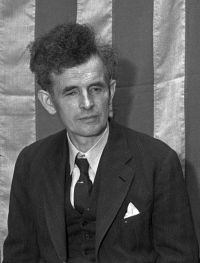 Patrick MacGill,
Children of the Dead End: The Autobiography of an Irish Navvy
Patrick MacGill,
Children of the Dead End: The Autobiography of an Irish Navvy
“ But to man, a physical contest is a pastime and a joy. I love to see a fight with the bare fists, the combatants stripped naked to the buff, the long arms stretching out, the hard knuckles showing white under the brown skin of the fists, the muscles sliding and slipping like live eels under the flesh, the steady and quick glance of the eye, the soft thud of fist on flesh, the sharp snap of a blow on the jaw, and the final scene where one man drops to the ground while the other, bathed in blood and sweat, smiles in acknowledgment of the congratulations on the victory obtained. ”
Kate Norgate, Richard the Lion Heart (1924)
“ Even martial sports had no charm for a lad who, while other young knights of his day—his brothers among them—were acquiring the use of arms in an endless round of tournaments, was serving his military apprenticeship in real warfare ”
Japan: From the Japanese Government History
“ Every member of the feudal class, from the shōgun downward, received regular instruction in this art, and regarded his two swords with the utmost love and veneration, the skill and spirit shown by him in their use being justly a source of pride to Japan. Spears and firearms were also widely employed, and the practice of jiūjitsu—a species of gymnastics based on the laws of balance and reaction and directed to purposes of self-defense—received general attention. Men conspicuous for skill in fencing and other martial exercises built schools and became teachers of their respective specialties. ”
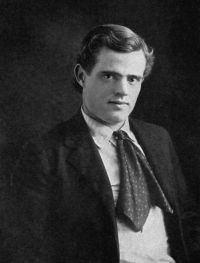 Jack London,
When God Laughs & Other Stories…
Jack London,
When God Laughs & Other Stories…
“ No longer could he do a fast twenty rounds, hammer and tongs, fight, fight, fight, from gong to gong, with fierce rally on top of fierce rally, beaten to the ropes and in turn beating his opponent to the ropes, and rallying fiercest and fastest of all in that last, twentieth round, with the house on its feet and yelling, himself rushing, striking, ducking, raining showers of blows upon showers of blows and receiving showers of blows in return, and all the time the heart faithfully pumping the surging blood through the adequate veins. ”
Baron Edward Bulwer Lytton Lytton, Pausanias, the Spartan; The Haunted and the Haunters
“ Severe and early training, long habits of rigid abstemiousness, the toils of war, and, more than all, perhaps, the constant play of a restless, anxious, aspiring temper, had left, undisfigured by superfluous flesh, the grand proportions of a frame, the very spareness of which had at once the strength and the beauty of one of those hardy victors in the wrestling or boxing match, whose agility and force are modelled by discipline to the purest forms of grace. ”
baron de César Lecat Bazancourt, Secrets of the Sword
“ We have now reached a point from which we may survey the thrilling spectacle of the assault, as fencers call the mimic combat, in which desperate and brutal fighting is controlled by skill, the hazardous duel, full of fire and fury, between two combatants, who summon to their aid all that they know or all that they think they know. ”
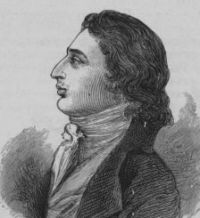 Robert Southey,
Omniana
(1812)
Robert Southey,
Omniana
(1812)
“ How famous is that martial ring, which carried in some fit place, or rubbed on some such part, will allay and cure the pains of the teeth and head, the cramp, quartain ague, falling sickness, vertigo, apoplexy, plague, and other diseases! insomuch that the great captain of Hetruria commanded the inventor thereof (a brother of St. Augustine's order) to sell none to any but himself for some years. ”
Various, Popular Science Monthly (1900)
“ AS in boxing, fencing, saber and bayonet exercises, there are comparatively few postures, guards, thrusts and strokes, so in warfare, whether the numbers be large or small, the arms most modern or ancient, there are just a few principles to whose steady adherence and skilful manipulation all success is due. ”
Samuel Butler, Hudibras, in Three Parts, Written in the Time of the Late Wars
“ Which he can never do that's slain. Hence timely running's no mean part 245 Of conduct in the martial art; ”
 Percival Christopher Wren,
The Wages of Virtue
(1916)
Percival Christopher Wren,
The Wages of Virtue
(1916)
“ Well, wrestling's his forte—and he can break the back of any man he gets his arms round—and the rest's a mixture of boxing, ju-jitsu, and la savate, which, as you know, is kicking. Yes, he's a dirty tighter, though it's precious rarely that it comes to what you could call a fight. ”
Every Boy's Book: A Complete Encyclopædia of Sports and Amusements
“ The commencement of tournaments during the Dark Ages in some degree revived athletic exercises; but the invention of gunpowder, the use of the small sword, the rifle, and scientific tactics, by which battles were gained more by skill than force, kept down the training of the body for athletic feats. ”
Various, The Catholic World, Vol. 13, April to September…
“ Among the varied exercises which formed a part of the military education, and are sculptured on the numerous monuments, are found complete gymnastic rules. Nothing could be more varied than the attitudes and positions of the wrestlers, attacking, defending themselves, receding and advancing by turns, bending down or turning over, rising up again, and triumphing over the opponents by dint of strength, art, and skill. ”
 William Hickling Prescott,
History of the Conquest of Peru
William Hickling Prescott,
History of the Conquest of Peru
“ The candidates were required to show their prowess in the athletic exercises of the warrior; in wrestling and boxing, in running such long courses as fully tried their agility and strength, in severe fasts of several days' duration, and in mimic combats, which, although the weapons were blunted, were always attended with wounds, and sometimes with death. ”
 Thorstein Veblen,
The Theory of the Leisure Class
(1899)
Thorstein Veblen,
The Theory of the Leisure Class
(1899)
“ This does not say that there is not an appreciable number of individuals among the industrial classes in whom the martial spirit asserts itself obtrusively. Nor does it say that the body of the people may not be fired with martial ardour for a time under the stimulus of some special provocation, such as is seen in operation to-day in more than one of the countries of Europe, and for the time in America. ”
Isabella Lucy Bird Bishop, Unbeaten Tracks in Japan — LETTER XXXVII-III (1880)
“ He is a grand-looking man, in spite of the havoc wrought by his intemperate habits. There is plenty of room in the house, and this morning, when I asked him to show me the use of the spear, he looked a truly magnificent savage, stepping well back with the spear in rest, and then springing forward for the attack, his arms and legs turning into iron, the big muscles standing out in knots, his frame quivering with excitement, the thick hair falling back in masses from his brow, and the fire of the chase in his eye. ”
Edward M. Plummer, Athletics and Games of the Ancient Greeks
“ Battle itself was an effective, even if a very perilous, mode of physical culture. It often involved, to be sure, the death of the weaker adversary, who was weak only comparatively, and who, considered by himself, was usually an admirable specimen of man. But, throughout all historic time, a branch of athletic sports has existed that could not be practiced without risk, as fencing, boxing, or wrestling. ”
 H. Irving Hancock,
Japanese Physical Training
(1903)
H. Irving Hancock,
Japanese Physical Training
(1903)
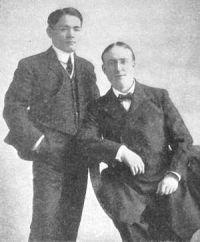
“ When the reader passes on to descriptions of arm grips, leg tackles, throttlings, and holds in which a grip at the small of the back is employed, he should remember, when practising, to be at all times careful not to use these tactics with more force than is necessary for strengthening the muscles of both antagonists and for acquiring the victory. When first starting in with the work it is always well for the opponents to arrange in advance who is to secure the victory. Then the one who is on the defensive employs only sufficient strength to prevent too easy a conquest. ”
United States. War Department, Manual for Noncommissioned Officers and Privates of Cavalry of the Army
“ He must be master of his weapon, not only to show the various movements but also to lead in the exercises at will. He should stimulate the zeal of the men and arouse pleasure in the work. Officers should qualify themselves as instructors by fencing with each other.113. The character of each man, his bodily conformation, and his degree of skill must always be taken into account. When the instructor is demonstrating the combinations, feints returns, and parries the rapidity of his attack should be regulated by the skill of the pupil, and no more force than is necessary should be used. ”
Percival Christopher Wren,
Snake and Sword: A Novel
“ Sword Mounted, Bayonet-fighting, Tug-of-War, Fencing, and other officers’ and men’s events had been, or were being, contested. The finals of the British Troops’ Sword v. Sword Dismounted, was being reserved for the last, as of supreme interest to the experts present, but not sufficiently spectacular to be kept for the evening final “show,” when the whole of Society would assemble to be thrilled by the final Jumping, Driving, Tent-pegging, Sword v. Sword Mounted, Bayonet-fighting, Sword v. Lance, Tug-of-War, and other events for British and Indian officers and men of all arms. ”
baron de César Lecat Bazancourt, Secrets of the Sword
“ The art received a new impetus. ‘Natural fighters,’ men equipped with abundant energy and assurance, who were convinced that all that was necessary for self-defence was a general athletic training such as they possessed, called the fencer’s skill in question. ”
H. Irving Hancock,
Japanese Physical Training
(1903)
“ As soon as the one on the defensive has been swung around as far as can be done without radically changing the position of his feet, a moment's breath should be taken, and then the one lately on the defensive should swerve his late assailant back to where the affair started. Care must be taken at all times to keep the arms rigid and the muscles tense. The combatant who is being moved must employ all the resistance that can be used without defeating the attack. ”
J. G. Wood, The uncivilized races of men in all countries of the world… (1875)
“ Whenever the warrior comes to close quarters, he strips off the leathern sheath, and, rushing in upon his adversary, strikes at the face with the sharp edge, or, flinging the left arm round him, cuts his naked body almost into pieces with rapid strokes of this terrible weapon. ”
Edward Lucas White, The Unwilling Vestal
“ Each fight is a spectacle by itself, entirely different from any other. I don’t mean the difference between the fighters in respect to their equipment and appearance, though that contributes to the variety also; I mean the difference in posture, method of defense and attack, style of lunge and parry, and all that; and the countless variations in form in the men, the subtle differences of character which makes them face similar situations so very differently. You’ll get the feeling for it in a half a dozen shows and be as keen on it as the rest of us. ”
Anna Robertson Brown Lindsay, The Warriors
“ There are natures to whom mere combat is a joy. Strife is the atmosphere in which they find their finest physical and spiritual development. In the early times, there must have been those who stood apart from their tribesmen in contests of pure athletic skill,—in running, jumping, leaping, wrestling, in laying on thew and thigh with arm, hand, and curled fist in sheer delight of action, and of the display of strength. ”
Various, Popular Science Monthly (1911)
“ Curiously enough there is no means of teaching waltzing and guiding in a crush so good as the foot-work in sparring. Since it trains the whole body, including arms, chest and head (especially producing mobility and accuracy in placing the neck) and above all, since it encourages the great moral qualities of patience, good nature and self-restraint, sparring can be ranked among the most valuable of educational exercises. ”
 Sir Herbert Thirkell White,
A Civil Servant in Burma
Sir Herbert Thirkell White,
A Civil Servant in Burma
“ At last preliminaries are arranged, and the boxers face each other in the ring. They may kick, and they may slap with open hand, but not with closed fist. As soon as a drop of blood is drawn from the slightest scratch, the fight is at an end. ”
Edward M. Plummer, Athletics and Games of the Ancient Greeks
“ To fight successfully from the chariot, to dismount and grapple with the adversary, necessitated not only muscular strength, but also unabating alertness of mind, an ability to seize instantly the advantageous opportunity, to dodge or fend instantly the deadly thrust. ”
Charles Edmund Newton Robinson, 1911 Encyclopædia Britannica, Volume 9… (1911)
“ The play of individuals is determined by their respective temperaments and physical powers. But every fencer should be always ready to deliver a well-aimed, swift, direct thrust at any exposed part of the antagonist’s arm, his mask or thigh. Very tall men, who are usually not particularly quick on their legs, should not as a rule attack, otherwise than by direct thrusts, when matched against shorter men. For if they merely extend their sword-arm in response to a simple attack, their longer reach will ward it off with a stop or counter-thrust. ”
William Blaikie, How to Get Strong and How to Stay So
“ To see two great, hulking six-footers, ignorant of the first rudiments of good sparring, actually whirling their fists round and round each other as if winding yarn, and with no sort of idea how to use even one hand, let alone two, was positively ridiculous. A hundred-pound thief, handy with his fists and quick of foot, could have slapped their faces, and, if they could run no better than they sparred, could have been at the Battery before either of them was half-way. ”
1911 Encyclopedia Britannica (1911)
“ In addition to the ordinary gymnastic exercises of the palaestra, the athletes were instructed in carrying heavy loads, lifting weights, bending iron rods, striking at a suspended leather sack filled with sand or flour, taming bulls, &c. Boxers had to practise delving the ground, to strengthen their upper limbs. The competitions open to athletes were running, leaping, throwing the discus, wrestling, boxing and the pancratium, or combination of boxing and wrestling. Victory in this last was the highest achievement of an athlete, and was reserved only for men of extraordinary strength. ”
 X.-B. Saintine,
Myths of the Rhine
X.-B. Saintine,
Myths of the Rhine
“ It would seem that the habit of taking violent exercise had finally developed their muscles and sinews to such a degree, that few men could be found strong enough to overcome them in a wrestling match, or in armed combat. ”
Henry Downes Miles, Pugilistica: The History of British Boxing…
“ It asks more steadiness, self-control, aye, and manly courage than any other combat. You must take as well as give—eye to eye, toe to toe, and arm to arm. Give my thanks to both the men, they are brave and clever fellows, and I hope we shall never want such among our countrymen. ”