Mechanical equivalent of heat

Definition and stakes

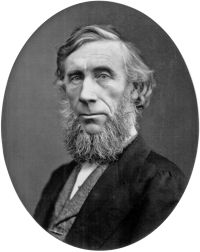
Portrait of Balfour Stewart Balfour Stewart The conservation of energy (1875)

It is not merely that heat produces mechanical effect, but that a given quantity of heat absolutely passes out of existence as heat in producing its equivalent of work. If, therefore, we could measure the mere heat produced in an engine by the burning of a ton of coals, we should find it to be less when the engine was doing work than when it was at rest.
In like manner, when a gas expands suddenly its temperature falls, because a certain amount of its heat passes out of existence in the act of producing mechanical effect.
Source: Gutenberg

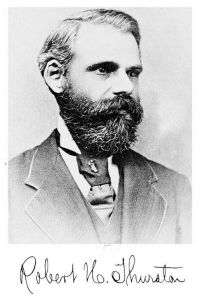
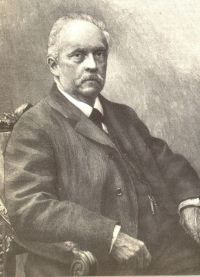
Portrait of Robert Henry Thurston Robert Henry Thurston A History of the Growth of the Steam-Engine

Joule also determined, by experiment, the fact that the expansion of air or other gas without doing work produces no change of temperature, which fact is predicable from the now known principles of thermo-dynamics. He stated the results of his researches relating to the mechanical equivalent of heat as follows:
1. The heat produced by the friction of bodies, whether solid or liquid, is always proportional to the quantity of work expended.
Source: Gutenberg

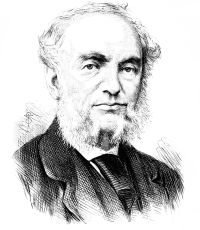
Robert Hunt The Poetry of Science; or, Studies of the Physical Phenomena of Nature

This increase of temperature is due to the mechanical force due to the fall, and is no more an evidence of the conversion of motion into heat, than is the old experiment of rubbing a button until it becomes hot. At all events, the fact that a given amount of mechanical force always produces an equivalent of heat is as applicable to the idea of a “subtile elastic medium” which is diffused through all matter, as to the, at present, favourite hypothesis.
Source: Gutenberg

Get perspective with Kwize: daily news enlightened by great literature