“ Such are some of the stereotyped ideas which crowd our mind when we reflect upon the Middle Ages. They are certainly one-sided. Drawn for the most part from the study of monastic literature, exaggerated by that reaction against medievalism which the Renaissance initiated, they must be regarded as inadequate to represent the whole truth. ”
Medievalism
Definition and stakes
Medievalism refers to the study, depiction, or revival of the Middle Ages as a historical and cultural period. Scholars such as Joseph Strayer highlight its foundational role in shaping modern civilization, while William Stubbs emphasizes the ecclesiastical records that define medieval historical accounts. Carlton J. H.
Hayes points to the Christian spirit of medieval art, from Gothic cathedrals to stained glass, portraying it as deeply intertwined with religious devotion. Meanwhile, critiques such as those found in the Encyclopædia Britannica mention the declining influence of medieval architectural styles. These viewpoints together reveal medievalism as both a means of understanding continuity and a debated framework for interpreting cultural development.
Quotes about “medievalism”
Richard P. Spiers, John Bilson, William R. Lethaby and Henry H. Statham, 1911 Encyclopædia Britannica, Volume 2… (1911)
“ And the civilized countries have almost with one consent returned, in the main, to the adoption of a school of architecture based on classic types. The taste for medievalism is dying out even in Great Britain, which has been its chief stronghold. ”
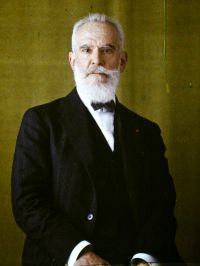 Rafael Altamira,
A History of Spain
Rafael Altamira,
A History of Spain
“ THE Catholic Kings attacked the economic problems of their era with much the same zeal they had displayed in social and political reforms, but without equal success, for medievalism in material affairs was more persistent than in social, political, and intellectual institutions. ”
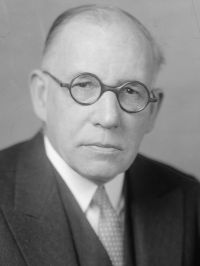 Carlton J. H. Hayes,
A Political and Social History of Modern Europe V.1
Carlton J. H. Hayes,
A Political and Social History of Modern Europe V.1
“ The art of the middle ages had been essentially Christian—it sprang from the doctrine and devotions of the Catholic Church and was inextricably bound up with Christian life. The graceful Gothic cathedrals, pointing their roofs and airy spires in heavenly aspiration, the fantastic and mysterious carvings of wood or stone, the imaginative portraiture of saintly heroes and heroines as well as of the sublime story of the fall and redemption of the human race, the richly stained glass, and the spiritual organ music—all betokened the supreme thought of medieval Christianity. ”
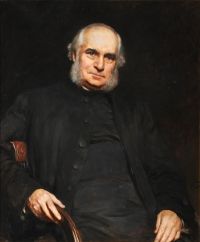 William Stubbs,
Seventeen lectures on the study of medieval and modern history and kindred subjects
(1886)
William Stubbs,
Seventeen lectures on the study of medieval and modern history and kindred subjects
(1886)
“ We all know how large a debt modern and medieval History owes to the ecclesiastical writers. From the very beginning of the middle ages, Annals, Chronicles, and Histories poured in comparative abundance from the religious houses of England and the Continent, records which serve to check and correct one another at almost every turn, and which, for some of the more dramatic incidents of History, enable us to reconstruct a picture of the event, viewed by different minds from different points and in different lights, in a perfection which has no parallel at all in ancient history. ”
Joseph Strayer, Western Europe in the Middle Ages (1955)
“ They would find their lives rather limited and unsatisfactory if they could do none of these things, and yet the basic idea of every one of these activities was worked out in the Middle Ages and not in ancient Greece or Rome. Our civilization has roots in the Middle Ages as well as in the classical period, and the medieval roots often contribute more nourishment than the classical ones. The story of medieval civilization is worth knowing, and it is that story which is told, in its barest outlines, in this book. ”
William Stubbs,
Seventeen lectures on the study of medieval and modern history and kindred subjects
(1886)
“ The vital interest of Medieval and Modern History lies in England, France and Germany, as certainly as that of the ancient lies in the East, in Greece and Italy; no small part of that of the future lies in the further Western world. The actors in the medieval and modern drama are the new nations, nations that were unheard of before the decline of the Roman empire began, and which inherited from the civilisation of that empire only the ecclesiastical culture, not the political system, or even the political map, which that system had laid out. ”
William Stubbs,
Seventeen lectures on the study of medieval and modern history and kindred subjects
(1886)
“ Let scripture history, classical and ecclesiastical history, medieval history and modern history, be read successively and connectedly, so much the better; but why deny that classical history and medieval and modern can be advantageously studied apart? why confine the thoughts to the points on which they are conterminous, continuous and agreed, to the exclusion of those in which they differ, when it is on the points in which they differ that the great contributions to the real history of man are to be traced? ”
James J. Walsh, The Thirteenth, Greatest of Centuries
“ That thought has come to many others who, knowing and appreciating medieval progress in art and literature, have tried to work out the reasons for the gap that exists between medieval art and modern artistic endeavor. Some of these explanations, because they serve to make clear why art evolution stopped so abruptly and we are retracing our steps and taking models from the past rather than doing original work that is an advance, must be quoted here. ”
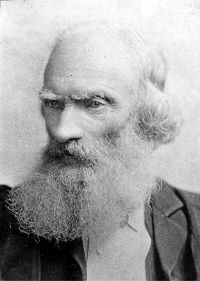 Sir Daniel Wilson,
The archæology and prehistoric annals of Scotland
Sir Daniel Wilson,
The archæology and prehistoric annals of Scotland
“ Egyptian, Assyrian, Greek, Roman, and medieval manufactures, have all been patiently and enthusiastically traced back to their first rude efforts. It is to the study of the infancy of medieval art especially that the sculptors and painters of Germany, France, and England, have now turned in their enthusiastic anticipations of a new revival. Why should the infantile efforts of our own national ancestry be alone deemed unworthy of regard, rude though they be, and little akin to the favourite models of modern schools? ”
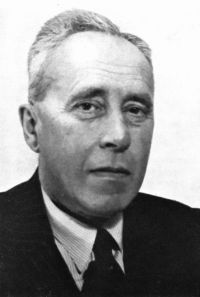 Johan Huizinga,
The Waning of the Middle Ages
(1924)
Johan Huizinga,
The Waning of the Middle Ages
(1924)
“ The history of French civilization of the fifteenth century, on the contrary, does not permit us to forget the Middle Ages. France had been the mother-land of all that was strongest and most beautiful in the products of the medieval spirit. All medieval forms—feudalism, the ideas of chivalry and courtesy, scholasticism, Gothic architecture—were rooted here much more firmly than ever they had been in Italy. ”
Joseph Strayer, Western Europe in the Middle Ages (1955)
“ Too many people still think that the Middle Ages are merely a stagnant pit which lies between the heights of classical and of Renaissance civilization, and that all our legacy from the past was carried over the bridges which Renaissance thinkers threw across the medieval pit to the firm ground of Graeco-Roman learning. ”
 Janet Erskine Stuart,
The Education of Catholic Girls
Janet Erskine Stuart,
The Education of Catholic Girls
“ It is only necessary to consider the position of Christian art in the thirteenth and fourteenth centuries, and the changes wrought by the Renaissance, to estimate the value of some knowledge of it in giving to children a right understanding of those times and of what they have left to the world. Again, the inferences to be drawn from the varied developments of Gothic architecture in France, Spain, and England are roads indicated to what is possible to explore in later studies, both in history and in art. ”
James J. Walsh, The Thirteenth, Greatest of Centuries
“ There are few whose eyes are now holden as they used to be, as to the surpassing place in the history of culture of the last three centuries of the Middle Ages. Personally the author is convinced, however, that only a beginning of proper appreciation has come as yet, and he feels that the solution of many problems that are vexing the modern world, especially in the social order, are to be found in these much misunderstood ages, and above all in that culmination of medieval progress—the period from 1200 to 1300. ”
 Walter Pater,
The Renaissance: Studies in Art and Poetry
Walter Pater,
The Renaissance: Studies in Art and Poetry
“ But it is not so much the ecclesiastical art of the middle age, its sculpture and painting—work certainly done in a great measure for pleasure's sake, in which even a secular, a rebellious spirit often betrays itself—but rather its profane poetry, the poetry of Provence, and the magnificent after-growth of that poetry in Italy and France, which those French writers have in view when they speak of this medieval Renaissance. ”
 Peter Kropotkin,
Mutual Aid: A Factor of Evolution
(1902)
Peter Kropotkin,
Mutual Aid: A Factor of Evolution
(1902)
“ But why should one take trouble to insist upon the advance of science and art in the medieval city? Is it not enough to point to the cathedrals in the domain of skill, and to the Italian language and the poem of Dante in the domain of thought, to give at once the measure of what the medieval city created during the four centuries it lived? ”
John Lord, Beacon Lights of History, Volume 05…
“ Why was classic literature utterly neglected? Why did no great scholars arise, even in the Church? The new races looked in vain for benefactors. Even the souvenirs of the old Empire were lost. Nearly all the records of ancient greatness perished. The old cities were levelled to the ground. Nothing was built but monasteries, and these were as gloomy as feudal castles at a later date. The churches were heavy and mournful. Good men hid themselves, trying to escape from the miserable world, and sang monotonous chants of death and the grave. ”
 Henry Osborn Taylor,
The Mediaeval Mind (Volume 2 of 2…
Henry Osborn Taylor,
The Mediaeval Mind (Volume 2 of 2…
“ The causes making the Middle Ages a characterizable period in human history have been scanned. We observed the antecedent influences as they finally took form and [Pg 526] temper in the intellectual atmosphere of the latter-day pagan world and the cognate mentalities of the Church Fathers. We followed the pre-Christian Latinizing of Provence, Spain, Gaul, and the diffusion of Christianity throughout the same countries, where, save for sporadic dispossession, Christianity and Latin were to continue, and become, in the course of centuries, mediaeval and Romance. ”
William Stubbs,
Seventeen lectures on the study of medieval and modern history and kindred subjects
(1886)
“ The ideas of medieval and modern life are of medieval and modern growth, or if connected with antiquity, connected by a new birth of culture, a re-discovery, a re-creation, not a continuous impulse of vitality. ”
 Alfred North Whitehead,
Science and the modern world
(1925)
Alfred North Whitehead,
Science and the modern world
(1925)
“ The first phase of medieval art has a haunting charm beyond compare: its own intrinsic quality is enhanced by the fact that its message, which stretched beyond art’s own self-justification of aesthetic achievement, was the symbolism of things lying behind nature itself. In this symbolic phase, medieval art energised in nature as its medium, but pointed to another world. ”
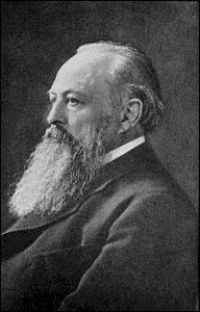 John Acton,
Lectures on Modern History
(1906 (this is a 1930 reprint))
John Acton,
Lectures on Modern History
(1906 (this is a 1930 reprint))
“ Modern History tells how the last four hundred years have modified the medieval conditions of life and thought. In comparison with them, the Middle Ages were the domain of stability, and continuity, and instinctive evolution, seldom interrupted by such originators as Gregory VII. or St. Francis of Assisi. Ignorant of History, they allowed themselves to be governed by the unknown Past; ignorant of Science, they never believed in hidden forces working onwards to a happier future. ”
James John Hissey, Over Fen and Wold
“ At the base of this are sculptured stone figures representing the Roman guards watching the tomb; and these are shown clad in medieval armour!—a curious instance of inconsistency, but then there were no art critics in those days, and the medieval carver and painter were a law unto themselves! Yet in spite of their oftentimes glaring anachronisms, the works of the medieval artists, be they sculptors or painters, were always effective and suggestive of life, and never failed to be decorative. Modern art, as a rule, simply reverses these conditions. ”
Legends and Satires from Mediæval Literature
“ Out of the failures and the doubts of one age comes the quicker power of another, and true progress looks both backward and forward. To cherish old traditions is both a duty and an inspiration.The reader who turns his face toward the world of mediæval England and France, seeking to know the spirit which animated our ancestors of six centuries ago, must recognize in plowman, hermit, knight, friar, or minstrel the fundamental fact that their life was actual and real, not a mere tissue of mediæval costume and mechanical movements. ”
William Emerton Heitland, Agricola (1921)
“ No doubt it is not meant to imply that what we call the Middle Ages is to be ignored. But it inevitably tends to stifle a belief in historical continuity, a faith in which is the soul of historical inquiry as generally understood in the present day. That modern labour-conditions shew a powerful reaction against medieval, is obvious: that medieval conditions have not influenced the modes of this reaction, is to me incredible. ”
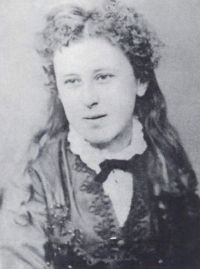 Vernon Lee,
Renaissance Fancies and Studies
Vernon Lee,
Renaissance Fancies and Studies
“ And the art of the Middle Ages was the fantastic, far-fetched, and often morbid production of nations of crusaders and theologians, burning heretics, worshipping ladies, seeing visions, and periodically joining hands in a vertiginous death-reel, whose figures were danced from country to country. ”
J. N. Larned, History for ready reference, Volume 3… (1895)
“ Progress, however much there may have been, is not its distinctive characteristic. There is a popular recognition of this fact in the general opinion that the medieval is a very barren and uninteresting period of history—the 'dark ages'—so confused and without evident plan that its facts are a mere disorganized jumble, impossible to reduce to system or to hold in mind. This must be emphatically true for every one, unless there can be found running through all its confusion some single line of evolution which will give it meaning and organization. ”
J. H. Kurtz, Church History, Volume 2 (of 3…
“ In all departments of life, ecclesiastical and political, moral and intellectual, civil and industrial, new views, needs, developments, and tendencies were introduced. Mediæval culture now reached the highest point of its attainment, and its failure to transcend the past opened the way for the conditions of modern society. ”
 John Ruskin,
Lectures on Architecture and Painting…
John Ruskin,
Lectures on Architecture and Painting…
“ I want to deepen and make clear to you this consciousness that the world has had essentially a Trinity of ages—the Classical Age, the Middle Age, the Modern Age; each of these embracing races and individuals of apparently enormous separation in kind, but united in the spirit of their age,—the Classical Age having its Egyptians and Ninevites, Greeks and Romans,—the Middle Age having its Goths and Franks, Lombards and Italians,—the Modern Age having its French and English, Spaniards and Germans ”
Sir George Gilbert Scott, Lectures on the rise and development of medieval architecture…
“ It is absolutely necessary, too, that you should understand and be familiar with all the varieties of our old architecture, because, though you may not follow them in your own works, you may be frequently called upon to restore them, though this reason is hardly necessary to lead you to master the whole range of Mediæval art.Still, however, you cannot choose but follow more lovingly the works of the periods which most approve themselves to your minds as the days when art was the most vigorous, noble, and full of deep and true sentiment. ”
Reginald Lane-Poole, Illustrations of the History of Medieval Thought and Learning (1920)
“ The history of medieval thought falls naturally into two broad divisions, each of which is brought to a close not by the creation of a new method or system from native resources, but by the introduction of fresh materials for study from without. ”
Edmund Candler, The Unveiling of Lhasa
“ But at present the people are medieval, not only in their system of government and their religion, their inquisition, their witchcraft, their incantations, their ordeals by fire and boiling oil, but in every aspect of their daily life. ”
Seeing Europe with Famous Authors…
“ But the medieval genius is many-sided, and never satisfied with that which is beautiful alone; and this magnificent array of Christian carving would not be complete to the mind of the medieval artist unless he had crowned the angles of his buildings with a series of grotesque gargoyles and allegoric statues, representing the streams that watered the earthly paradise, while at the summit of the roof are niched angles bearing instruments of music. ”
by John Mason Neale, illustrated by Arthur Gaskin, Good King Wenceslas (1904)
“ Mediæval history in all its detail, with all its enthusiasms, legends, and superstitions, is now cultivated by many who have no ecclesiastical bias as a portion of the great progress of the life of man on the earth, the discovery of which as an unbroken chain belongs almost entirely to our own days. ”
H. W. Carless Davis, Medieval Europe
“ We appraise them rather by their most heroic exploits and their most enduring work. We must apply the same test to the medieval nations; we must judge of them by their philosophy and law, by their poetry and architecture, by the examples that they afford of statesmanship and saintship. In these fields we shall not find that we are dealing with the spasmodic and irreflective heroisms which illuminate a barbarous age. ”
L. F. Salzman, English Industries of the Middle Ages
“ As to defining what is meant by the medieval period, it is not easy to lay down any hard and fast rule, for the change from old methods or conditions to new, which practically constitutes the division between the medieval and the modern periods, occurred at a different date in each industry. ”
Sir George Gilbert Scott, Lectures on the rise and development of medieval architecture…
“ Then, again, you must always study the meaning and object of every ancient building which you are examining, that you may know how far its practical characteristics bear upon or are alien to such as belong to our own day. In ecclesiastical works this becomes a practical and necessary study; for, though the ritual uses and customs have greatly changed, many of them hold good in our own day, either directly or in some modified or parallel form, which connects the study of the ritual arrangements of ancient churches more or less directly with our own. ”
