Mercury(II) oxide

Definition and stakes

New York Journal of Pharmacy, Volume 1…

“ By exposure to the light, it becomes black.
The salt of the suboxide of mercury was also prepared by double decomposition. It is a loose, yellowish white powder. {113}
The salt of oxide of mercury was prepared by agitating together, the yellow hydrate of the oxide with water and valerianic acid. After some time, I obtained a colorless liquid, which, upon evaporation at a temperature not exceeding 100° Fahr., yielded crystals which, however, speedily fell into a red powder.
”

Source: Gutenberg

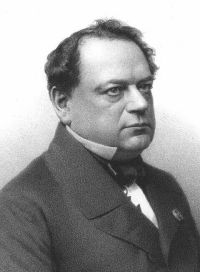
Portrait of John Ayrton Paris John Ayrton Paris,  Pharmacologia

“ That the corrosive sublimate of mercury is actually decomposed by the vegetable principles of the bark is sufficiently evident, but it would seem that the oxide thus developed, and recombined with vegetable extractive, is a very active mercurial, especially with respect to its alterative powers. The same observation will, to a certain extent, apply to the results of its decomposition by other agents; the fixed alkalies have been found by actual experiment to be incapable of disarming this salt of its virulence, because, as Orfila has stated, the oxide liberated is, in itself, an active poison. ”
Source: Gutenberg

Dmitry Ivanovich Mendeleyev,  The Principles of Chemistry, Volume II

“ Mercury does not change in the air—that is to say, it does not oxidise at the ordinary temperature—but at a temperature approaching the boiling-point, as was stated in the Introduction, it oxidises, forming mercuric oxide. Both metallic mercury and its compounds in general produce salivation, trembling of the hands, and other unhealthy symptoms which are found in the workmen exposed to the influence of mercurial vapours or the dust of its compounds. ”
Source: Gutenberg

Get perspective with Kwize: daily news enlightened by great literature