Metal casting

Definition and stakes

Members of the Arts and Crafts Exhibition Society,  Arts and Crafts Essays (1893)

“ When possible, the surface should be finished and left as a metal casting. It may, however, be entirely gilt. If painted, the colour must be neutral and gray.
Casting in iron has been so abased and abused that it is almost difficult to believe that the metal has anything to offer to the arts. At no other time and in no other country would a national staple commodity have been so degraded.
”
Source: Wikisource

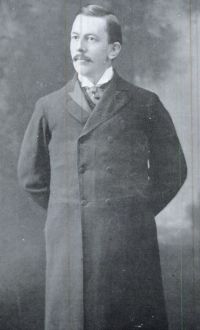
Portrait of Talbot Baines Reed Talbot Baines Reed,  A History of the Old English Letter Foundries

“ After the casting, the mould-bar, drawn endways, cuts off communication with the metal, and brings the said types beneath a series of punches, which descend and force them out at the same time that the matrix-box is unlocked, and descends clear of the types . . . The mould-bar is kept cool during the process by a stream of water passing through it . . . The metal is injected by the descent of a plunger into the metal chest. The type, as cast, is carried direct into a composing machine, where it is set up by means of a mechanism worked by keys, resembling the notes of a piano.200 ”
Source: Gutenberg

G. W. Eve,  Heraldry as art: An account of its development and practice… (1907)

“ It must be remembered, in designing firebacks, that the work is to be carried out by casting and should therefore be of suitable character. Casting is necessary because every time that wrought iron becomes red-hot and cools again it scales, and so loses a considerable thickness of material in a comparatively short time, a disadvantage that does not exist in the cast metal. The design in most cases is treated panel-wise within a raised border, but in the later backs the outline of the design, of the mantling and crest, sometimes formed the edge of the fireback without a containing rim. ”
Source: Gutenberg

Get perspective with Kwize: daily news enlightened by great literature