Mimicry (biology)

Definition and stakes

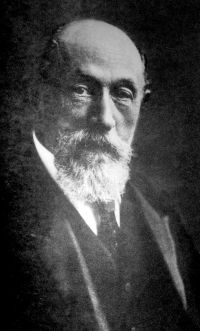
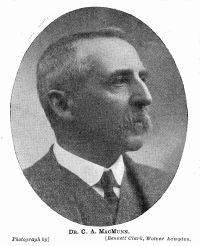
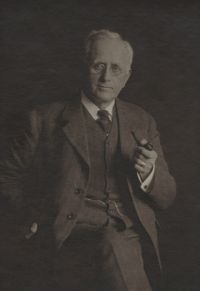
Portrait of Charles Alexander MacMunn Charles Alexander MacMunn,  1911 Encyclopædia Britannica, Volume 6… (1911)

“ The production of mimicry in an individual animal has no more to do with consciousness or “taking thought” than any of the other processes of growth. Protective mimicry is here defined as an advantageous and superficial resemblance of one animal to another, which latter is specially defended so as to be disliked or feared by the majority of enemies of the groups to which both belong—a resemblance which appeals to the sense of sight, sometimes to that of hearing, and rarely to smell, but does not extend to deep-seated characters except when the superficial likeness is affected by them. ”
Source: Wikisource

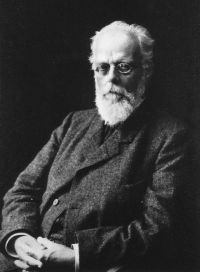
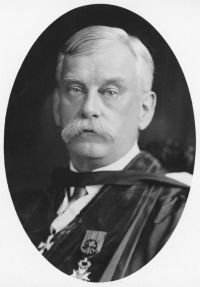
Portrait of A. C. Seward A. C. Seward,  Darwin and Modern Science

“ Mimicry was not only one of the first great departments of zoological knowledge to be studied under the inspiration of natural Selection, it is still and will always remain one of the most interesting and important of subjects in relation to this theory as well as to evolution. In mimicry we investigate the effect of environment in its simplest form: we trace the effects of the pattern of a single species upon that of another far removed from it in the scale of classification. ”
Source: Gutenberg

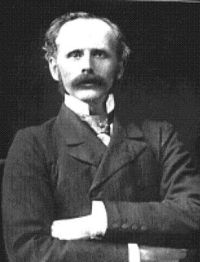
Guy Anstruther Knox Marshall,  The Zoologist (1900)

“ A consideration of these facts has led him to offer the suggestion that "animals of their own volition, and in their efforts to avoid their enemies, place themselves where possible in such adaptation to their surroundings, that protective resemblance and some forms of mimicry are due to animal intelligence, and not so entirely to what is generally understood as the unconscious process of natural selection" (l.c. 1899, p. 465) . It is proposed to designate this conscious action by the somewhat unsatisfactory name of "active mimicry" ”
Source: Wikisource

Get perspective with Kwize: daily news enlightened by great literature