Monitor (ship)

Definition and stakes

Sir Edward J. Reed,  Modern ships of war (1887)

“ The Monitor system itself, pure and simple, was never viewed with favor, and could never be adopted by England, except under the severest restrictions, because the work of England has mainly to be done upon the high seas and in distant parts of the world, and the extremely small freeboard of the Monitor, or, in other words, the normal submersion of so very much of the entire ship, is highly inconvenient and not a little dangerous on sea service, as the fate of the Monitor itself demonstrated. ”
Source: Gutenberg

James Otis,  The Boys of '98

“ If all this secondary battery is stripped off, leaving nothing but the turrets with the big guns, and these are brought down close to the water, and the armour belt is reduced to seven or eight inches in thickness, the type of vessel known as the monitor is reached. It is simply a battle-ship on a reduced scale. Such vessels are very slow and cannot stand rough weather, on account of their low freeboard. The speed of the monitors is seldom more than twelve or fourteen miles an hour, and they are intended to act in coast defence, usually in connection with shore-batteries. ”
Source: Gutenberg

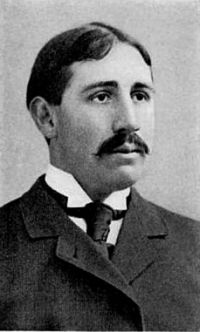
Portrait of Ralph Delahaye Paine Ralph Delahaye Paine,  The Corsair in the war zone (1920)

“ There will be four well-protected and arranged lookout stations on each side of the ship, capable of holding two lookouts each. During daylight there will be an officer in each top, in addition to lookouts. At all times there will be an officer in charge of lookouts on deck who will make periodic inspections. The communication system from lookout stations to bridge will be tested frequently.
Lookouts will be carefully selected for their fitness for lookout duty—keen eyesight, intelligence, and freedom from seasickness are essential qualities. A school for lookouts will be held daily.
”
Source: Gutenberg

Get perspective with Kwize: daily news enlightened by great literature