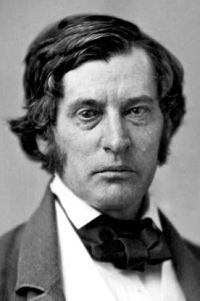
 Charles Sumner,
Charles Sumner: his complete works…
Charles Sumner,
Charles Sumner: his complete works…
“ The True Grandeur of Humanity is in moral elevation, sustained, enlightened, and decorated by the intellect of man. ”
Charles Sumner,
Charles Sumner: his complete works…
“ The True Grandeur of Humanity is in moral elevation, sustained, enlightened, and decorated by the intellect of man. ”
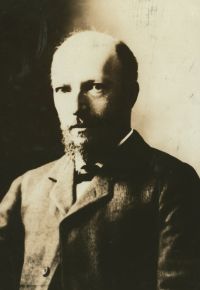 Felix Adler,
Creed and Deed: A Series of Discourses
Felix Adler,
Creed and Deed: A Series of Discourses
“ What the exigencies of the modern age demand, more than aught else, is a new movement for the moral elevation of the race. Now the basic facts of man's moral nature, though insufficiently illustrated in practice, are universally admitted among civilized human beings. ”
M. Valentine, Theoretical Ethics
“ By as much as this theory of despair is suited to atrophy all nerve for the ethical task, and sink personality from its true intended elevation of divine fellowship and excellence into the inanity of unconscious being, by so much does the Christian truth of the assured success and victory of right and goodness in the advancing kingdom of God's grace and eternal love, exalting the worth and force of personality to the highest, inspire and sustain the moral endeavor. ”
 Friedrich Nietzsche,
The Will to Power
Friedrich Nietzsche,
The Will to Power
“ The standard according to which the value of moral valuations is to be determined. The fundamental fact that has been overlooked: The contradiction between "becoming more moral " and the elevation and the strengthening of the type man. ”
Archibald B. D. Alexander, Christianity and Ethics: A Handbook of Christian Ethics
“ It is not enough to ask what is most attractive, what line of life will ensure the greatest material gain or worldly honour? Rather should we ask, Where shall I be safest from moral danger, and, above all, in what position of life, open to me, can I do the most good? ”
Various, The Continental Monthly, Vol. 6…
“ Yet this very tone of society, and all these standards of honor and uprightness, when traced to their origin, are found to arise from the precepts of revelation. We are all, physically and intellectually, the creatures of circumstance. Experience moulds and develops the intellect. Our moral natures are not innate, but solely and entirely the result of the influences by which we are surrounded. ”
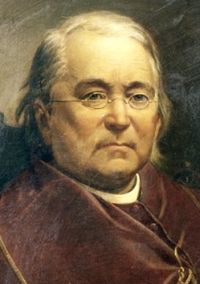 Martin John Spalding,
Pastoral Letter Promulgating the Jubilee
(1865)
Martin John Spalding,
Pastoral Letter Promulgating the Jubilee
(1865)
“ LVIII. No other forces are to be recognized than those which reside in matter, and all moral teaching and moral excellence ought to be made to consist in the accumulation and increase of riches by every possible means, and in the enjoyment of pleasure. ”
Baron Thomas Babington Macaulay Macaulay, Critical and Historical Essays…
“ But the just harmony of qualities, the exact temper between the stern and the humane virtues, the habitual observance of every law, not only of moral rectitude, but of moral grace and dignity, distinguish him from all men who have been tried by equally strong temptations, and about whose conduct we possess equally full information. ”
M. Valentine, Theoretical Ethics
“ Secondly, that while there is diversity as to many points, there is none in its judgments as to the great body of virtues and vices of human life. As to all the49 leading qualities of character and conduct there is full and universal agreement. With respect to all the cardinal virtues, such as justice, kindness, veracity, love, courage, fidelity, generosity, the moral judgments approve them as the magnet owns its pole, in all the multi-form relations and offices of life. ”
Giovanni Gentile, The Reform of Education
“ The force of the will, the vigour of the personality, the impulse of the spirit in its becoming, this is the wondrous power which galvanises matter and organically quickens it; which sustains life, equips it, and fits it for its march towards ever renewed, ever improved finalities. It is not temperament which is the basis of character, but character which is the basis of temperament. If we reverse this proposition, every moral conception of life becomes absurd, and every spiritual value appears ineffectual. ”
Sarah E. Wall, Orange Grove (1866)
“ Through the fascinating power thus wielded over others a great influence may be exerted to elevate the moral tone of society by presenting pictures of domestic life that shall array the merits and demerits of virtues and vices, delineating those delicate threadings among the counter currents of passions and emotions that control the individual, which escape the observation in actual life. ”
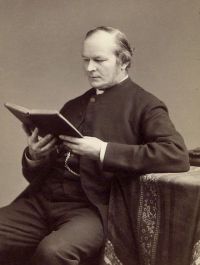 F. W. Farrar,
Seekers after God
F. W. Farrar,
Seekers after God
“ The growth of the personal character, the reminiscences of a life advancing into perfect consciousness, are largely moulded by the gradual recognition of moral laws, by the sense of mystery evolved in the inevitable struggle between duty and pleasure,--between the desire to do right and the temptation to do wrong. ”
M. Valentine, Theoretical Ethics
“ They concerned the powers and possibilities of man in the crowning endowments of his nature, and in the highest ascent of their evident intention and adaptation. They touched the great problems of personal and social welfare in the most vital relations and decisive interests. So the old sages became moralists and their great themes were the themes of virtue and duty. Not very deeply, however, did they, for centuries, succeed in penetrating the rational principles of the moral life and the authority of the moral judgments. ”
“ But suppose the same individual placed, from infancy, in the society of a superiorly endowed moral and intellectual people, the moral faculties will then be habitually excited, and their organs invigorated by repetition, till a greater aptitude will be induced in them, or, in other words, till a higher moral character will be formed. ”
 Anna Garlin Spencer,
The family and its members
Anna Garlin Spencer,
The family and its members
“ If it is true, as one has said, that "the test of sound moral character is that it possesses coherence under liberty and has learned those various arts of adaptation to ever-varying circumstance which make it a working quality, constant, rational, and automatic," we must perceive the intimate connection between mental power and moral competency. ”
 Isaac Taylor,
Natural History of Enthusiasm
Isaac Taylor,
Natural History of Enthusiasm
“ And if the whole amount of the influence which has in fact flowed from the example of the wise, the brave, and the good, could have been placed in prophetic vision before them, while in the midst of their arduous course, would not these worthies contentedly and gladly have purchased so immense a wealth of moral power at the price of their personal sufferings? ”
 James Frederick Ferrier,
Philosophical Works of the Late James Frederick Ferrier
(1888)
James Frederick Ferrier,
Philosophical Works of the Late James Frederick Ferrier
(1888)
“ This answer instantly raises the fourth question, But what is the best and noblest manner of living reasonably? Answer, By so regulating our moral nature, which is made up of reason and the passions, that reason shall govern and passion obey; in other words, by so regulating our moral nature as to develop the virtues: for the virtues arise out of the governance which reason exercises over the passions. This answer calls forward the fifth question, But how is this adjustment to be effected? by what means are the moral virtues to be developed? Answer, By means of custom. ”
 Auguste Comte,
A General View of Positivism
Auguste Comte,
A General View of Positivism
“ Besides, independently of their intrinsic merits, whether intellectual or moral, the necessities of their daily life serve to impress them with respect for the great rules of morality, which in most cases were framed for their own protection. ”
Emory Adams Allen, The Golden Gems of Life; Or, Gathered Jewels for the Home Circle
“ Such principles impart new light and vigor to the mind, and secure to its possessor a safe passage through all the temptations of the world to the abodes of eternal purity and blessedness. A character without fixed moral principles has impressed on it the deformity of a great and palpable defect. Whatever virtues it does not possess are like flowers planted in the snow or withered by the drought—wanting the life vigor and beauty which principles alone can impart. ”
P. V. N. Myers, History as past ethics; an introduction to the history of morals (1913)
“ Clothed in actual flesh and blood, the sweet persuasiveness of the ideal—the nobility and divineness of suffering voluntarily borne in the stead of another—made unwonted appeal to the heart of humanity, and for eighteen hundred years and more, accepted as a true symbol and interpretation of the moral order, it has been a chief molding force in the moral life of the Western world. ”
 Josiah Royce,
The Religious Aspect of Philosophy
(1885)
Josiah Royce,
The Religious Aspect of Philosophy
(1885)
“ But this chief present work of ours, this extension of the moral insight, is best furthered by devotion to our individual vocations, coupled with strict loyalty to the relations upon which society is founded. The work thus set before us demands the sacrifice of many ideal emotional experiences to the service of the Highest. Our comfort however in it all must be that the Highest is there above us, forget it as we may. ”
Earl of Philip Dormer Stanhope Chesterfield, Letters to His Son, 1748
“ Among men, how often have I seen the most solid merit and knowledge neglected, unwelcome, or even rejected, for want of them! While flimsy parts, little knowledge, and less merit, introduced by the Graces, have been received, cherished, and admired. Even virtue, which is moral beauty, wants some of its charms if unaccompanied by them. ”
 Sarah Stickney Ellis,
The Mothers of England
(1844)
Sarah Stickney Ellis,
The Mothers of England
(1844)
“ Next in degree to the exercise of the afflictions, as a means of promoting individual as well as social happiness, is that of one of the faculties of the human mind, the cultivation of which is too little regarded in the training of youth. I mean the faculty of admiration, which, if properly directed, under the influence of religious feeling, has the effect of raising, by imperceptible degrees, the moral nature of man in his intellectual, as well as his spiritual enjoyments. ”
Richard Hurd, The works of Richard Hurd, volume 7… (1811)
“ Still I agree to make a further concession to the pride of Virtue. Let the moral qualities of some men be so excellent, and the tenour of their lives so pure, as to entitle them to a positive reward from the great searcher of hearts and inspector of human actions: would not the daily blessings of this life be a suitable recompense for such desert; would not health, and prosperity, and reputation, and peace of mind, be an adequate return for their best services? ”
Andrew P. Peabody, A Manual of Moral Philosophy
“ The primal virtues are first made habits of the unceasing consciousness and of the daily life, and the moral power no longer needed for these is then employed in the cultivation of the finer traits of superior excellence,—the shaping of the delicate lines, roundings, and proportions, which constitute "the beauty of holiness," the symmetry and grace of character that win not only abounding respect and confidence, but universal admiration and love. ”
 Josephus Nelson Larned,
Popular Science Monthly
(1877)
Josephus Nelson Larned,
Popular Science Monthly
(1877)
“ It is upon that discipline chiefly that those qualities which I have called the moral qualities of the personal order, and which have their root in truthfulness and courage, depend for their evolution. ”
George Spring Merriam, The Chief End of Man
“ Moral perfection for himself, and, as the outcome to the world, not a new church or a theology or a missionary enterprise, but a winning of the forces of nature to the service of man, and a shaping of the social organism for the benefit of all. ”
 Bertrand Russell,
The Dial
(1923)
Bertrand Russell,
The Dial
(1923)
“ In each of these great religions, virtue was that line of conduct which would be pursued by a prudent egoist. Neither of these, however, has much influence on the practical morality of our own time. For energetic people, the moral code of our time is that of "success"—the code which my generation learnt in childhood from Smiles' Self-help and which modern young men learn from efficiency experts. ”
 Benjamin Rush,
Medical Inquiries and Observations…
Benjamin Rush,
Medical Inquiries and Observations…
“ As I consider virtue and vice to consist in action, and not in opinion, and as this action has its seat in the will, and not in the conscience, I shall confine my inquiries chiefly to the influence of physical causes upon that moral power of the mind, which is connected with volition, although many of these causes act likewise upon the conscience, as I shall show hereafter. The state of the moral faculty is visible in actions, which affect the well-being of society. ”
 Timothy East,
The Sheepfold and the Common; Or…
Timothy East,
The Sheepfold and the Common; Or…
“ We should, in that case, be reduced to the necessity of believing that the greatest, the wisest, and the most benevolent being that ever appeared in the human form, came and went away without accomplishing any purpose commensurate with the moral grandeur of his character, or the vastness of his resources for practical utility. ”
 Charles Dudley Warner,
Certain Diversities of American Life
Charles Dudley Warner,
Certain Diversities of American Life
“ I have not much confidence in an ornamental top-dressing of philosophy, theology, and classic learning upon the foundation of an unformed and unstable mental and moral condition. Somehow, character must be built up, and character depends upon industry, upon thrift, upon morals, upon correct ethical perceptions. ”
Francis A. Baker, Sermons of the Rev. Francis A. Baker…
“ Is there a profession, or trade, or court, or country which has not been sanctified by moral heroes who drew in their holy inspirations from its lessons? And who can tell us the amount of goodness in every-day life, to some extent necessarily hidden, but of which we catch such unearthly glimpses, and which is the practical fruit of its principles? {299} The virtuous families, the upright transactions, the glorious sacrifices, the noble charities, the restraint of passion, the interior purity, the patient perseverance! ”
Timothy East,
The Sheepfold and the Common; Or…
“ We cannot explain the action of moral power, nor conceive the mode of its operation, however sensible we may be of its effects. What power, for example, in a frown to depress! and in a smile to elevate and tranquillize! What power in words both to cheer and sadden the heart! As I have loved you—these expressive words should guide our fraternal intercourse with our Christian brethren, who, when they feel our sympathy to be real, will often attach a much greater value to it than to any amount of pecuniary assistance. ”
 John Stuart Blackie,
What Does History Teach?
John Stuart Blackie,
What Does History Teach?
“ By appealing directly to the individual conscience, and making religion a matter of personal concern and of moral conviction, it raised the value of each individual as a responsible moral agent, and placed the dignity of every man as a social monad on the firmest possible pedestal. ”
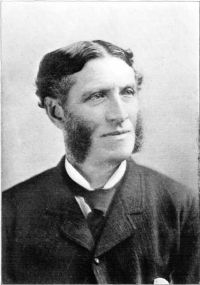 Matthew Arnold,
St. Paul and Protestantism, with an Essay on Puritanism and the Church of England
Matthew Arnold,
St. Paul and Protestantism, with an Essay on Puritanism and the Church of England
“ As moral agents, for whom alone exist all the predicaments of merit and demerit, praise and blame, effort and failure, vice and virtue, we are impotent and lost;—we are saved through that in us which is passive and involuntary; we are saved through our affections, it is as beings acted upon and influenced that we are saved! ”
 Alexander Maclaren,
Expositions of Holy Scripture
Alexander Maclaren,
Expositions of Holy Scripture
“ We note how emphatically the field in which this wisdom is to be exercised is declared to be the moral conduct of life. 'Righteousness and judgment and equity' are 'wise dealing,' and the end of true wisdom is to practise these. ”
 William Whewell,
The Plurality of Worlds
William Whewell,
The Plurality of Worlds
“ One school of moral discipline, one theatre of moral action, one arena of moral contests for the highest prizes, is a sufficient centre for innumerable hosts of stars and planets, globes of fire and earth, water and air, whether or not tenanted by corals and madrepores, fishes and creeping things. So great and majestic are those names of Right and Good, Duty and Virtue, that all mere material or animal existence is worthless in the comparison. ”
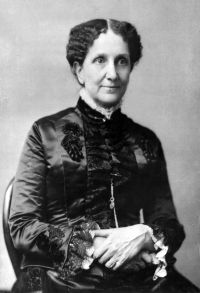 Mary Baker G. Eddy,
Science and Health with Key to the Scriptures
(1889)
Mary Baker G. Eddy,
Science and Health with Key to the Scriptures
(1889)
“ Moral courage is requisite to meet the wrong and proclaim the right. But how shall we reform the man who has more animal than moral courage, who has less Soul, because he has more material sense? Through my method of silent argument, convince his reason of its mistaken means for procuring happiness. Perhaps reason is his highest human faculty. Let that inform the sentiments, and awaken his dormant sense of moral obligation; and by degrees he will learn the nothingness of the pleasures of human sense, and the grandeur and bliss of a diviner sense that is superior to matter. ”
 Ralph Waldo Emerson,
Essays: First Series — The Over-Soul
(1841)
Ralph Waldo Emerson,
Essays: First Series — The Over-Soul
(1841)
“ Those who are capable of humility, of justice, of love, of aspiration, stand already on a platform that commands the sciences and arts, speech and poetry, action and grace. For whoso dwells in this moral beatitude already anticipates those special powers which men prize so highly. ”
 James Henry Leuba,
Psychotherapic Cults: Christian Science…
(1912)
James Henry Leuba,
Psychotherapic Cults: Christian Science…
(1912)
“ Although they usually define the aim of life in terms of power, happiness, and love, they cannot fairly be charged either with insensitiveness to moral values, or with indifference to the ethical advancement of mankind. ”
John Stuart Blackie,
Four Phases of Morals: Socrates…
“ And the effective influence of this firm faith on society has been to give an infinitely greater dignity to human life, to increase infinitely the moral worth of the individual, and to add a support of wonderful efficacy to those states and stages of toilsome existence which stand so much in need of such hopeful consolation. ”
Josephus Nelson LarnedJohn Stuart BlackieMartin John SpaldingA. Maude RoydenPaul JanetFriedrich Nietzsche Catharine Esther Beecher
 AristotleM. ValentineVarious
 John Stuart Mill
 Benjamin FranklinCora May WilliamsRalph Waldo EmersonJames Frederick Ferrier
 Robert Green IngersollP. V. N. MyersFelix Adler
 Oscar Wilde
 Leslie Stephen