 Aristotle,
The Ethics of Aristotle
Aristotle,
The Ethics of Aristotle
“ Next, Man’s work as Man is accomplished by virtue of Practical Wisdom and Moral Virtue, the latter giving the right aim and direction, the former the right means to its attainment; ”
Moral virtue, broadly defined, refers to the development of ethical character and proper conduct, often described as the balanced integration of reason, will, and action. This idea has been examined through various perspectives: Aristotle connects it to practical wisdom and the pursuit of human flourishing, while Richard Hurd reflects on the benefits of living virtuously, proposing divine acknowledgment as a possible result. Elihu Palmer highlights the inherent value of kindness and fairness, challenging society's disregard for moral excellence.
Thomas Hill Green differentiates between moral feeling and active virtue, emphasizing the importance of social welfare in ethical behavior. Meanwhile, M. Valentine stresses the importance of personal agency in moral decision-making, arguing that only conscious beings can exhibit virtue or vice. These viewpoints together illustrate moral virtue as both a philosophical goal and a flexible, situationally shaped practice, grounded in the interaction of individual intent and shared values.
Aristotle,
The Ethics of Aristotle
“ Next, Man’s work as Man is accomplished by virtue of Practical Wisdom and Moral Virtue, the latter giving the right aim and direction, the former the right means to its attainment; ”
Richard Hurd, The works of Richard Hurd, volume 7… (1811)
“ Still I agree to make a further concession to the pride of Virtue. Let the moral qualities of some men be so excellent, and the tenour of their lives so pure, as to entitle them to a positive reward from the great searcher of hearts and inspector of human actions: would not the daily blessings of this life be a suitable recompense for such desert; would not health, and prosperity, and reputation, and peace of mind, be an adequate return for their best services? ”
Elihu Palmer, Principles of nature; or, a development of the morals causes of happiness and misery among the… (1819)
“ Will you never give to man his due degree of merit, and reward him for his real virtue. Is there nothing tender, nothing sympathetic, nothing moral in the heart of an intelligent being? Is there no justice for the benefit of society, no benevolence to brighten the character of man, no humanity for the relief of distressed objects? ”
 William Blake,
Life of William Blake
(1880)
William Blake,
Life of William Blake
(1880)
“ You cannot have liberty in this world without what you call moral virtue, and you cannot have moral virtue without the subjection of that half of the human race who hate what you call moral virtue. ”
 Thomas Hill Green,
Lectures on the Principles of Political Obligation
Thomas Hill Green,
Lectures on the Principles of Political Obligation
“ What is called 'moral sentiment' is merely a weaker form of that interest in social well-being which, when wrought into a man's habits and strong enough to determine action, we call virtue. So far as this interest is brought into play on the mere survey of action, and serves merely to determine an approbation or disapprobation, it is called moral sentiment. ”
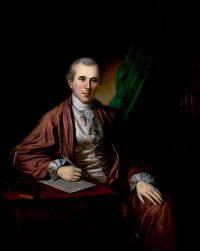 Benjamin Rush,
Medical Inquiries and Observations…
Benjamin Rush,
Medical Inquiries and Observations…
“ As I consider virtue and vice to consist in action, and not in opinion, and as this action has its seat in the will, and not in the conscience, I shall confine my inquiries chiefly to the influence of physical causes upon that moral power of the mind, which is connected with volition, although many of these causes act likewise upon the conscience, as I shall show hereafter. The state of the moral faculty is visible in actions, which affect the well-being of society. ”
 James Frederick Ferrier,
Philosophical Works of the Late James Frederick Ferrier
(1888)
James Frederick Ferrier,
Philosophical Works of the Late James Frederick Ferrier
(1888)
“ When this adjustment is effected, the right working of man's moral nature is secured; in other words, moral virtue is the result, while happiness is at the same time attained, inasmuch as man is now living a rational life in the best and noblest way in which such a life can be led—in accordance, namely, with excellence or virtue. ”
 Alexander Pope,
The Works of Alexander Pope, Volume 2…
Alexander Pope,
The Works of Alexander Pope, Volume 2…
“ To these profound principles of natural knowledge are added some moral instructions equally new,—that self interest, well understood, will produce social concord—that men are mutual gainers by mutual benefits—that evil is sometimes balanced by good—that human advantages are unstable and fallacious, of uncertain duration and doubtful effect—that our true honour is not to have a great part, but to act it well—that virtue only is our own—and that happiness is always in our power. ”
M. Valentine, Theoretical Ethics
“ Of what may we justly affirm moral quality? Where does the conscience apply the distinctions of right and wrong? What are properly the objects, and the only objects, of moral approval or condemnation? Or, to put it in a way possibly more easily understood, to what human activities or features of life does moral quality belong?It has already been noted in general that only personal beings can be moral agents or become, in what they are and do, objects of moral judgment. Apart from personality, no place for virtue or vice can be found. ”
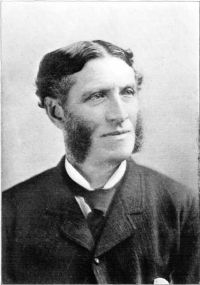 Matthew Arnold,
St. Paul and Protestantism, with an Essay on Puritanism and the Church of England
Matthew Arnold,
St. Paul and Protestantism, with an Essay on Puritanism and the Church of England
“ As moral agents, for whom alone exist all the predicaments of merit and demerit, praise and blame, effort and failure, vice and virtue, we are impotent and lost;—we are saved through that in us which is passive and involuntary; we are saved through our affections, it is as beings acted upon and influenced that we are saved! ”
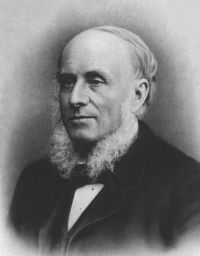 Alexander Bain,
Moral Science; a Compendium of Ethics
Alexander Bain,
Moral Science; a Compendium of Ethics
“ The inducements to virtue are, in his view, our humane sentiments, on the one hand, and our self-love, or prudence, on the other; the two classes of motives conspiring to promote both our own good and the good of mankind. ”
St. George William Joseph Stock, Deductive Logic
“ The term 'virtue,' for instance, in one sense, namely, as signifying moral excellence in general, without distinction of kind, is strictly a singular term, as being the name of one attribute: but as applied to different varieties of moral excellence—justice, generosity, gentleness and so on—it is a common term, as being a name which is applicable, in the same sense, to a class of attributes. ”
Mary G. Ware, The elements of character
“ Moral courage, the third phase of this virtue, is that faculty of the soul by which we are enabled to act, in all the social relations of life, with perfect independence of the opinions of the world, and governed only by the laws of abstract propriety, uprightness, and charity. It gives us power to say and to do whatever we conscienciously believe to be right and true, without being influenced by the fear of man's frown or the hope of his favor. ”
M. Valentine, Theoretical Ethics
“ And this accords with the best cosmic philosophy.172 For this holds all these relations as parts of a rationally designed system of world-order for universal well-being, and the moral reason as capacitated to discern, with more or less clearness and fulness, the moral requirement which they involve and present for observance. We know of no morality that exists, or can exist, in human life, apart from them. Strike them all away, and all duties disappear. Take, as illustration, the most generic virtue of all the virtues recognized by the ethical judgments, that of good-will or love. ”
Earl of Philip Dormer Stanhope Chesterfield, Letters to His Son, 1748
“ Among men, how often have I seen the most solid merit and knowledge neglected, unwelcome, or even rejected, for want of them! While flimsy parts, little knowledge, and less merit, introduced by the Graces, have been received, cherished, and admired. Even virtue, which is moral beauty, wants some of its charms if unaccompanied by them. ”
 Samuel Johnson,
Dr. Johnson's Works: Life, Poems…
Samuel Johnson,
Dr. Johnson's Works: Life, Poems…
“ Since virtue, or moral goodness, consists in a just conformity of our actions to the relations, in which we stand to the supreme being and to our fellow-creatures, where shall we find a man who has been, or endeavoured to be, more diligent in the discharge of those essential duties? ”
Benj. N. Martin, Choice Specimens of American Literature…
“ It is, moreover, efficient in proportion to the purity of the moral principle of a people. We hence perceive the elements of superiority which, by the constitution of our nature, have been bestowed upon virtue.Another illustration of the power of the moral principle, is seen in the sentiments with which we contemplate the character of confessors, martyrs, and men of every age, who have sacrificed every thing else for the sake of adherence to righteousness. The highest glory of human nature is to love right better than life, and to obey the dictates of conscience at every conceivable hazard. ”
 Percy Bysshe Shelley,
The Prose Works of Percy Bysshe Shelley…
(1897)
Percy Bysshe Shelley,
The Prose Works of Percy Bysshe Shelley…
(1897)
“ It is inquired for what reason a human being should engage in procuring the happiness, or refrain from producing the pain of another? When a reason is required to prove the necessity of adopting any system of conduct, what is it that the objector demands? He requires proof of that system of conduct being such as will most effectually promote the happiness of mankind. To demonstrate this, is to render a moral reason. Such is the object of Virtue. ”
M. Valentine, Theoretical Ethics
“ They concerned the powers and possibilities of man in the crowning endowments of his nature, and in the highest ascent of their evident intention and adaptation. They touched the great problems of personal and social welfare in the most vital relations and decisive interests. So the old sages became moralists and their great themes were the themes of virtue and duty. Not very deeply, however, did they, for centuries, succeed in penetrating the rational principles of the moral life and the authority of the moral judgments. ”
 Albert Taylor Bledsoe,
A Theodicy, or, Vindication of the Divine Glory
Albert Taylor Bledsoe,
A Theodicy, or, Vindication of the Divine Glory
“ In conclusion, we shall simply lay down, in a few brief propositions, what we trust has now been seen in relation to the nature of virtue and vice:—1. No necessitated act of the mind can be its virtue or its vice. 2. In order that any act of the will should partake of a moral nature, it must be free from the dominion of causes over which it has no control, or from whose influence it cannot depart. ”
 Henry Fielding,
History of Tom Jones, a Foundling
Henry Fielding,
History of Tom Jones, a Foundling
“ There are a set of religious, or rather moral writers, who teach that virtue is the certain road to happiness, and vice to misery, in this world. A very wholesome and comfortable doctrine, and to which we have but one objection, namely, that it is not true. ”
 Bertrand Russell,
The Dial
(1923)
Bertrand Russell,
The Dial
(1923)
“ In each of these great religions, virtue was that line of conduct which would be pursued by a prudent egoist. Neither of these, however, has much influence on the practical morality of our own time. For energetic people, the moral code of our time is that of "success"—the code which my generation learnt in childhood from Smiles' Self-help and which modern young men learn from efficiency experts. ”
Alexander Bain,
Moral Science; a Compendium of Ethics
“ Its end is to make the mind sensible of the bond between virtue and happiness; it is the direct and vivid application of the law of merit. Again, he touches the states of moral satisfaction and remorse, speaks of our sympathy with the moral goodness of others and our benevolent feeling that arises towards them—emotions all, but covering up judgments ”
 Frances Power Cobbe,
Life of Frances Power Cobbe, as told by herself
Frances Power Cobbe,
Life of Frances Power Cobbe, as told by herself
“ But though neither the true source of our Knowledge of Moral Distinctions nor yet the right Motive why we are to choose the Good, this Moral Sense of Pleasure in Virtue, and Pain in Vice, is a psychological fact demanding the investigation of the Moralist. ”
 Kersey Graves,
The Bible of Bibles; Or, Twenty-Seven "Divine" Revelations
Kersey Graves,
The Bible of Bibles; Or, Twenty-Seven "Divine" Revelations
“ His moral nature should be warmed by affection, and not congealed by frowns. His instinctive respect for virtue should be developed by a sound moral education, and not crushed by pursuing him with a malignant spirit. ”
W. R. Sorley, Recent Tendencies in Ethics
“ And he proceeds to ask the question, "How can there be any such intrinsic difference between the objects willed as justifies the distinction which 'moral sense' seems to draw between good and bad action, between virtue and vice? And if there is such a difference, in what does it consist?" [2] Now we may define a good action as the sort of action which proceeds from a good man; or we may define a good man as a man who performs good actions. ”
Cora May Williams, A Review of the Systems of Ethics Founded on the Theory of Evolution
“ We distinguish by the name of virtue that moral constitution which rises above the average. It is presupposed, however, that its possessor has, in general, the impulses and capacities belonging [Pg 213] to human nature; he could not be called temperate in any particular direction, if he did not possess the capacity of enjoyment which leads many to intemperance. Moreover, the control of strong impulses from a desire to do right presupposes a strong sense of duty; and it is on account of this sense of duty that we respect a man. ”
Aristotle,
The Ethics of Aristotle
“ (By the way, a question is sometimes raised, whether the moral choice or the actions have most to do with Virtue, since it consists in both: it is plain that the perfection of virtuous action requires both: but for the actions many things are required, and the greater and more numerous they are the more.) ”
“ Such persons will generally be found in possession of good moral habits—props they instinctively set up to sustain their pretenses. They know by intuition that an affectation of wisdom and greatness would be intolerable if attended by vicious propensities and practices; so they cultivate with systematic carefulness all the forms of morality and virtue. ”
James Frederick Ferrier,
Philosophical Works of the Late James Frederick Ferrier
(1888)
“ This answer instantly raises the fourth question, But what is the best and noblest manner of living reasonably? Answer, By so regulating our moral nature, which is made up of reason and the passions, that reason shall govern and passion obey; in other words, by so regulating our moral nature as to develop the virtues: for the virtues arise out of the governance which reason exercises over the passions. This answer calls forward the fifth question, But how is this adjustment to be effected? by what means are the moral virtues to be developed? Answer, By means of custom. ”
 Adam Smith,
The Theory of Moral Sentiments
(1759)
Adam Smith,
The Theory of Moral Sentiments
(1759)
“ so in the common degree of the moral, there is no virtue. ”
Saint Aquinas Thomas, On prayer and the contemplative life
“ But all this seems rather to come under charity, by which we love our neighbour, than under the moral virtues. Consequently the acts of the moral virtues seem not to belong to the active life.But a man can, by acts of all the moral virtues, lead his neighbour to good works by his example; and this S. Gregory here attributes to the active life.3. Lastly, the moral virtues dispose us to the contemplative life. But disposition to a thing and the perfect attainment of that thing come under the same head. Consequently the moral virtues do not belong to the active life. ”
Earl of Philip Dormer Stanhope Chesterfield, Letters, sentences and maxims (1903)
“ Examine yourself, why you like such and such people, and dislike such and such others; and you will find that those different sentiments proceed from very slight causes. Moral virtues are the foundation of society in general, and of friendship in particular; but attentions, manners, and graces both adorn and strengthen them. ”
 Havelock Ellis,
Little Essays of Love and Virtue
(1922)
Havelock Ellis,
Little Essays of Love and Virtue
(1922)
“ Again, our judgments of value and of merit are rooted in our sentiments; and our moral principles have the same source, for they are formed by our judgments of moral value.” ↑ The destructive effects of the mechanisation of modern life have lately been admirably set forth, and with much precise illustration, by Dr. ”
Samuel Johnson,
The Works of Samuel Johnson, LL.D. in Nine Volumes…
“ Among many parallels which men of imagination have drawn between the natural and moral state of the world, it has been observed that happiness, as well as virtue, consists in mediocrity; ”
François de La Rochefoucauld, Reflections; or Sentences and Moral Maxims (1665)
“ 1.—What we term virtue is often but a mass of various actions and divers interests, which fortune, or our own industry, manage to arrange; and it is not always from valour or from chastity that men are brave, and women chaste. ”
M. Valentine, Theoretical Ethics
“ Secondly, that while there is diversity as to many points, there is none in its judgments as to the great body of virtues and vices of human life. As to all the49 leading qualities of character and conduct there is full and universal agreement. With respect to all the cardinal virtues, such as justice, kindness, veracity, love, courage, fidelity, generosity, the moral judgments approve them as the magnet owns its pole, in all the multi-form relations and offices of life. ”
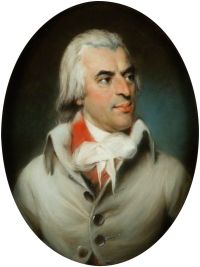 Arthur Young,
The Autobiography of Arthur Young
(1898)
Arthur Young,
The Autobiography of Arthur Young
(1898)
“ Their vices may differ, but they are all equally remote from virtue, truth, justice, gratitude, the love of excellence, or any other of those qualities which constitute the real dignity of human nature. ”
 George Edward Moore,
Principia Ethica — Chapter I
(1903)
George Edward Moore,
Principia Ethica — Chapter I
(1903)
“ Whenever we say, ‘So and so is a good man,’ or ‘That fellow is a villain’; whenever we ask, ‘What ought I to do?’ or ‘Is it wrong for me to do like this?’; whenever we hazard such remarks as ‘Temperance is a virtue and drunkenness a vice’—it is undoubtedly the business of Ethics to discuss such questions and such statements; to argue what is the true answer when we ask what it is right to do, and to give reasons for thinking that our statements about the character of persons or the morality of actions are true or false. ”
Archibald B. D. Alexander, Christianity and Ethics: A Handbook of Christian Ethics
“ It is not enough to ask what is most attractive, what line of life will ensure the greatest material gain or worldly honour? Rather should we ask, Where shall I be safest from moral danger, and, above all, in what position of life, open to me, can I do the most good? ”
 Brigham Young,
Journal of Discourses — Volume 1…
Brigham Young,
Journal of Discourses — Volume 1…
“ To me it would establish no more than a good wholesome principle upon which the wicked may act, as well as the righteous—a principle upon which the world ought to act, by the moral obligations they are under to stretch out the arm of charity to every person, to fill up their days with industry, prudence, and faithfulness, procuring means to sustain themselves, and to administer to the wants of those who are unable to administer to themselves. ”
Aristotle Friedrich NietzscheAlexander Pope
 William Edward Hartpole LeckyPercy Bysshe Shelley
 ConfuciusM. Valentine
 PlatoPaul JanetAlexander Bain
 Frances WrightGeorge Edward Moore
 Marcus Tullius Cicero
 Ralph Waldo Emerson
 Francis BaconSaint Aquinas Thomas
 Michel de MontaigneA. P. RussellArchibald B. D. Alexander
 Edward Young