 Aristotle,
The Ethics of Aristotle
Aristotle,
The Ethics of Aristotle
“ Next, Man’s work as Man is accomplished by virtue of Practical Wisdom and Moral Virtue, the latter giving the right aim and direction, the former the right means to its attainment; ”
Aristotle,
The Ethics of Aristotle
“ Next, Man’s work as Man is accomplished by virtue of Practical Wisdom and Moral Virtue, the latter giving the right aim and direction, the former the right means to its attainment; ”
“ And that which men of practical wisdom, either all, or more, or the best of them, would judge, or have judged, to be a greater good, must necessarily be such, either absolutely or in so far as they have judged as men of practical wisdom. The same may be said in regard to everything else; for the nature, quantity, and quality of things are such as would be defined by science and practical wisdom. ”
Aristotle,
Nicomachean Ethics
(1937)
“ Again, Practical Wisdom and Excellence of the Moral character are very closely united; [17] since the Principles of Practical Wisdom are in accordance with the Moral Virtues and these are right when they accord with Practical Wisdom. ”
Saint of Alexandria Clement, The writings of Clement of Alexandria… (1869)
“ Knowledge is then followed by practical wisdom, and practical wisdom by self-control: for it may be said that practical wisdom is divine knowledge, and exists in those who are deified; but that self-control is mortal, and subsists in those who philosophize, and are not yet wise. ”
 Isaac Taylor,
Natural History of Enthusiasm
Isaac Taylor,
Natural History of Enthusiasm
“ This excellent mechanism of matter and mind, which, beyond any other of his works, declares the wisdom of the Creator, and which, under his guidance, is now passing the season of its first preparation, shall stand up anew from {150} the dust of dissolution, and then, with freshened powers, and with a store of hard-earned practical wisdom for its guidance, shall essay new labors—we say not perplexities and perils—in the service of God, who by such instruments chooses to accomplish his designs of beneficence. ”
Aristotle,
Nicomachean Ethics
(c. 334 BC - 330 BC)
“ for we say that some of the virtues are intellectual and others moral, philosophic wisdom and understanding and practical wisdom being intellectual, liberality and temperance moral. ”
Delaumosne, Delsarte System of Oratory
“ Trained by tradition, reason is called common sense. Trained by personal experience to the knowledge of principles, reason is called science. Trained by the contemplation of principles to the perfection of the intellect, reason is called wisdom. ”
 Donald Hankey,
A Student in Arms: Second Series
Donald Hankey,
A Student in Arms: Second Series
“ The true wisdom is that in which all knowledge is subordinate to practical aims, [pg 140] and blended into a working philosophy of life.The true wisdom is that it is not what a man does, or has, or says, that matters ”
Aristotle,
Organon
(1853)
“ For the rest, how it is necessary to distinguish between discourse and intellect, and science and art, and prudence and wisdom, belongs rather partly to the physical, and partly to the ethical theory. ”
William Miller, Convocation Addresses of the Universities of Bombay and Madras (1892)
“ Ideals, it is true, are attained but seldom, and with you as with us all, mental training is far from perfect, and zeal for knowledge far from pure. Yet we trust that in no inconsiderable measure you have a sense of the dignity of wisdom a sense of your own need of it, and a power at the same time of gathering it henceforward for yourselves. Thus you are complete with the completeness of a seed. ”
 Rufus M. Jones,
Spiritual Reformers in the 16th & 17th Centuries
Rufus M. Jones,
Spiritual Reformers in the 16th & 17th Centuries
“ The seventh, and final, "quality" is body or figure, by which he means the fundamental tendency or energy toward expression in actuality and concrete form. The final goal of intelligent purpose is the realization of wisdom, of idea, in actual Nature-forms and life-forms—the incarnation of the spirit. ”
E. P. Barrows, Companion to the Bible
“ The principles embodied in them admit of endlessly varied applications, so that the study of a life cannot exhaust them. The more they are pondered, and prayed over, and reduced to practice, the more are their hidden treasures of wisdom brought to light. ”
The Bible, Douay-Rheims, Complete
“ He that wanteth understanding thinketh vain things, and the foolish, and erring man, thinketh foolish things.16:24. Hearken to me, my son, and learn the discipline of understanding, and attend to my words in thy heart.16:25. And I will shew forth good doctrine in equity, and will seek to declare wisdom: and attend to my words in thy heart, whilst with equity of spirit I tell thee the virtues that God hath put upon his works from the beginning, and I shew forth in truth his knowledge. ”
J. Ewing Ritchie, The Religious Life of London
“ To discover and methodize truths connected either with the laws of nature, the progress of thought, or the lives of good men in all ages and countries, so that they may be rendered of practical value as guides to a healthy, moral, and manly life. ”
 Brigham Young,
Journal of Discourses — Volume 13…
Brigham Young,
Journal of Discourses — Volume 13…
“ They have the foundation, and they can improve and add knowledge to knowledge, wisdom to wisdom, light to light, and intelligence to intelligence. This power to increase in wisdom and intelligence so that we can know things for ourselves is within every one of us. ”
 Edwin Hatch,
The influence of Greek ideas and usages upon the Christian church
(1914)
Edwin Hatch,
The influence of Greek ideas and usages upon the Christian church
(1914)
“ He distinguishes three elements in the process of attaining goodness—nature, learning, discipline. [241] He distinguishes those who discipline themselves in wisdom by means of actual works, from those who have only a literary and intellectual knowledge of it. [242] He holds that the greatest and most numerous blessings that a man can have come from the gymnastic of moral efforts. ”
 Samuel Taylor Coleridge,
The Literary Remains of Samuel Taylor Coleridge…
Samuel Taylor Coleridge,
The Literary Remains of Samuel Taylor Coleridge…
“ But in the popular acceptation, common sense in an uncommon degree is what the world calls wisdom. ”
Nathaniel Sands, The Philosophy of Teaching
“ So with each of the other faculties of man; each draws its nourishment from its special Fountain. Wisdom, love, justice, and truth should preside; and if judgment, sympathy and conscientiousness be judiciously trained and developed, they will help to develop harmoniously all the other faculties. ”
 Alexander Maclaren,
Expositions of Holy Scripture
Alexander Maclaren,
Expositions of Holy Scripture
“ We note how emphatically the field in which this wisdom is to be exercised is declared to be the moral conduct of life. 'Righteousness and judgment and equity' are 'wise dealing,' and the end of true wisdom is to practise these. ”
 Josiah Royce,
The World and the Individual, Second Series
(1901)
Josiah Royce,
The World and the Individual, Second Series
(1901)
“ But we have now won the philosophical right, and have become subject to the practical obligation, not only thus to follow out our theoretical interests, but also to show how the philosophy set forth in our earlier lectures stands related to the more immediate problems of life. ”
Matthew Henry, Commentary on the Whole Bible… (1700s)
“ If we are wiser than others, this should be evidenced by the goodness of our conversation, not by the roughness or vanity of it. Words that inform, and heal, and do good, are the marks of wisdom; not those that look great, and do mischief, and are the occasions of evil, either in ourselves or others. 2. True wisdom may be known by its works. The conversation here does not refer only to words, but to the whole of men's practice; therefore it is said, Let him show out of a good conversation his works. True wisdom does not lie in good notions or speculations so much as in good and useful actions. ”
John Stewart, The Apocalypse of Nature (1790)
“ Wisdom, in its operation to gain the knowledge of self, must begin with the mental faculties, and by discovering the means to exercise them, and executing their functions, their primum mobile, or active moral force will be established. ”
 John E. Russell,
Rational Horse-Shoeing
John E. Russell,
Rational Horse-Shoeing
“ And we hope that the thoughtful readers of these pages will see in our intention, an earnest, honest purpose and belief, and that, without affectation of science or pretense of superior knowledge, we base all our efforts upon nature and common sense. ”
Robert F. Horton, The Expositor's Bible: The Book of Proverbs
“ Again, from this large point of view Wisdom could be regarded as the Divine Philosophy, the system of thought and the body of beliefs which would furnish the explanation of life, and would root all the decisions of ethics in eternal principles of truth. And this function of Wisdom is presented with singular beauty and power in the eighth chapter of our book, where, as we shall see, the mouth of Wisdom shows that her concern with men is derived from her relation with the Creator and from her comprehension of His great architectural design in the construction of the world. ”
 Charles Kingsley,
Westminster Sermons
Charles Kingsley,
Westminster Sermons
“ Knowledge which will be really useful, really worth knowing? Knowledge which I shall know accurately, and practically too, so that I can use it in daily life, for myself and my fellow-men? Knowledge, too, which shall be clear knowledge, not warped or coloured by my own fancies, passions, prejudices, but pure, and calm, and sound ”
 Elisha Gray,
Familiar Talks on Science: World-Building and Life…
Elisha Gray,
Familiar Talks on Science: World-Building and Life…
“ A knowledge of the real things in the objective world about us and the laws that govern them in their inter-relations is of practical [Pg vii] value to every man, whatever his calling may be. Not only will it be of value practically, but it will also be a constant source of interest and pleasure. ”
 Samuel Johnson,
The Works of Samuel Johnson, LL.D. in Nine Volumes…
Samuel Johnson,
The Works of Samuel Johnson, LL.D. in Nine Volumes…
“ How the understanding is best conducted to the knowledge of science, by what steps it is to be led forwards in its pursuit, how it is to be cured of its defects, and habituated to new studies, has been the inquiry of many acute and learned men, whose observations I shall not either adopt or censure: my purpose being to consider the moral discipline of the mind, and to promote the increase of virtue rather than of learning. ”
Various, Blackwood's Edinburgh Magazine…
“ Taking, as our limits necessarily oblige us to take, a broad survey of the principle, and the results of the principle disclosed by experience, we cheerfully pronounce both to be positively and undeniably good. ”
Charles C. Rich, Journal of Discourses — Volume 10…
“ We ought to think of this, in order that we may be ready day by day for the performance of any duty required of us; we ought to know the principles so perfectly that we can apply them to the performance of every duty and feel and know that we are right—understand them for ourselves that we may be capable of applying them both in this life and in that which is to come. ”
 Benedetto Croce,
The Philosophy of the Practical…
Benedetto Croce,
The Philosophy of the Practical…
“ Is it not indubitable that we possess practical concepts, that is, concepts of classes of action or of supreme guides to action, concepts of things good, of ideals, of ends, and that we effect judgments of value by the application of those concepts to the image of given actions? ”
Robert J. Evans, Dorothy's Mystical Adventures in Oz
“ Use your wisdom and knowledge today, and use it in a reverent and holy way, with ever a high motive in mind. By so doing, your consciousness shall widen, shall extend out and take in more of this universal knowledge and wisdom. "Once man has truly taken this step in sincerity, placed it above all else, above all other things, then he will begin to move rapidly on his course. ”
 G. Stanley Hall,
Youth: Its Education, Regimen, and Hygiene
G. Stanley Hall,
Youth: Its Education, Regimen, and Hygiene
“ The psychology of sentiments and feelings and intuitions will take precedence of that of pure intellect; ethics will be taught on the basis of the whole series of practical duties and problems, and the theories of the ultimate nature of right or the constitution of conscience will have small place. ”
M. Valentine, Theoretical Ethics
“ The clearer light is forceful and efficacious for a better realization of the moral task. "Knowledge is power," especially knowledge which throws into view the most impressive realities and relations, and appeals with the most cogent motives. ”
 J. Holland Rose,
William Pitt and national revival
(1911)
J. Holland Rose,
William Pitt and national revival
(1911)
“ When they enter into practical life, they possess indeed an immense stock of philosophical and learned material; but in the narrow circle of their calling this cannot be practically applied, and will therefore be forgotten as useless. ”
Saint of Alexandria Clement, The writings of Clement of Alexandria… (1869)
“ But that which par excellence is termed knowledge, bears the impress of judgment and reason, in the exercise of which there will be rational cognitions alone, applying purely to objects of thought, and resulting from the bare energy of the soul. ”
Portal:Anonymous texts, The Urantia Book (1955)
“ By these very techniques do the Perfectors of Wisdom adapt decisions and recommendations to the real needs and actual status of the peoples and worlds under consideration, and always do they act in concert with the Divine Counselors and the Universal Censors. ”
 Émile Faguet,
Initiation into Philosophy
Émile Faguet,
Initiation into Philosophy
“ PRACTICAL REASON.—But there is perhaps another reason, or another aspect of reason—to wit, practical reason. What is practical reason? Something in us tells us: you should act, and you should act in such a way; you should act rightly ”
Henry Davenport Northrop, New Century Speaker and Writer… (1901)
“ And the range of topics is very wide; it embraces science and art, history and philosophy; above all, the knowledge of human nature that teaches how the mind he addresses is to be convinced and persuaded, and how a willing ear is to be won to his discourse. ”
Nicolas August Ludwig Jacob Johannsen, Popular Science Monthly (1875)
“ When we learn what knowledge is most valuable, the habit or discipline incidentally acquired in seeking that knowledge will, no doubt, be the discipline which will aid most in seeking and applying other valuable knowledge throughout the whole course of life. ”
 Mary Everest Boole,
Logic Taught by Love
(1905)
Mary Everest Boole,
Logic Taught by Love
(1905)
“ Therefore The Unseen Wisdom which guides the destinies of mankind, raises up occasionally what we call "a Reformer"; whose function is to give to Humanity such a lesson as I have described the teacher of Analytical Geometry giving to a class. ”
George Gore, The Scientific Basis of National Progress…
“ The great principles which govern the phenomena of all bodies are gradually being discovered, and when found we deductively apply them to ourselves, and thus arrive at a knowledge of our true position in nature, our duties, our proper course of conduct, &c. ”
 Catharine Esther Beecher,
Common Sense Applied to Religion…
Catharine Esther Beecher,
Common Sense Applied to Religion…
“ It is to cultivate the powers of the human intellect, to train every mind, from early life, to detect the true laws of reason, and to practice accurately the process of reasoning. Not that this alone will suffice without the attending cultivation of the moral powers, and the promised blessing of heavenly aid. ”
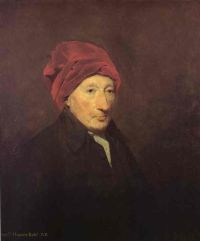 Thomas Reid,
An Inquiry into the Human Mind…
Thomas Reid,
An Inquiry into the Human Mind…
“ When reason is properly employed, she will confirm the documents of nature, which are always true and wholesome; she will distinguish, in the documents of human education, the good from the bad, rejecting the last with modesty, and adhering to the first with reverence. ”
Various, The Atlantic Monthly (1858)
“ Concede intellectual power, or the spiritual element, then add this temperament, and there follows a certain subtile, penetrative, radical quality of thought, a characteristic percipience of principles. And principles are not only seen, but felt; they thrill the nerve as well as greet the eye ”
P. Coffey, Ontology, or the Theory of Being
“ We seek knowledge in order to use it for the guidance of our conduct in life, for the orientation of our activities, for the improvement of our condition; knowing that knowledge is power, we seek it in order to make it minister to our needs. ”
Charles J. Callan, Moral Theology
“ Thus, knowledge of general principles must be applied to particular affairs, and this supposes that one knows how to reason correctly, how to infer the particular from the general, how to put facts together. ”
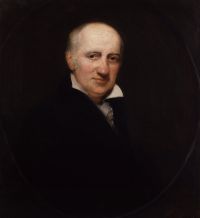 William Godwin,
Imogen: A Pastoral Romance
William Godwin,
Imogen: A Pastoral Romance
“ To what purpose was a mind so capacious, competent to the greatest improvements, and formed to comprehend subjects of the most extensive compass, or the sublimest reach, bestowed upon us, if it be not employed in the pursuits of science and experience? ”


