“ Supposing it were true and possible, it would naturally be the strongest force in the world, the most effective motive that could be devised: it would affect the whole moral outlook, and make some things easy now deemed impossible, and make some things impossible now to our shame too easy. ”
Motive force
Definition and stakes
The theme of “motive force” has been addressed by authors such as Margaret Cameron, Albert Taylor Bledsoe, Horatius Flaccus, Émile Durkheim and William Kingdon Clifford. It is often associated with terms like will, moral, character, action and desire.
Quotes about “motive force”
 Friedrich Nietzsche,
The Will to Power
“ Of such a process we have no experience, no idea." "We experience as little concerning force as a motive power, as concerning the necessity of a movement." Force is said to be the constraining element! ”
 William Kingdon Clifford,
The Scientific Basis of Morals…
“ But we distinguish this mass of passions and pleasures, desire and knowledge and pain, which makes up most of my character at the moment, from that inner and deeper motive-choosing self which is called Reason, and the Will, and the Ego; which is only responsible when motives are voluntarily chosen by directing attention to them. It is responsible only for the choice of one motive out of those presented to it, not for the nature of the motives which are presented. ”
 George Edward Moore,
Principia Ethica — Chapter V
(1903)
“ And in the second division we may distinguish between the habitual tendency to be actuated by one motive, namely, the desire to do duty for duty’s sake, and all other motives, such as love, benevolence, etc. ”
Charles Gore, The Sermon on the Mount: A Practical Exposition
“ You will find at last that one motive is dominant. Either, at the last push, he will do God’s will, or he will do that by which he thinks to serve his interests in the world. Now, what a man does at the last analysis or when pushed into a corner, that is what reveals his real motive. The motive on which he then acts is his only real master-principle. There can be only one such in a life. ”
 Leslie Stephen,
Prose Masterpieces from Modern Essayists…
(1891)
“ But is it not contrary to all common-sense to expect that the motive will retain any vital strength when the very people who rely upon it admit that it rests on the most shadowy of grounds? The other motive, which is supposed to be so incomparably weaker that it cannot be used as a substitute, has yet proved its strength in every age of the world. ”
Mary G. Ware, The elements of character
“ It is the external motive power, just as Affection is the internal motive power,—the body, of which Affection is the soul. Without earnestness, all our other powers come to naught, and we live in vain ”
 Albert Taylor Bledsoe,
A Theodicy, or, Vindication of the Divine Glory
“ The necessitarian contends that “volition, or an act of the mind, is the effect of motive, and that it is subject to the power and action of its cause.”126 The advocate of free-will replies, If we must suppose an action of motive on the mind to account for its act, we must likewise suppose another action to account for the action of motive ”
 James Mill,
Analysis of the Phenomena of the Human Mind
“ The association of the thought with the pleasurable end in view, is sufficient to influence the attention, but not sufficient to command it. The will, therefore, has to be called in, to heighten the effect. But in this case, as in every case, the will is called into action by a motive. The motive, like all other motives, is a desire. ”
George Spring Merriam, The Chief End of Man
“ Again we may say, with no pretense of probing the mystery in its depths, but as gaining a touch of side-light, it is plain that what we look at as the strictly moral forces of mankind—the clear thinking, the definite purpose, the pure aspiration—must be reckoned with as only a part of the volume of force that carries along the individual and the race. ”
 David Hume,
Philosophical Works, v. 2 (of 4…
“ This hypothesis is founded on sufficient experience. A man, who, from any motives, has entertained a resolution of performing an action, naturally runs into every other view or motive which may fortify that resolution, and give it authority and influence on the mind. To confirm us in any design, we search for motives drawn from interest, from honour, from duty. What wonder, then, that pity and benevolence, malice and anger, being the same desires arising from different principles, should so totally mix together as to be undistinguishable? ”
George Spring Merriam, The Chief End of Man
“ Other elements of that force are the physical needs; the push and play of passions ingrained in human nature; the inherited bias; the strength of habits formed before childhood had begun to reflect,—the thousand forces which blend with reason and choice to make up our destiny. ”
 Abraham Myerson,
The Foundations of Personality
“ What of the will, basic force in character and center of a controversy that will never end? Has man a free will? does his choice of action and thought come from a power within himself? Is there a uniting will, operating in our actions, a something of an integral indivisible kind, which is non-material yet which controls matter? ”
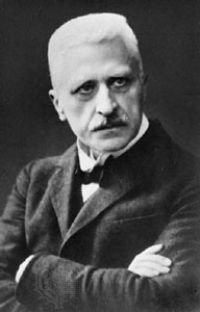 Rudolf Otto,
Naturalism and Religion
“ Let us take, for instance, a motive, m, that impels us towards a particular action, and another, n, that hinders us. If these meet in us, the result is not simply a weakening of the power of the one, and a remaining motive of the strength of m minus n. ”
 F. H. Bradley,
Ethical Studies — Essay VII.
(1876)
“ And where we act, as we say, with a motive, where we have in our minds a reason, an aim, an object beyond the act, which the act subserves, there these motives, these thoughts of ends or objects to be realized, are of very different kinds. ”

“ And so I would appeal to those who credit this power of thought to employ it responsibly, and to realise that they are all God’s atoms in the great scheme of things, and must use their personal force as a contribution to the vast thought-waves which can advance, or which, when ill directed, can sweep away a nation. ”
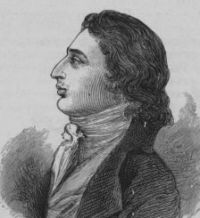 Robert Southey,
Omniana
(1812)
“ It is a matter of infinite difficulty, but fortunately of comparative indifference, to determine what a man's motive may have been for this or that particular action. Rather seek to learn what his objects in general are. What does he habitually wish? habitually pursue? and thence deduce his impulses, which are commonly the true efficient causes of men's conduct; and without which the motive itself would not have become a motive. ”
 William Edward Hartpole Lecky,
History of European Morals From Augustus to Charlemagne…
“ But this is a pursuit in which every moment employed is a moment wasted. All motives are abstractedly good. No man has ever had, can, or could have a motive different from the pursuit of pleasure or of shunning pain.”—Deontology, vol. ”
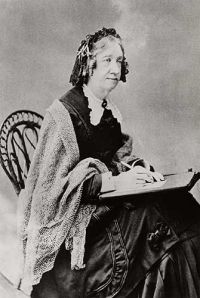 Catharine Esther Beecher,
An Appeal to the People in Behalf of Their Rights as Authorized Interpreters of the Bible
“ The first mode is so to combine circumstances of temptation as to affect the most excitable and powerful sensibilities, or to remove those objects and influences that sustain moral principle, or by a long course of training, to form habits and induce principles. The combinations of motive influences that one mind can thus bring to bear on another, as temptations to right or wrong action, are almost infinite. ”
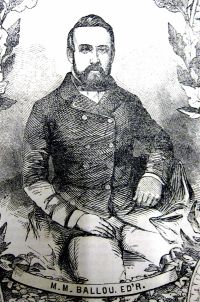 Maturin M. Ballou,
Pearls of Thought
“ Whatever touches the nerves of motive, whatever shifts man's moral position, is mightier than steam, or caloric, or lightning.—Chapin.Let the motive be in the deed and not in the event. Be not one whose motive for action is the hope of reward.—Kreeshna.We must not inquire too curiously into motives. They are apt to become feeble in the utterance: the aroma is mixed with the grosser air. We must keep the germinating grain away from the light.—George Eliot.Every activity proposes to itself a passivity, every labor enjoyment.—Jacobi. ”
Leslie Stephen,
The English Utilitarians, Volume 1…
“ A 'motive' corresponds to one of his 'springs of action.' He shows how every one of the motives included in his table may lead either to good or to bad consequences. The desire of wealth may lead me to kill a man's enemy or to plough his field for him; the [Pg 257] fear of God may prompt to fanaticism or to charity; illwill may lead to malicious conduct or may take the form of proper 'resentment,' as, for example, when I secure the punishment of my father's murderer. ”
 Percy Bysshe Shelley,
The Complete Poetical Works of Percy Bysshe Shelley…
“ Because, relying on the necessary conjunction of motive and action, he proceeds to produce moral effects, by the application of those moral causes which experience has shown to be effectual. Some actions may be found to which we can attach no motives, but these are the effects of causes with which we are unacquainted. ”
Friedrich Nietzsche,
The Genealogy of Morals
(1921 (for translation))
“ The proud knowledge of the extraordinary privilege of responsibility, the consciousness of this rare freedom, of this power over himself and over fate, has sunk right down to his innermost depths, and has become an instinct, a dominating instinct—what name will he give to it, to this dominating instinct, if he needs to have a word for it? ”
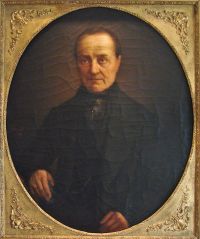 Auguste Comte,
A General View of Positivism
“ And this is the first motive, a motive founded alike on moral and on intellectual considerations, for the separation of temporal from spiritual power in the final organization of society. The more vigorously we concentrate our efforts upon social progress, the more clearly shall we feel the impossibility of modifying social phenomena without knowledge of the laws that regulate them. ”
William James, The Principles of Psychology, Volume 2…
“ All these lesser motives are appealed to, and the one ultimate motive is neglected. The ultimate motive with the man of every-day life is the will to have an external world. Whatever consciousness contains, reason will persist in spontaneously adding the thought: 'But there shall be something beyond this.'... The popular assurance of an external world is the fixed determination to make one, now and henceforth." (Religious Aspect of Philosophy, p. 304—the italics are my own.) ”
Margaret Cameron, The Seven Purposes: An Experience in Psychic Phenomena
“ Personal motives are more easily recognized than purpose, and Church and state emphasize [118] and encourage them. But the time is at hand when great conflicting purposes will meet in combat for control of men. ”
Various, Punch, or the London Charivari…
“ The complex play of action and motive—the purpose blunted by overmuch thinking, the spurs to dull revenge, the self-contempt, the assumed antic disposition, at times the real mental disturbance—all this was set before us with a fine skill and resource. ”
James Gillman, The Life of Samuel Taylor Coleridge
“ But that this is a motive, and the most impressive of motives to any given person, arises from, and supposes, a commencing state of regeneration in that person's mind and heart. That therefore which constitutes a regenerate State is the true Principle On which, or with a view to which, actions, feelings, and motives ought to be grounded. The different operations of this radical principle, (which principle is called in Scripture sometimes faith, and in other places love,) I have been accustomed to call good impulses because they are the powers that impel us to do what we ought to do. ”
Leslie Stephen,
The English Utilitarians, Volume 1…
“ The motive, or 'internal motive,' is the anticipation of pain to be avoided or pleasure to be gained. Actions are good or bad simply and solely as they are on the whole 'productive of a balance of pleasure or pain.' The problem of the legislator is how to regulate actions so as to incline the balance to the right side. His weapons are 'sanctions' which modify 'motives.' What motives, then, should be strengthened or checked? ”
Margaret Cameron, The Seven Purposes: An Experience in Psychic Phenomena
“ I am the force used by greater forces to reach the world through you. We have always been the same purpose, and I can reach you freely.” After an allusion to mental purpose, she defined it thus: “Mental purpose is the force that convinces men. Moral purpose is that which persuades them. We prefer conviction. It lasts, where persuasion fades. ”
Giovanni Gentile, The Reform of Education
“ The force of the will, the vigour of the personality, the impulse of the spirit in its becoming, this is the wondrous power which galvanises matter and organically quickens it; which sustains life, equips it, and fits it for its march towards ever renewed, ever improved finalities. It is not temperament which is the basis of character, but character which is the basis of temperament. If we reverse this proposition, every moral conception of life becomes absurd, and every spiritual value appears ineffectual. ”
“ To know how to deal with such men—to know how to use them—is the problem which ambitious force is called upon to solve. Personality, individuality, force of character, or by whatever name we choose to designate original and vigourous manhood, is the best thing which nature has in her gift. ”
Margaret Cameron, The Seven Purposes: An Experience in Psychic Phenomena
“ But as has been explained in the Lessons, the very material form you have was originally an effort to evolve a force not conquerable by purpose alone. Both good and evil forces, in your phrase—constructive and destructive, in ours—took possession of these concrete forms, and now the bitterness of the fight is greatest where both forces are represented in one individual. The only way we can fight that effectively is to sit on the job, and try to call [168] to the purpose that is ours more clearly and appealingly, or more commandingly, than the other fellow does. ”
 Friedrich Schiller,
Aesthetical Essays of Friedrich Schiller
“ In the former we oppose the individual, a sensuous and limited being, and his personal will, which can be effected pathologically, to the absolute law of the will in general, and of unconditional duty which binds every spiritual being; in the second case, on the contrary, we oppose the faculty of willing, absolute volition, and the spiritual force as an infinite thing, to the solicitations of nature and the impediments of sense. ”
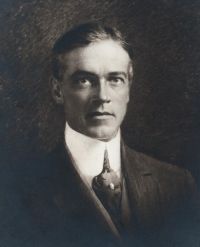 Victor Mapes,
Heart and Soul by Maveric Post
“ As a result of these influences, the character of an individual is formed, his conduct is determined. At any given time, in the presence of any given question as to what he will, or will not do, the answer will depend on the relative force, or sway, of the conflicting considerations. ”
Lucien Price, Immortal Youth: A Study in the Will to Create
“ And the shock of having to transvalue all the accepted values, of having, in a world organized on the basis of fear, to conceive of a world organized on the basis of good will, made him a thinker in his own right. ”
John Abercrombie, The Philosophy of the Moral Feelings
“ In the chain of mental operations which, in such a case, intervene between the desire and the volition, a class of agents is brought into view which act upon the mind as moral causes of its volitions;—these are usually called motives,—or principles of action. ”
T. Troward, The Edinburgh Lectures on Mental Science
“ The business of the will, then, is to retain the various faculties of our mind in that position where they are really doing the work we wish, and this position may be generalized into the three following attitudes; either we wish to act upon something, or be acted on by it, or to maintain a neutral position; in other words we either intend to project a force, or receive a force or keep a position of inactivity relatively to some particular object. ”
“ Each exercise of strength we take in resisting temptation, is the moral gymnastics that redoubles that power against the next encounter, and adds muscle and fire to all the capabilities of life. Each exercise of sense we take to discriminate between true and false life, true and false pleasure, true and false charmers, is a training of the intellect and judgment to more delicate discernments, and more virtuous and vital joys. ”
Henry Paul Mainwaring Jones, War Letters of a Public-School Boy
“ He will sometimes make a slight change in a motive, or make a development of it, that gives us an entirely different psychological impression of the idea represented by the motive, as indicating some new aspect of it in which the motives are all dovetailed together into a compact whole that is simply marvellous. ”
Earl of Dudley Ryder Harrowby, Modern Skepticism
“ We may sum the whole matter of motive in a single sentence. Motives do not make the man, but the man his motives. To conceive it otherwise would be to imagine each man a mere bundle of instincts, such instincts as we calculate with certainty in the brute animals we wish to allure, to subdue, or to destroy. ”
Joseph Haven, Mental Philosophy: Including the Intellect…
“ We find ourselves, under the influence of these motives, acting, now from desire, now from sense of duty, now in view of what is in itself agreeable, and now in view of what is right; and the various motives which influence us and result in action, may be resolved into one or the other of these powerful elements. ”
Albert Taylor Bledsoe,
A Theodicy, or, Vindication of the Divine Glory
“ Now, when the advocates of free-agency insist that motive is not the efficient cause of volition, and that mind is the efficient cause thereof, we suppose them to employ the expression, efficient cause, in one and the same sense in both branches of the proposition. ”
Related terms
Authors who wrote about “motive force”
Margaret CameronAlbert Taylor BledsoeHoratius Flaccus Émile DurkheimWilliam Kingdon Clifford
 Arthur SchopenhauerJames GillmanWilliam Edward Hartpole LeckyVictor MapesJames MillLeslie Stephen
 William ShakespeareGeorge Spring Merriam
 Ralph Waldo EmersonVariousDavid Hume
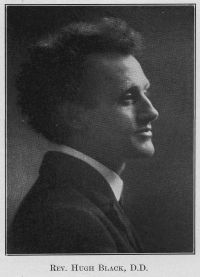 Hugh BlackFriedrich NietzscheCharles GoreRudolf Otto
Albert Taylor BledsoeHoratius FlaccusÉmile DurkheimWilliam Kingdon CliffordArthur SchopenhauerJames GillmanWilliam Edward Hartpole LeckyVictor MapesJames MillLeslie StephenWilliam ShakespeareGeorge Spring MerriamRalph Waldo EmersonVariousDavid HumeHugh BlackFriedrich NietzscheCharles GoreRudolf Otto