Mary G. Ware, The elements of character
“ It is the external motive power, just as Affection is the internal motive power,—the body, of which Affection is the soul. Without earnestness, all our other powers come to naught, and we live in vain ”
Motive power, defined as the force used to initiate movement, includes both physical energies and psychological impulses that set actions in motion. Authors have examined this concept from various perspectives: Mary G. Ware distinguished between external motive power and internal emotion, while Bulwer Lytton portrayed desire and ambition as crucial drivers of practical effort.
Nietzsche reinterpreted it as the "Will to Power," a metaphysical force underlying human behavior, and Mill associated it with social rivalry and individual ambition. These viewpoints highlight motive power as a link between mechanical energy and human initiative, demonstrating its role in both physical systems and philosophical thought. The theme therefore connects technological advancement with existential meaning, underscoring its lasting significance across fields.
Mary G. Ware, The elements of character
“ It is the external motive power, just as Affection is the internal motive power,—the body, of which Affection is the soul. Without earnestness, all our other powers come to naught, and we live in vain ”
Baron Edward Bulwer Lytton Lytton, Kenelm Chillingly — Complete
“ That essay is designed to intimate that without motive power a man, whatever his talents or his culture, does nothing practical. The mainsprings of motive power are Want and Ambition. They are absent from my mechanism. By the accident of birth I do not require bread and cheese; by the accident of temperament and of philosophical culture I care nothing about praise or blame. But without want of bread and cheese, and with a most stolid indifference to praise and blame, do you honestly think that a man will do anything practical in literature or politics? ”
 Albert Taylor Bledsoe,
A Theodicy, or, Vindication of the Divine Glory
Albert Taylor Bledsoe,
A Theodicy, or, Vindication of the Divine Glory
“ The necessitarian contends that “volition, or an act of the mind, is the effect of motive, and that it is subject to the power and action of its cause.”126 The advocate of free-will replies, If we must suppose an action of motive on the mind to account for its act, we must likewise suppose another action to account for the action of motive ”
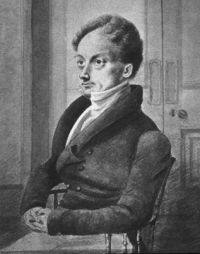 James Mill,
Analysis of the Phenomena of the Human Mind
James Mill,
Analysis of the Phenomena of the Human Mind
“ As it is not only of value to me to have more Wealth, Power, and Dignity; but of additional value to have more than other men; the surpassing of other men becomes, thus, a cause of Pleasure; and hence the idea of this surpassing, associated with the ideas of my own acts, as the cause, becomes a Motive. ”
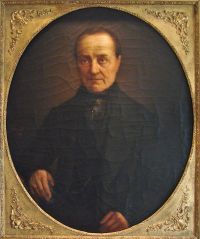 Auguste Comte,
A General View of Positivism
Auguste Comte,
A General View of Positivism
“ And this is the first motive, a motive founded alike on moral and on intellectual considerations, for the separation of temporal from spiritual power in the final organization of society. The more vigorously we concentrate our efforts upon social progress, the more clearly shall we feel the impossibility of modifying social phenomena without knowledge of the laws that regulate them. ”
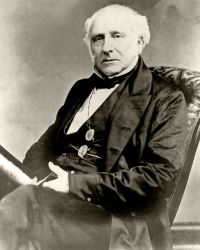 David Salomons,
Lippincott's Monthly Magazine
(1890)
David Salomons,
Lippincott's Monthly Magazine
(1890)
“ Apart from the rapidity and ease with which motive power may be installed wherever it may be desired, there are also eliminated the dangers, disadvantages, and complications which exist more or less in connection with the forms of motive power hitherto employed. ”
 Thomas Hill Green,
Lectures on the Principles of Political Obligation
Thomas Hill Green,
Lectures on the Principles of Political Obligation
“ If, however, because this is so, we answer the question whether a man has power over his will, or is free to will, in the negative, [1] we at once suggest the conclusion that something else has power over it, viz. the strongest motive. We ignore the truth that in being determined by a strongest motive, in the only sense in which he is really so determined, the man (as previously explained) [2] is determined by himself, by an object of his own making, and we come to think of the will as determined like any natural phenomenon by causes external to it. ”
Baron Edward Bulwer Lytton Lytton, The Parisians — Volume 07
“ I rub the lamp, 'the genius comes.'""I have read in some English author that motive power is necessary to continued labour: you have motive power, I have none.""I do not quite understand you.""I mean that a strong ruling motive is required to persist in any regular course of action that needs effort: the motive with the majority of men is the need of subsistence ”
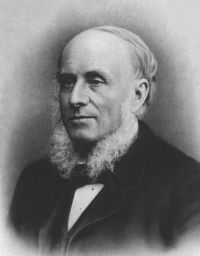 Alexander Bain,
Popular Science Monthly
(1878)
Alexander Bain,
Popular Science Monthly
(1878)
“ The power exercised is of a mixed character and the several elements admit of being singled out. The social motive, in its pure form of gregarious attraction and mutual sympathy, does not stand alone. ”
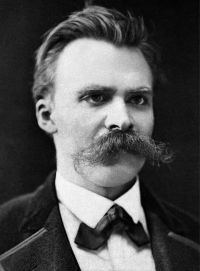 Friedrich Wilhelm Nietzsche,
The Will to Power: An Attempted Transvaluation of All Values…
Friedrich Wilhelm Nietzsche,
The Will to Power: An Attempted Transvaluation of All Values…
“ Do ye also want a light, ye most concealed, strongest and most undaunted men of the blackest midnight?—This world is the Will to Power—and nothing else! And even ye yourselves are this will to power—and nothing besides! ”
Charles Gore, The Sermon on the Mount: A Practical Exposition
“ You will find at last that one motive is dominant. Either, at the last push, he will do God’s will, or he will do that by which he thinks to serve his interests in the world. Now, what a man does at the last analysis or when pushed into a corner, that is what reveals his real motive. The motive on which he then acts is his only real master-principle. There can be only one such in a life. ”
 Abraham Myerson,
The Foundations of Personality
Abraham Myerson,
The Foundations of Personality
“ What of the will, basic force in character and center of a controversy that will never end? Has man a free will? does his choice of action and thought come from a power within himself? Is there a uniting will, operating in our actions, a something of an integral indivisible kind, which is non-material yet which controls matter? ”
 Friedrich Nietzsche,
The Genealogy of Morals
(1921 (for translation))
Friedrich Nietzsche,
The Genealogy of Morals
(1921 (for translation))
“ The proud knowledge of the extraordinary privilege of responsibility, the consciousness of this rare freedom, of this power over himself and over fate, has sunk right down to his innermost depths, and has become an instinct, a dominating instinct—what name will he give to it, to this dominating instinct, if he needs to have a word for it? ”
Theron Q. Dumont, The Power of Concentration
“ Put these suggestions into practice with true earnestness, and you will soon note astonishing results, and your whole life will be completely changed. An excellent motto for one of pure motives is: Through my will power I dare do what I want to. ”
 William Kingdon Clifford,
The Scientific Basis of Morals…
William Kingdon Clifford,
The Scientific Basis of Morals…
“ But we distinguish this mass of passions and pleasures, desire and knowledge and pain, which makes up most of my character at the moment, from that inner and deeper motive-choosing self which is called Reason, and the Will, and the Ego; which is only responsible when motives are voluntarily chosen by directing attention to them. It is responsible only for the choice of one motive out of those presented to it, not for the nature of the motives which are presented. ”
J. D. Buck, The New Avatar and The Destiny of the Soul
“ It is domination, the mastery, so far as it goes or exists at all, of the will, voluntary powers, and sensory organs of one individual, by the will of another; thus reversing completely the process of nature.To dominate the will of another is to weaken it. Timidity, apprehension, fear, are in inverse ratio to confidence, self-assurance, courage, and self-control.Health, happiness, and self-development lie along the lines of man’s higher evolution, and the basic principle, the primary power, the minister of state, is the rational and intelligent Will. ”
 Leslie Stephen,
Prose Masterpieces from Modern Essayists…
(1891)
Leslie Stephen,
Prose Masterpieces from Modern Essayists…
(1891)
“ But is it not contrary to all common-sense to expect that the motive will retain any vital strength when the very people who rely upon it admit that it rests on the most shadowy of grounds? The other motive, which is supposed to be so incomparably weaker that it cannot be used as a substitute, has yet proved its strength in every age of the world. ”
Friedrich Nietzsche,
Thus Spake Zarathustra
(1917)
“ Of its own accord must it ever overcome itself anew. With your values and formulae of good and evil, you exercise power, you valuing ones: and that is your secret love, and the sparkling, trembling, and overflowing of your souls. ”
“ It is, in fact, the pleasure of exercising power. I do not mean arbitrary, personal authority, but the power to produce, by successful but quiet contrivance, extensive and happy results;—the pleasure of calmly considering every difficulty, and without irritation or anger, devising the proper moral means to remedy the moral evil: and then the interest and pleasure of witnessing its effects. ”
Leslie Stephen,
The English Utilitarians, Volume 1…
“ The motive, or 'internal motive,' is the anticipation of pain to be avoided or pleasure to be gained. Actions are good or bad simply and solely as they are on the whole 'productive of a balance of pleasure or pain.' The problem of the legislator is how to regulate actions so as to incline the balance to the right side. His weapons are 'sanctions' which modify 'motives.' What motives, then, should be strengthened or checked? ”
Sir Edward Tyas Cook, The Life of Florence Nightingale…
“ He will find that influenced by higher motives you have no desire to employ your influence for any other purpose than to do all the good you can in the work which you have chosen, and that the absence of personal motive it is which gives you the courage and the right to speak fearlessly the whole truth, and to persevere in the direct line of duty whatever may be the difficulties or the obstacles. ”
 David Hume,
Philosophical Works, v. 2 (of 4…
David Hume,
Philosophical Works, v. 2 (of 4…
“ This hypothesis is founded on sufficient experience. A man, who, from any motives, has entertained a resolution of performing an action, naturally runs into every other view or motive which may fortify that resolution, and give it authority and influence on the mind. To confirm us in any design, we search for motives drawn from interest, from honour, from duty. What wonder, then, that pity and benevolence, malice and anger, being the same desires arising from different principles, should so totally mix together as to be undistinguishable? ”
Thomas Alfred Spalding, Elizabethan Demonology
“ But can we, with all our boasted advantages of wealth, power, and knowledge, truly say that all our aims are as high, all our desires as pure, our words as true, and our deeds as noble, as those whose opinions we feel this tendency to contemn? ”
Giovanni Gentile, The Reform of Education
“ The force of the will, the vigour of the personality, the impulse of the spirit in its becoming, this is the wondrous power which galvanises matter and organically quickens it; which sustains life, equips it, and fits it for its march towards ever renewed, ever improved finalities. It is not temperament which is the basis of character, but character which is the basis of temperament. If we reverse this proposition, every moral conception of life becomes absurd, and every spiritual value appears ineffectual. ”
 John Stuart Mill,
Autobiography
John Stuart Mill,
Autobiography
“ I saw that though our character is formed by circumstances, our own desires can do much to shape those circumstances; and that what is really inspiriting and ennobling in the doctrine of freewill is the conviction that we have real power over the formation of our own character; that our will, by influencing some of our circumstances, can modify our future habits or capabilities of willing. ”
 George William Rusden,
Moyarra: An Australian Legend in Two Cantos
(1891)
George William Rusden,
Moyarra: An Australian Legend in Two Cantos
(1891)
“ Then everything includes itself in power; Power into will, will into appetite; And appetite, an universal wolf. So doubly seconded with will and power, Must make perforce an universal prey. And, last, eat up himself. ”
 George Edward Moore,
Principia Ethica — Chapter V
(1903)
George Edward Moore,
Principia Ethica — Chapter V
(1903)
“ And in the second division we may distinguish between the habitual tendency to be actuated by one motive, namely, the desire to do duty for duty’s sake, and all other motives, such as love, benevolence, etc. ”
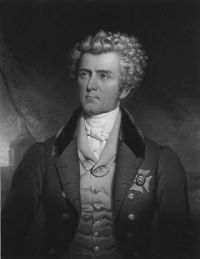 Sir Francis Bond Head,
Bubbles from the Brunnens of Nassau
Sir Francis Bond Head,
Bubbles from the Brunnens of Nassau
“ One sees but little,—yet that little, caught here and there, so much resembles some of the attributes of the Great Power which created us, that the mind, trembling under the immensity of the conceptions it engenders, is lost in feelings which human beings cannot impart to each other. ”
Anonymous, The Young Lady's Mentor
“ For all other intellectual efforts, however, either of the understanding or the fancy, and requiring a thorough knowledge either of man's strength or his weakness, we apprehend them to be, in all respects, as well qualified as their perceptions of grace, propriety, ridicule—their power of detecting artifice, hypocrisy, and affectation—the force and promptitude of their sympathy, and their capacity of noble and devoted attachment, and of the efforts and sacrifices it may require, they are, beyond all doubt, our superiors. ”
Chautauqua Institution, The Chautauquan, Vol. 05, April 1885
“ The will power is man’s, not that of the brute. The rational, voluntary agent, having conscience, moral ideas, sensibilities, and emotions, is, under law, blame- or praiseworthy, and personally responsible for what he is and does. ”
 Annie Payson Call,
The Freedom of Life
Annie Payson Call,
The Freedom of Life
“ Behind an our desires, aversions, and inclinations each one of us possesses a capacity for a higher will, the exercise of which, on the side of order and righteousness, brings into being the greatest power in human life. ”
 Albert J. Beveridge,
The Young Man and the World
Albert J. Beveridge,
The Young Man and the World
“ There comes to you an acquisition of power. Your influence, by a process which escapes any human analysis, reaches out over your associates, and, in proportion to the magnitude of your character, over humanity. ”
 Edward L. Pierce,
The Freedmen at Port Royal
(1863)
Edward L. Pierce,
The Freedmen at Port Royal
(1863)
“ Let those who would study well this social question, or who in public trusts are charged with its solution, be most careful here. Every motive in the minds of these people, whether of instinct, desire, or duty, must be addressed. ”
Lewis E. Gates, Three studies in literature (1899)
“ He believes, to be sure, in a “power not ourselves that makes for righteousness”; but his interest in this power and his comments upon it confine themselves almost wholly to its plain and palpable influence upon human conduct. ”
William Winter, Shadows of the Stage
“ The element of power, in all the expressions of such a mind, will fluctuate; but every one of its expressions will be sincere and in a greater or less degree will be vital with a universal and permanent significance. ”
Lucien Price, Immortal Youth: A Study in the Will to Create
“ And the shock of having to transvalue all the accepted values, of having, in a world organized on the basis of fear, to conceive of a world organized on the basis of good will, made him a thinker in his own right. ”
William Hazlitt, The Collected Works of William Hazlitt…
“ But if this analogy holds with respect to secondary and artificial motives which are not in their own nature allied to action, surely it must hold much more with respect to the direct, original motives themselves, the ideas of good and evil, where the power inheres in the very nature of the object. ”
Margaret Cameron, The Seven Purposes: An Experience in Psychic Phenomena
“ Personal motives are more easily recognized than purpose, and Church and state emphasize [118] and encourage them. But the time is at hand when great conflicting purposes will meet in combat for control of men. ”
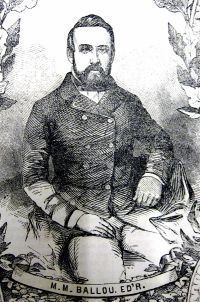 Maturin M. Ballou,
Pearls of Thought
Maturin M. Ballou,
Pearls of Thought
“ Whatever touches the nerves of motive, whatever shifts man's moral position, is mightier than steam, or caloric, or lightning.—Chapin.Let the motive be in the deed and not in the event. Be not one whose motive for action is the hope of reward.—Kreeshna.We must not inquire too curiously into motives. They are apt to become feeble in the utterance: the aroma is mixed with the grosser air. We must keep the germinating grain away from the light.—George Eliot.Every activity proposes to itself a passivity, every labor enjoyment.—Jacobi. ”
Various, Graham's Magazine, Vol. XX, No… (1842)
“ With all his various powers, he wants the one great power—the power of truth! He wants, too, that ennobling principle of all human endeavors, the aspiration “after an ideal standard, that is higher than himself.” In a word, he wants sincerity and spirituality. ”
 Bertrand Russell,
Roads to freedom
(1918)
Bertrand Russell,
Roads to freedom
(1918)
“ But the power which consists in persuasion, in teaching, in leading men to a new wisdom or the realization of new possibilities of happiness—this kind of power, which may be wholly beneficial, would remain untouched, and many vigorous men, who in the actual world devote their energies to domination, would in such a world find their energies directed to the creation of new goods rather than the perpetuation of ancient evils. ”
John Stuart Mill,
A System of Logic, Ratiocinative and Inductive
(1881)
“ To train the human being in the habit, and thence the power, of subordinating his personal impulses and aims to what were considered the ends of society; of adhering, against all temptation, to the course of conduct which those ends prescribed ”
 Ralph Waldo Emerson,
Essays: First Series — Circles
(1841)
Ralph Waldo Emerson,
Essays: First Series — Circles
(1841)
“ This fact, as far as it symbolizes the moral fact of the Unattainable, the flying Perfect, around which the hands of man can never meet, at once the inspirer and the condemner of every success, may conveniently serve us to connect many illustrations of human power in every department. ”
“ And so I would appeal to those who credit this power of thought to employ it responsibly, and to realise that they are all God’s atoms in the great scheme of things, and must use their personal force as a contribution to the vast thought-waves which can advance, or which, when ill directed, can sweep away a nation. ”
 Howard Pyle,
A Modern Aladdin; or, The Wonderful Adventures of Oliver Munier
Howard Pyle,
A Modern Aladdin; or, The Wonderful Adventures of Oliver Munier
“ This learned scholar held that the power of man's will was such that, under certain circumstances, it could be so far impressed upon those diffused forces of life about us as to materialize or concentrate them, and so render them cognizant to the human understanding, or, in other words, visible. ”
 James Frederick Ferrier,
Blackwood's Magazine
(1838)
James Frederick Ferrier,
Blackwood's Magazine
(1838)
“ We must commence, then, by liberating our ordinary consciousness from the control or domineering action of outward objects. Thus commencing at the very circumference of man, we shall clear out an enlarged atmosphere of freedom around that true and sacred centre of his personality—his character, namely, as a moral and accountable agent. ”
 Daniel WebsterAlbert Taylor BledsoeWilliam Kingdon CliffordAlexander BainThomas Hill GreenJames MillRalph Waldo EmersonFriedrich NietzscheVarious
 Jacob AbbottBaron Edward Bulwer Lytton LyttonLeslie StephenJohn Stuart MillWilliam HazlittFriedrich Wilhelm NietzscheAuguste ComteDavid SalomonsJ. D. BuckSir Edward Tyas CookCharles Gore
