Mould (casting)

Definition and stakes

James Nasmyth,  James Nasmyth, Engineer: An Autobiography

“ I soon had the metal mould ready for casting. It consisted of a base plate of cast iron, on the surface of which I placed a ring or hoop of iron turned to fully the diameter of the intended speculum, so as to anticipate the contraction of the alloy. The result of the very first trial of this simple metal mould was most satisfactory. It yielded me a very perfect casting: and it passed successively through the ordeal of the first rough grinding, and eventually through the processes of polishing, until in the end it exhibited a brilliancy that far exceeded that of the sand mould castings. ”

Source: Gutenberg

Chicago American Bureau of Engineering,  Profits from scrap

“ Always be sure there is enough melted lead in the ladle to completely fill the mould, before starting to pour.
The mould can now be easily opened by pulling on the handles especially if it has been properly dusted with the Ambu Mould Compound.
After the mould is opened, Figure 8, the castings are easily removed, without damage to either the mould or the casting proper. The workman does not, at any time, handle the hot parts of the mould or the hot castings.
”
Source: Gutenberg

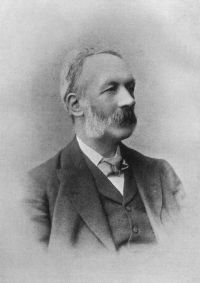
Portrait of John Evans John Evans,  The Ancient Bronze Implements, Weapons…

“ There is in the upper part of the mould when put together a transverse hole, which would produce what may be termed trunnions on the clay core, and assist materially in holding it in proper position during the process of casting. From the upper surfaces of the gouges found with the mould, it appears that there were two channels cut for the runners of metal, one at the middle of each half of the mould, so as to alternate with the joint of the mould through which the air could escape during the casting process. ”
Source: Gutenberg

Get perspective with Kwize: daily news enlightened by great literature