“ If, therefore, the lungs be rarely called into active exercise, not only do they suffer, but an important aid to digestion being withdrawn, the stomach and bowels also become weakened, and indigestion and costiveness ensue.The exercise of what has not unaptly been called Vocal Gymnastics, and the loud and distinct speaking enforced in many of our schools, not only fortify the vocal organs against the attacks of disease, but tend greatly to promote the general health. For this purpose, also, as well as for its social and moral influences, vocal music should be introduced into all our schools. ”
Music stool
Definition and stakes
The theme of “music stool” has been addressed by authors such as Sidney Licht, Carl Engel, Conrad Aiken, Marion Bauer and W. H. Hadow. It is often associated with terms like piano, musical, organ, instrument and hospital.
Quotes about “music stool”
Carl Engel, Musical Myths and Facts, Volume 2…
“ He asserts that music has healed many a sufferer whose life was embittered by the fetters of melancholia, or the tortures of hypochondria. To persons suffering from indigestion and its harassing effects, he recommends a daily practice on some instrument which requires a rather fatiguing exertion of the body; such as the organ, on which hands and feet are occupied. His remarks on singing are judicious; but many of them would naturally suggest themselves to any thinking musician. ”
 Robert Means Lawrence,
Primitive Psycho-Therapy and Quackery
“ For the latter exerts a powerful influence upon the higher cerebral centres, and thence, through the sympathetic nervous system, upon other portions of the body. Indeed the entire working of the human mechanism, physical and psychical, may be aided by the beautiful art of music. With some people the digestion is facilitated by hearing music. ”
Sidney Licht, Music in Medicine (1946)
“ Even the untrained will find some interest in the timbre of the notes and the qualities of sound emitted with the pulling of different stops. The lingering sounds and the novelty of playing an organ which is no longer a commonplace in the home, are great incentives to playing. Instruction on the organ, which has a smaller keyboard and slower manipulation than the piano, is pleasant and simple. For combined upper and lower extremity disabilities, the organ is an excellent instrument. Every hospital music department should own one. ”
“ And if—as in our Western civilization—the men have made their own elephants, why should they be chased by them?There are some of us who have wondered a little at the comparative inferiority of organ music. We have come to the conclusion that perhaps organ music is inferior because it has been largely composed by organists, by men who sit at organ machines many hours a day, and who have let their organ machines with all their stops and pedals, and with all their stop-and-pedal-mindedness, select out of their minds the tones that organs can do best—the music that machines like. ”
Various, The Art of Music - Vol. 7 (of 14… (1915)
“ Therefore we find in organ music, rapid scales, arpeggios rising from depths, falling from heights, new figures especially suited to the organ, such as the ‘rocking’ figure upon which Bach built his well-known organ fugue in D minor; deep pedal notes, which endure immutably while above them the artist builds a castle of sounds; interlinked chords marching up and down the keyboard, strong with dissonance. There are trills and ornamental turns, rapid thirds and sixths. And in all these things organ music displays what is its own, not what it has inherited from choral music. ”
 Woods Hutchinson,
A Handbook of Health
“ All the musical instruments in the world, from the penny whistle to the grand piano, are but poor imitations of the human music box. The bellows, of course, of the human pipe organ are the lungs; while the tongue furnishes the stops; and the throat, mouth, and nose, the resonance, or sounding, chambers. ”
Sidney Licht, Music in Medicine (1946)
“ If certain criteria are observed music can be relaxing. The elements which increase relaxation are melody, rhythm, and softness. If the music which accompanies meals is carefully selected it can make eating more pleasurable, and this is desirable for patients in the hospital.Mealtime music must be unobtrusive. It must lack stimulating qualities which attract attention. If the diner can promptly name the selection played five minutes earlier, that piece was too impressive in score or performance. Perhaps the most suitable form of dinner music is that played by a small string ensemble. ”
Robert Means Lawrence,
Primitive Psycho-Therapy and Quackery
“ Thus our music-food is selected and distributed where it is most needed, and this natural selection of musical vibrations acts specifically upon those parts of the body which are out of harmony. A concert programme is a menu for the multitude. We hear all the music printed on it, but digest very little of it. Some kinds of music thus heard, must inevitably be wasted on the listener, or cause a musical dyspepsia. ”
 Waldo David Frank,
Virgin Spain
(1926)
“ The male music works. The stomach, sudden, as if in unseen violation, wrenches, cascades, in passional response. The shrilling pipes are visited whole upon the naked women. They shriek: their cry, overtoned, fluted, pulsant, marries flesh and iron: blots out the music, and the music falls. ”
 Mabel Osgood Wright,
People of the Whirlpool
“ As we stood on the corner of Rector Street and Broadway, hesitating whether to take surface or elevated cars, faint strains of organ music from Trinity attracted us."Service or choir practice; let us go in a few moments," said Evan, to whom the organ is a voice that never fails to draw. We took seats far back, and lost ourselves among the shadows. ”
Sidney Licht, Music in Medicine (1946)
“ The filling of the stomach is in itself a soporific. Warmth, darkness, and physical relaxation increase the tendency to sleep. Since there is no universally sleep-inducing music, music should be avoided at this time. It may keep some awake. If the patient is in a private room and is willing to be played to sleep it should be attempted. It must be remembered that if the music is sufficiently interesting or if the reproduction is poor or scratchy it may prolong wakefulness or even prevent sleep. ”
The art of music, Vol. 05 (of 14… (1915)
“ The slightest indisposition of any kind is almost invariably reflected in the voice. Under the conditions in which people in the usual walks of life are placed, slight colds and trifling upset states of the digestive [Pg 19] organs are a matter of almost no concern. But with the professional singer conditions are entirely different. So delicate and finely adjusted are the laryngeal muscles of the cultivated voice that their ‘tone’ may be upset by apparently insignificant causes. The mucous membranes of the larynx and throat are also highly sensitive to severe and unfavorable conditions. ”
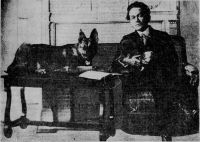 Royal Dixon,
The Human Side of Animals
“ In view of these facts, it is easy to see how animals, with their nervous temperaments and ready response to outside stimuli, are greatly influenced by various kinds of music. It is scientifically recognised that music tends to increase the elimination of carbonic acid and increases not only the consumption of oxygen, but even the activities of the skin. There is no doubt that good music at meal time aids the digestion. ”
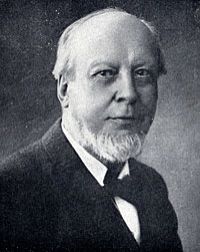 Dudley Buck,
The Influence of the Organ in History
“ While the improvement of the organ, as respects both tone, mechanism and general capabilities, continued, and still continues at the present day, it is noteworthy that from the time of Bach, of all others, the influence of the organ upon music at large began to diminish. From this point we have to consider the decline of this influence, showing that music began to emancipate itself, each instrument claiming and receiving its own especial rights and treatment, long before a similar dawn of liberty began in the political world. ”
George Laing Miller, The Recent Revolution in Organ Building
“ In the case of the organ, the pressure with which the keys are struck does not need to be recorded or reproduced, but instead of this, we have to operate the various stops or registers and the various swell shades if we would obtain a faithful reproduction mechanically of the piece of music played by an artist on the organ. ”
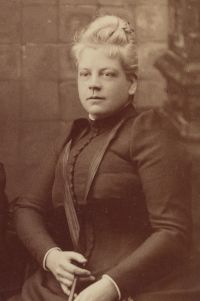 Isabel Florence Hapgood,
Russian Rambles
“ Rendered as it invariably is by male voices, with superb basses in place of the non-existent organ, it spoils one's taste forever for the elaborate, operatic church music of the West performed by choirs which are usually engaged in vocal steeplechases with the organ for the enhancement of the evil effects. ”
Sidney Licht, Music in Medicine (1946)
“ We must keep uppermost in our minds the goal of music for bed-ridden or chronically hospitalized patients. They look to music as a morale-booster and a source of enjoyment. Most people have favorite songs, but the degree of desire for them or for any music will fluctuate with the time of day, the kind of day, and many other considerations. The taste of the patient will vary not only with age, training, nationality and home back-ground, but with such intrinsic and unfathomable things as personality and thinking habits. ”
H. Ernest Hunt, Spirit and Music
“ There is a technical alteration of the working of the vocal chords at a certain pitch, but with a rightly-used voice this is automatic and unfelt: the whole body is full of such wonderful adjustments. To be called upon to deal consciously with such details is generally proof that they have gone wrong. Your attention to your digestion is enforced by dyspepsia: nobody notices a perfectly acting digestion. ”
J. Church, The Morning of Spiritual Youth Improved…
“ There are three several kind of organs that do more immediately, yet distinctly and gradually, conduce to the production of vocal Music; the first is the Lungs, which are the proper instruments of our breathing; the second sort of organs that conduce to music, are such as form the Breath into the Voice, or Respiration, the Tongue, the Palate of the Mouth, the Teeth, especially the four Front Teeth, and, lastly, the Lips: these form the sound into a Voice ”
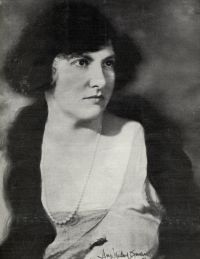 Marion Bauer,
How music grew
(1925)
“ So we see how one invention led to another until the organ became an instrument of almost unlimited possibilities, and how keyed instruments had shown the composers how to develop music along new lines. By the end of the 16th century, organ compositions and organ-playing had made rapid progress all over Europe, and you will recall the great organists in all the churches and cathedrals in the Netherlands, in England, Italy, France, Spain, and even in Germany which up to this time had not been on the “musical map.” ”
“ TWO INSTANCES OF THE SURPRISING EFFECTS OF MUSIC, AS RELATED IN THE HISTORY OF THE ROYAL ACADEMY OF SCIENCES, AT PARIS. A famous musician, and great composer, was taken ill of a fever, which gradually increased, till the 7th day, when he was seized with a violent delirium, almost constantly accompanied by cries, tears, terrors, and a perpetual watchfulness. The third day of his delirium, one of those natural instincts, which makes, as it is said, sick animals seek out for the herbs that are proper for their case, set him upon desiring [Pg 39] earnestly to hear a little concert in his chamber. ”
Sidney Licht, Music in Medicine (1946)
“ Entertainment. Musical entertainment on the ward may take the form of patient participation or “live” music. For patient participation, there is nothing to equal ward sings. The music aide may use either the record-player in the music cart or, preferably, a portable instrument such as a small piano organ, or accordion. The words of the songs may be mimeographed or flashed on a screen, wall, or ceiling with a small projector. Hymn books or other books of songs may also be used to advantage. Songs should be chosen for their popularity and familiarity. ”
Sidney Licht, Music in Medicine (1946)
“ Some bed patients are too ill to listen to music. It is possible that judiciously offered music might be of value to all patients but it is safer to deny a few in the absence of expert medical guidance than to disturb the sick. ”
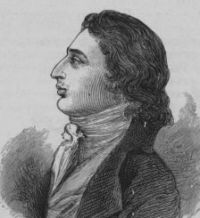 Robert Southey,
The doctor, &c., vol. 7 (of 7)
(1834)
“ Next to this it imported to comfort the stomach, and to cherish the root of man, that is to say the brain, with its proper corroborants, especially with sweet odours and with music. For music was so good a remedy for melancholy, so great an alleviator of pain, such a soother of uneasy emotions, and of passion, that she marvelled wherefore so excellent a medicine should not be more in use, seeing that undoubtedly many grievous diseases, as for example epilepsy, might be disarmed and cured by it ”
Carl Engel, Musical Myths and Facts, Volume 2…
“ But also the direct influence which the cultivation of music may exercise upon the body is not insignificant, considered medically. Thus, for instance, singing, if judiciously practised, is conducive to health, inasmuch as it benefits the lungs and the chest; and the playing on certain musical instruments is salutary, while on others it is injurious. Moreover, in combination with dancing, music is likely to prove in some complaints an efficacious remedy. ”
Sidney Licht, Music in Medicine (1946)
“ When one considers the number and variety of hospitals in this country, it is difficult to imagine a kind of music which can not find a place in at least one of them, but, for reasons which seem more obvious to musicians than physicians, music has been used in the past almost exclusively for patients suffering from mental illness. During the past few decades, hospitals have given increasing attention to music, and in some instances have developed impressive programs. ”
Sidney Licht, Music in Medicine (1946)
“ In the hospital occupational therapy shop, music may originate from the public address system, a record player, or the radio. It would seem that the most suitable in the average hospital would be the use of the radio, which the therapist can change at intervals of fifteen minutes or longer in an attempt to get unexciting music at a low volume level.FOOTNOTES: [Pg 82] [III.] The use of industrial music is not to be confused with working songs. Working songs are those sung by groups performing tedious or strenuous work to help them maintain good rhythm and spirit. ”
Sidney Licht, Music in Medicine (1946)
“ Altshuler [2] points out that the seat of all sensation, emotion, and esthetic feeling (the thalamus) is not involved in mental illness, and is directly attacked by music. The musical stimulation of the thalamus automatically transfers from this “below awareness” level to the brain cortex. ”
Sidney Licht, Music in Medicine (1946)
“ In treating these patients an attempt is often made to promote an interest in real things and social consciousness. It is necessary to stimulate attention and redirect it to things outside the patient. Music has a more important place in this disease than in any other mental condition, and this disease may account for more than half the population of many mental hospitals. ”
Frank E. Miller, The Voice: Its Production, Care and Preservation
“ Like the respiration, the alimentation ought to be watched by the singer. As much as possible during the process of digestion no violent or prolonged singing-exercise should be undertaken. Digestive troubles are often the cause of deterioration of the voice, either because the swelling and distension of the stomach by gas trammels the play of the diaphragm, and consequently that of the lungs, or because intestinal troubles bring on constipation or diarrhœa. ”
Thomas Jefferson Ritter, Mother's Remedies
“ An instrument in the hands of a careful man is all right. They can be stretched by the fingers or the Wales' bougie, thus: Patients should come to the office two or three times a week, the instrument (bougies) are introduced and allowed to remain within the bowel until the muscle resistance is overcome, and many times their withdrawal will soon be followed by a copious stool. ”
 Adelaide Anne Procter,
Legends and Lyrics. Part 2
“ Seated one day at the Organ, I was weary and ill at ease, And my fingers wandered idly Over the noisy keys.I do not know what I was playing, Or what I was dreaming then; But I struck one chord of music, Like the sound of a great Amen. ”
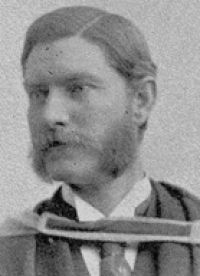 Wesley Mills,
Voice production in singing and speaking…
“ All this is a result of reflex action—i.e., outgoing messages set up by ingoing ones—the "centre" being either the brain or the spinal cord. From all this it is evident that the singer or speaker must guard against everything unfavorable, to an extent that an ordinary person need not. The stomach, as the diagram is also meant to show, may express itself on the brain, and give rise, as in fact it often does, owing to indiscretion in eating, to unpleasant outward effects on the muscles required in singing or speaking. ”
Related terms
Authors who wrote about “music stool”
Sidney LichtCarl Engel Conrad AikenMarion BauerW. H. Hadow
 Wolfgang Amadeus Mozart
 Henry Edward KrehbielRobert Means LawrenceDudley Buck
 Wassily Kandinsky
 Friedrich NietzscheRoyal Dixon
 Henry David Thoreau
 George Eliot
 Alfred NoyesMabel Osgood WrightThomas Jefferson RitterWaldo David FrankWoods HutchinsonVarious
Conrad AikenMarion BauerW. H. HadowWolfgang Amadeus MozartHenry Edward KrehbielRobert Means LawrenceDudley BuckWassily KandinskyFriedrich NietzscheRoyal DixonHenry David ThoreauGeorge EliotAlfred NoyesMabel Osgood WrightThomas Jefferson RitterWaldo David FrankWoods HutchinsonVarious