Neuroplasticity

Definition and stakes

William James,  Habit (1914)

“ The only thing they can do, in short, is to deepen old paths or to make new ones; and the whole plasticity of the brain sums itself up in two words when we call it an organ in which currents pouring in from the sense-organs make with extreme facility paths which do not easily disappear. For, of course, a simple habit, like every other nervous event—the habit of snuffling, for example, or of putting one’s hands into one’s pockets, or of biting one's nails—is, mechanically, nothing but a reflex discharge; and its anatomical substratum must be a path in the system. ”
Source: Wikisource

William James,  The Principles of Psychology, Volume 1…

“ If habits are due to the plasticity of materials to outward agents, we can immediately see to what outward influences, if to any, the brain-matter is plastic. Not to mechanical pressures, not to thermal changes, not to any of the forces to which all the other organs of our body are exposed; for nature has carefully shut up our brain and spinal cord in bony boxes, where no influences of this sort can get at them. She has floated them in fluid so that only the severest shocks can give them a concussion, and blanketed and wrapped them about in an altogether exceptional way. ”
Source: Gutenberg

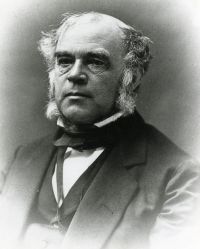
Portrait of Herbert Spencer Herbert Spencer,  The Factors of Organic Evolution

“ Who would have imagined that the nervous system is a modified portion of the primitive epidermis? In the absence of proofs furnished by the concurrent testimony of embryologists during the last thirty or forty years, who would have believed that the brain arises from an unfolded tract of the outer skin, which, sinking down beneath the surface, becomes imbedded in other tissues and eventually surrounded by a bony case? Yet the human nervous system in common with the nervous systems of lower animals is thus originated. ”
Source: Gutenberg

Get perspective with Kwize: daily news enlightened by great literature