Object (grammar)

Definition and stakes

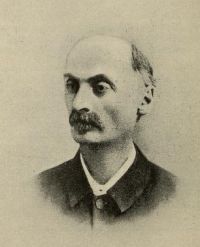
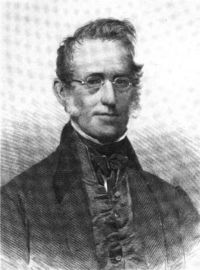
Portrait of Goold Brown Goold Brown,  The Grammar of English Grammars (1882)

“ Thirdly, "the consideration of an object as one," is but idle waste of thought; for, that one thing is one,--that an object is one object,--every child knows by intuition, and not by "consideration." Lastly, to consider "an object as more" than one, is impossible; unless this admirable definition lead us into a misconception in so plain a case! So much for the art of "the grammatical definer." ”
Source: Wikisource

Portrait of Goold Brown Goold Brown,  The Grammar of English Grammars

“ The objective case is that form or state of a noun or pronoun which usually denotes the object of a verb, participle, or preposition: as, I know the boy, having seen him at school; and he knows me.
The object of a verb, participle, or preposition, is that which answers to whom or what after it; as, "I know the boy."—I know whom? "The boy." Boy is therefore here in the objective case.
The nominative and the objective of nouns, are always alike in form, being distinguishable from each other only by their place in a sentence, or by their simple dependence according to the sense.
”
Source: Gutenberg

Portrait of Goold Brown Goold Brown,  The Grammar of English Grammars

“ Then, resolving that each word ought to be classed according to the meaning which its etymology fixes upon it, he refers the number of classes to nature, thus: "If, then, each [word] has a meaning, and is capable of raising an idea in the mind, that idea must have its prototype in nature. It must either denote an exertion, and is therefore a verb; or a quality, and is, in that case, an adjective; or it must express an assemblage of qualities, such as is observed to belong to some individual object, and is, on this supposition, the name of such object, or a noun. ”
Source: Gutenberg

Get perspective with Kwize: daily news enlightened by great literature