Ox cart

Definition and stakes

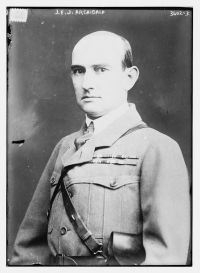
Portrait of James F. J. Archibald James F. J. Archibald,  Blue Shirt and Khaki: A Comparison

“ The ox-carts and great trek-wagons were chiefly used for commissary supplies, but they were so heavy as to be unsuitable for the work. An ox-cart was drawn by a span of sixteen or twenty animals, while the army wagon was drawn by ten mules. This was almost twice the number necessary, and the superfluous stock greatly delayed the operations, for it could not carry much more than its own feed. Those mules were much smaller than our big army mules, but six would have been ample for any ordinary160 load. When more are used, there is a great amount of energy lost. ”
Source: Gutenberg

W. G. Burn Murdoch,  From Edinburgh to India & Burmah

“ After some time another shooter arrived behind two white oxen, taking both sides of the road in a sort of big governess cart. Then Boots, who had hunted out a man Monteith, came up in a third dumbie, as their ox carts are called here. These go like anything if you can keep them in the straight, but the oxen are dead set on bolting right or left up any road or compound [Pg 138] avenue. ”
Source: Gutenberg

Various,  Lippincott's Magazine of Popular Literature and Science…

“ Nothing but kicking the ox in the leg with your free foot will stir it. In addition to these troubles of the ox-driver, the oxen know how to "turn the yoke:" they can twist their heads in the yoke after a fashion that enables them to stand facing the plough and staring at the driver. If they "turn the yoke" while drawing a cart down a side-hill, the cart, with the driver in it, slips about in front of them, and drags them down the gulf face foremost. The noisiest being on earth is a man ploughing with a pair of old bulls. ”
Source: Gutenberg

Get perspective with Kwize: daily news enlightened by great literature