“ Truly the word of a Queen and the patronage of the great are mighty factors in the world of letters!""As men of letters are fast learning, my young friend," replied the Duke with a smile. "Genius without a patron is like (as some wag remarked not long since) 'Paradise Lost' without the devil! ”
Patron (arts)
Definition and stakes
The theme of “patron (arts)” has been addressed by authors such as Sir Sidney Lee, John Galt, Various, William Hazlitt and Henry James. It is often associated with terms like artist, painter, patronage, art and genius.
Quotes about “patron (arts)”
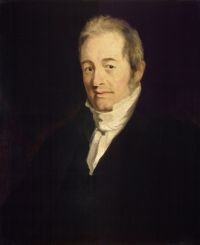 John Galt,
The Life, Studies, and Works of Benjamin West…
“ These facts are not to be denied; but they also lead us to another lesson, which is, that the patronage so generally dispensed was for the protection of living genius, and that they by whom it was so dispensed sought no other collections than the works of native and living artists. On any other ground there can be no such thing as patronage. Nothing else is worthy of that name. The true and generous patron of great works selects those which are produced by the talents existing around him. ”
Various, Blackwood's Edinburgh Magazine…
“ Gratian.—Patrons of art are too often mere lovers of furniture,—have not seriously considered art, nor cultivated taste. And if it be a fault, it is not altogether their own; it is in character with genius to be in advance, and to teach, and by its own works. It is that there is a want of cultivation, of serious study, among artists themselves. If the patron could dictate, he would himself be the maker, the poet, the painter, the musician,—excellence of every kind precedes the taste to appreciate it. It makes the taste as well as the work: my friend Aquilius has made me a convert. ”
William Hazlitt, The Collected Works of William Hazlitt…
“ Their taste is a servile dependant on their vanity, and their patronage has an air of pauperism about it. Perhaps the only public patronage which was ever really useful to the arts, or worthy of them, was that which they received first in Greece, and afterwards in Italy, from the religious institutions of the country; when the artist felt himself, as it were, a servant at the altar; when his hand gave a visible form to Gods or Heroes, Angels or Apostles; and when the enthusiasm of genius was exalted by mingling with the flame of national devotion. ”
Roger L'Estrange, Fables of Æsop and Other Eminent Mythologists… (1692)
“ It is the Patron, and the Price of all Wickedness: It Blinds all Eyes, and stops all Ears, from the Prince to the very Begger. It Corrupts Faith and Justice; and in one Word, ’tis the very Pick-Lock, that opens the way into all Cabinets and Councils. ”
John Galt,
The Life, Studies, and Works of Benjamin West…
“ When he turns from these views to contemplate the patronage which has been given to the fine arts, will he have less reason to esteem his profession,--a profession so richly cherished by all the greatest characters of the earth? and which in return has immortalised its patrons. Posterity has never ceased to venerate the names of the Cosmos and Lorenzos who sought art, and fostered to their full maturity the various talents of their countrymen. ”
Henry James, ../../ (1909)
“ The young man's expression became after this fashion something vivid and concrete—a beautiful personal presence, that of a prince in very truth, a ruler, warrior, patron, lighting up brave architecture and diffusing the sense of a function. ”
Frank Frankfort Moore, A Nest of Linnets
“ Oh, ’tis sure edifying to find Dr. Johnson the patron of music,” said the lady with double-edged sweetness.“Madam, let me tell you that one cannot rightly be said to be a patron of music,” said Dr. Johnson. “Music is an abstraction. One may be a patron of a musician or a painter—nay, I have even heard of a poet having a patron, [Pg 29] and dying of him too, because, like a gangrene that proves fatal, he was not cut away in time.”“And just now you are the patron of the musicians, sir?” ”
Various, Blackwood's Edinburgh Magazine…
“ Munificent patronage will often raise what that state which passes under the name of liberty will often destroy."In the most favoured periods of the fine arts, we find patronage either dispensed by the sovereign, the state, or the priesthood; or, if a commonwealth, by the rulers who had the revenues at their command. Possessing taste and knowledge themselves, and appreciating the importance and dignity of art, they selected the artists whom they deemed best fitted for the purpose. ”
 William Congreve,
The Way of the World
“ If I am not mistaken, poetry is almost the only art which has not yet laid claim to your lordship’s patronage. Architecture and painting, to the great honour of our country, have flourished under your influence and protection. In the meantime, poetry, the eldest sister of all arts, and parent of most, seems to have resigned her birthright, by having neglected to pay her duty to your lordship, and by permitting others of a later extraction to prepossess that place in your esteem, to which none can pretend a better title. ”
 Robert Green Ingersoll,
The Works of Robert G. Ingersoll…
“ The painter, the sculptor—poor wretches—had "patrons." Some of the greatest of the world were treated as servants, and yet they were the real kings of the human race. Now the public is the patron. The public has the intelligence to see what it wants. The stage does not have to flatter any man. The actor now does not enroll himself as the servant of duke or lord. He has the great public, and if he is a great actor, he stands as high in the public estimation as any other man in any other walk of life. ”
“ But the nineteenth-century artist finds it not in Prince, or Pope, or Patron, but in high indifference of temper, in the pleasure of the creation of beautiful things, and the long contemplation of them, in disdain of what in life is common and ignoble and in such felicitous sense of humour as enables one to see how vain and foolish is all popular opinion, and popular judgment, upon the wonderful things of art. ”
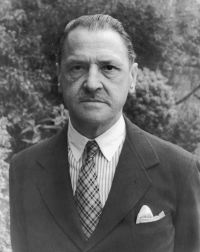 W. Somerset Maugham,
Of Human Bondage
(1915)
“ "I ought to have lived in the eighteen hundreds," he said himself. "What I want is a patron. I should have published my poems by subscription and dedicated them to a nobleman. I long to compose rhymed couplets upon the poodle of a countess. My soul yearns for the love of chamber-maids and the conversation of bishops." ”
 Francis Hopkinson Smith,
The Fortunes of Oliver Horn
“ An order, therefore, for a family portrait from so distinguished a patron not only gave weight and dignity to the work of any painter he might select, but it would unquestionably influence his many friends and acquaintances to go and do likewise. ”
John Marston, The Works of John Marston. Volume 1
“ Sir, you are like a patron that, presenting a poor scholar to a benefice, enjoins him not to rail against anything that stands within compass of his patron’s folly. Why should not we enjoy the ancient freedom of poesy? Shall we protest to the ladies that their painting makes them angels? ”
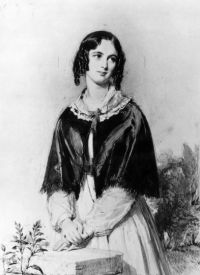 Charlotte M. Yonge,
The Armourer's Prentices
“ In terrible repetition, the artist had aimed at depicting every rank or class in life as alike the prey of the grisly phantom. Triple-crowned pope, scarlet-hatted cardinal, mitred prelate, priests, monks, and friars of every degree; emperors, kings, princes, nobles, knights, squires, yeomen, every sort of trade, soldiers of all kinds, beggars, even thieves and murderers, and, in like manner, ladies of every degree, from the queen and the abbess, down to the starving beggar, were each represented as grappled with, and carried off by the crowned skeleton. ”
John Richard Green, History of the English People, Volume III
“ A general esteem seems to have rewarded this rare instance of fidelity to a ruined patron. "For his honest behaviour in his master's cause he was esteemed the most faithfullest servant, and was of all men greatly commended." ”
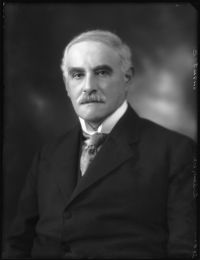 Sir Sidney Lee,
A Life of William Shakespeare
“ The Earl of Southampton the poet’s sole patron.Shakespeare’s biographer is under an obligation to attempt an identification of the persons whose relations with the poet are defined so explicitly. The problem presented by the patron is simple. Shakespeare states unequivocally that he has no patron but one. ”
Henry Green, Shakespeare and the Emblem Writers
“ And so when an Emperor is married, or the funeral rites of a Sovereign Prince celebrated, or a new saint canonized, or perchance some proud cardinal or noble to be glorified, whatever Art can accomplish by symbol and song is devoted to the emblem-book pageantry,—and the graving tool and the printing press accomplish as enduring and wide-spread a splendour as even Titian’s Triumphs of Faith and Fame. ”
 Dutton Cook,
Art in England: Notes and Studies
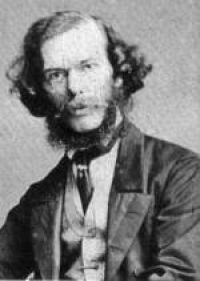
“ In Sherwin's days 'the patron' was a part which rich people were rather fond of playing. The fact of having discovered a new artist was in itself a sort of certificate of the discoverer's acumen and taste. If the patronized succeeded, the patron forthwith took high rank as a connoisseur ”
 Georg Philipp Friedrich Freiherr von Hardenberg,
Novalis Schriften
(1907)
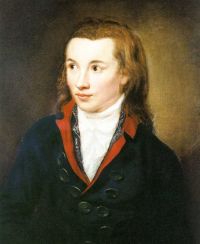
“ The regent produces an infinitely diverse spectacle, where stage and ground floor, actor and audience are one, and he himself is poet, director and hero of the play at the same time. How delightful when, as with the king, the directrice is at the same time the hero's lover and the heroine of the piece, when one catches a glimpse of the muse in her, it fills the poet with holy passion, and his lyre attunes to gentle heavenly melodies. ”
 Benjamin Blake Minor,
The Southern Literary Messenger…
(1905)
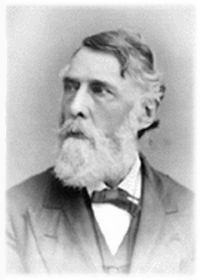
“ I am resolved that so far as lies in me, they shall not be; and I may say for those whose genius and learning have made the Messenger what it is, that they, too, are thus resolved. Let the hand of liberal patronage be opened and let the gifted minds pour forth their treasures, and the work shall prosper and shall be worthy of patronage. For myself, I desire only a fair compensation for my labors, on which I depend; and the rest shall gladly be given to the cause of literature and whatever credit there may be in the effort to promote its improvement and extension. ”
William Beloe, The Sexagenarian; or, the recollections of a literary life… (1817)
“ But this is not all, and abruptly to break off the delineation of the portrait here, would be ungenerous and unjust. He has done more; he has not only contributed to the interests of literature by his own individual exertions—he has been a patron to others. ”
Baron Thomas Babington Macaulay Macaulay, Critical and Historical Essays…
“ In the time which he employs on a square foot of canvas, a master of a different order covers the walls of a palace with gods burying giants under mountains, or makes the cupola of a church alive with seraphim and martyrs. The more fervent the passion of each of these artists for his art, the higher the merit of each in his own line, the more unlikely it is that they will justly appreciate each other. ”
1911 Encyclopædia Britannica (1911)
“ He had expended great sums in the king’s service, and he maintained a court of knights, squires, heralds and priests, more suited to royal than baronial rank. He kept open house, was a munificent patron of literature and of music, and his library contained many valuable works, he himself being a skilled illuminator and binder. ”
Various, Punch, or the London Charivari…
“ I still wait for some artist to depict the patron saint of this fair land of ours, not attacking the dragon with a cruel sword, but offering it in all brotherliness an orange, let us say, or a bath bun. ”
Reginald Herbert Mason, Pictures of life in Mexico/Volume 2 (1852)
“ If you meet him on equal terms, and desire to enter into conversation, he immediately gives you to perceive that he patronizes you. Employ him in the meanest capacity—whether he waits upon you at table, feeds your mule, or furnishes you with boots, spurs or wearing apparel and you remunerate him fourfold—he is still your patron. ”
 Gustavus Myers,
History of the Great American Fortunes…
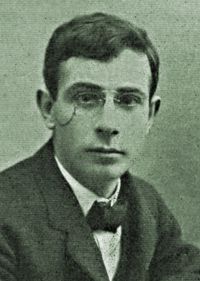
“ Nothing can express the pitying contempt or the lofty air of patronization with which the dominant commercial classes looked down upon the writer, the painter, the musician, the philosopher or the sculptor. ”
“ Works like these, often artistically of less importance, nevertheless not infrequently throw useful light on the nature of the conditions under which the sculptor worked—the trammels of tradition, the struggle to wriggle out of the commands of a patron, who desires to see reproduced the types of his childhood. ”
Great Pictures, As Seen and Described by Famous Writers
“ The master has fully displayed with supreme power, and with all the resources of his art, the colours of the costume, the paleness of the face, and the freshness of the flesh standing out from the background of green panels. ”
John Galt,
The Life, Studies, and Works of Benjamin West…
“ The patronage which has flowed from other quarters, deserves very honourable mention; and is of so much importance, that without it the spirit of art must droop, and the very profession of it be contracted in every situation whatever. It is not by the influence and support of any individual character, how elevated soever, or how warm soever in his attachment to taste and elegance, that the extent of professional talents spread through a country, can be effectually sustained with adequate encouragements. ”
John Weeks Moore, Complete Encyclopaedia of Music… (1880)
“ And the choice of the Person for that Work as Infinitely for the dignity of the Art : Since no less a Man, than the chief of their Monarchs, and the greatest of their Conquerors, was ordained by God, to be their Poet and Musician on that occasion. ”
Oliver Goldsmith, The Poems of Oliver Goldsmith
“ The master-prophet grasps his full-ton’d lyre;77 Mark where he sits, with executing art, Feels for each tone, and speeds it to the heart. See, how prophetic rapture fills his form, Awful as clouds that nurse the growing storm! And now his voice, accordant to the string, Prepares our monarch’s victories to sing. ”
 Walter Pater,
The Renaissance: Studies in Art and Poetry
“ The master is pre-eminent for the resolution, the ease and quickness, with which he reproduces instantaneous motion—the lacing-on of armour, with the head bent back so stately—the fainting lady—the embrace, rapid as the kiss caught, with death itself, from dying lips—the momentary conjunction of mirrors and polished armour and still water, by which all the sides of a solid image are presented at once, solving that casuistical question whether painting can present an object as completely as sculpture. ”
“ Master, laugh not. So thou hast thy choice of death, Leporello—’tis more than many a sinner; either by fear or by steel thou fallest. Well, well, if I love blood, I know not my likings. Good, master, good. Most gentle of statues, my master, and I—prythee, mark well, ’tis my master, and not I, good statue. ”
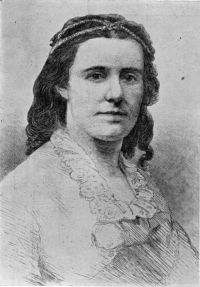 Abby Sage Richardson,
Stories from Old English Poetry…
(1899)
“ Then the poet was forced to seek some wealthy patron, who would keep him, as he kept a fine horse or a rare breed of dog, and throw him some crumbs of preferment, or a purse of gold, now and then, so that the poor verse-maker might not starve over his work. ”
Willey Francis Gates, Anecdotes of Great Musicians (1896)
“ It is fame enough to be a prince or king without being a musician! If we delved among the records of the ancient Greeks and Romans we might find many a monarch who was celebrated for his flute playing or his singing. ”
 John Ruskin,
Giotto and his works in Padua
“ It ought not, therefore, to be without a respectful admiration that we find the masters of the fourteenth century dwelling on moments of the most subdued and tender feeling, and leaving the spectator to trace the under-currents of thought which link them with future events of mightier interest, and fill with a prophetic power and mystery scenes in themselves so simple as the meeting of a master with his herdsmen among the hills, or the return of a betrothed virgin to her house. ”
A Popular Handbook to the National Gallery…
“ He says that it would double the pleasure that he takes in the emperor's satisfaction with the picture he is now painting, if he had your eye and your judgment to approve him. And indeed, the painter is not mistaken, for your judgment has been formed by age, by nature, and by art, with the prompting of that straightforward kindliness which pronounces upon the works of others exactly as if they were your own. Envy is not in your breast. ”
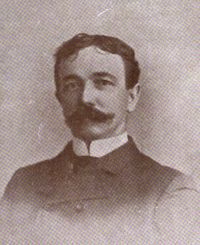 James Jeffrey Roche,
Life of John Boyle O'Reilly
(1891)
“ A hundred years ago, everbody patronized distinguished literary people, and in doing so displeased and degraded them. Today, the distinguished literary people patronize everybody else, and in so doing delight and elevate them—so that no questions can be raised as to whom the natural right of patronage belongs. Perhaps some future historian of literature, seeking for the period of the change, will stop at the record of this reception, to read over the names of our guests, and he will write it down that the Papyrus belonged completely to the new order of things. ”
Related terms
Authors who wrote about “patron (arts)”
Sir Sidney LeeJohn GaltVariousWilliam HazlittHenry JamesRoger L'EstrangeWilliam CongreveFrank Frankfort MooreRobert Green Ingersoll Oscar WildeFrancis Hopkinson SmithW. Somerset MaughamJohn MarstonJohn Richard GreenDutton CookWilliam BeloeReginald Herbert Mason
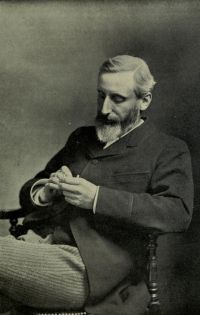 Grant AllenAbby Sage Richardson
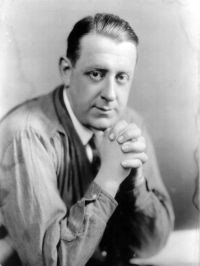 Hendrik Willem Van Loon
