Pattern (textile)

Definition and stakes

Kate Heintz Watson,  Textiles and Clothing

“ On garment fabrics the ornamentation should be flat, without shadow or relief. The pattern must enhance and not mar the figure. If flowers, foliage, or other natural objects are used for the designs, they should be conventionalized—not direct copies of nature. A figured textile requires more careful planning than plain material. It may be beautiful when used properly, but it will appear hideous if distorted in the making. A conventional fleur-de-lis pattern, or a long dash which appears and disappears when used in long, [214] graceful folds, adds to the apparent height. ”
Source: Gutenberg

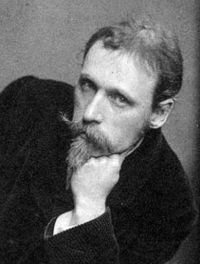
Portrait of Walter Crane Walter Crane,  Line and Form (1900)

“ In stained glass we should think of a pattern in lead lines inclosing one of translucent colour, each being interdependent and united to form a harmonious whole. In textile design we should be influenced by the thought of the difference of use, plan, and purpose of the finished material; as the difference between a rich vertical pattern in silk, velvet, or tapestry, to be broken by folds as in curtains or hangings, and a rich carpet pattern, to be spread upon the unbroken level surface of a floor. ”
Source: Gutenberg

Portrait of Walter Crane Walter Crane,  The Bases of Design

“ When we come to the second division of textile design, that in which pattern is applied to the surface of the cloth after it has been woven, by means of printing, the designer is chiefly controlled by considerations of scale and beauty of effect, as he has to adapt his design to various purposes, such as hangings and furniture coverings, or small dress patterns, kerchiefs, and so forth. Beyond the necessary limit of size of repeat and its satisfactory construction, he is freer than in designing for woven textiles ”
Source: Gutenberg

Get perspective with Kwize: daily news enlightened by great literature