“ Think of the peasant girl, inspired by spirit voices, throwing aside the timidity of her country breeding, her youth, and her sex, adopting the costume of a soldier, heading the armies of France, leading them to victory, and placing the national crown upon the head of the feeble Dauphin, much more of a girl than herself. ”
Peasant girl
Definition and stakes
The theme of “peasant girl” has been addressed by authors such as Annie H. Ryder, Berta Ruck, A. M. Williamson, Mary Raymond Shipman Andrews and Abbie Phillips Walker. It is often associated with terms like woman, princess, labor, child and dress.
Quotes about “peasant girl”
 Alice Mabel Bacon,
Japanese Girls and Women
Alice Mabel Bacon,
Japanese Girls and Women
“ At any rate, in this particular village, the only hope that any girl possessed of escaping from the hard home toil was by the sale of her person, and the thought of seeing the great cities, of wearing beautiful dresses, of being admired and petted, and perhaps at last of marrying some rich lover and becoming a great lady, was a tempting bait to these poor peasant girls. ”
A. E. Nordenskiöld, The Voyage of the Vega round Asia and Europe…
“ In passing we may say, that a Japanese peasant girl, like girls in general, may be pretty or the reverse, but that she generally is, what cannot always be said of the peasant girls at home, cleanly and of attractive manners. ”
“ The peasant girl, when her spirits are buoyant, is allowed to obey her natural feelings—to dance and skip and run; and thus she grows up strong and straight. But the young lady is receiving constant admonitions to curb all propensity to such vulgar activity, and, just in proportion as she subdues nature, she receives the praise of being well-bred. ”

“ By the road-side, peasant men in cloaks, peasant women in full-gathered dresses with white bodices or blouses having great full sleeves, tramped in the ridge of grass, driving cows or goats, or leading heavily-laden asses. The women had coloured kerchiefs on their heads, like the women Alvina remembered at the Sunday-School treats, who used to tell fortunes with green little love-birds. ”
Annie H. Ryder, Hold Up Your Heads, Girls! Helps for Girls…
“ How much more numerous the motives which can be given an American girl than one who lives on foreign soil! Look at the German girl, for example. Her country arbitrarily divides its people into high and low. The peasant maiden has so long stayed one side of the barrier, she thinks she always must; so, with her scanty loaf of black bread near her on the ground, she leans against a tree, knits her stocking, and tends the flock. When night comes she goes home to her rude stone cottage, lifts a prayer to the Virgin, if she is an Austrian, and one for the king. ”
 Thornton Wilder,
The bridge of San Luis Rey
(1927)
Thornton Wilder,
The bridge of San Luis Rey
(1927)
“ In repose one was startled to discover that the nose was long and thin, the mouth tired and a little childish, the eyes unsatisfied—a rather pinched peasant girl, dragged from the cafés-chantants and quite incapable of establishing any harmony between the claims of her art, of her appetites, of her dreams, and of her crowded daily routine. ”
 A. M. Williamson,
The Lightning Conductor: The Strange Adventures of a Motor-Car
A. M. Williamson,
The Lightning Conductor: The Strange Adventures of a Motor-Car
“ Then we began going up and up, and we kept meeting peasant girls tripping gaily down in their rope shoes, singing together like happy birds, not even touching with their hands the loaded baskets on their heads. They were so beautiful that they were more like stage peasants than real ones. ”
 Vicente Blasco Ibáñez,
The Torrent (Entre Naranjos)
Vicente Blasco Ibáñez,
The Torrent (Entre Naranjos)
“ Their sashes bulging with money bags, peasants were coming into town to buy supplies for the whole week out in the orange country. Orchard women were going from one stall to the next, as slender of body and as neatly dressed as the peasant girls of an opera ballet, their hair in señorita style, their skirts of bright batiste gathered up to hold their purchases and showing fine stockings and tight-fitting shoes underneath. Tanned faces and rough hands were the only signs to betray the rustic origin of the girls; because those were prosperous days for the orange growers of the District. ”
Mrs. Meer Hasan Ali, Observations on the Mussulmauns of India
“ But this dearly-loved custom cannot be passed over; and if the parents find it impossible to meet the pecuniary demands of these ceremonies, the girl has no alternative but to live out her days singly, unless by an agent's influence she is accepted as a dhollie wife to some man of wealth.Girls are considered to have passed their prime when they number from sixteen to eighteen years; even the poorest peasant would object to a wife of eighteen. ”
 Agnes Castle,
The Pride of Jennico: Being a Memoir of Captain Basil Jennico
Agnes Castle,
The Pride of Jennico: Being a Memoir of Captain Basil Jennico
“ In the vineyards, it is true, an incident occurred which for a moment threatened to mar my perfect satisfaction. The peasant girls—it is the custom of the country on the appearance of strangers in the midst of their work—gathered round each lady, surrounding her in wild dancing bands, threatening in song to load her shoulders with a heavy hodful of grapes unless she paid a ransom. ”
Alice Vansittart Strettel Carr, North Italian Folk: Sketches of Town and Country Life
“ Towards dark the great baskets are piled up that have been filled all day from each woman’s sack, and then the girls lift them upon their heads or their shoulders, and pick their way deftly along the stony paths with the burthens. Sometimes the loads are too heavy and must be left for the men, but this does not often happen, for these peasant women are strong, with a beautiful ease of strength, and proud of their power. ”
Abbie Phillips Walker, Sandman's rainy day stories (1920)
“ It did not take the peasant long to take her home, and when the Queen and the King saw their daughter in her own form again they fell on their knees before the peasant youth and thanked him.But the Princess did not understand what it all meant, and said: “Why do you kneel to him? He should kneel to you! Are you not King and Queen of this land, and this man a poor peasant?”Before the King could explain to the Princess the youth said: “I have brought you your daughter, but you must keep her. I could never marry a maid who thought herself above me. Give me gold and let me go back to my home!” ”
The World's Great Sermons, Volume 08…
“ The peasant's daughter, in her narrow circle, feels as keenly the disappointment of her hopes, and mourns as intensely the betrayal of her confidence, or the rude ending of her day-dreams, as either queen or princess, as either Katharine of England or Josephine of France. ”
 Honoré de Balzac,
Analytical Studies
Honoré de Balzac,
Analytical Studies
“ We would, however, make the remark that these nine million female pariahs produce here and there a thousand peasant girls who from peculiar circumstances are as fair as Cupids; they come to Paris or to the great cities and end up by attaining the rank of femmes comme il faut; but to set off against these two or three thousand favored creatures, there are one hundred thousand others who remain servants or abandon themselves to frightful irregularities. ”
Facts and fancies for the curious from the harvest-fields of literature
“ The peasant did not seem insensible to the perfection of form, but after awhile he burst forth, “What fools these girls are! They have not got money enough to buy themselves a suit of clothes; yet what little they have, they spend to get their photograph taken.” “Beats,” Not Turnips The angry mother of a small girl, a pupil in a New York grammar-school, indignantly demanded of the principal that the music-teacher in that school be discharged. ”
James Johnson, Pilgrimages to the Spas in Pursuit of Health and Recreation
“ It is not very flattering nor yet creditable to the pride of civilization, that in many parts of Europe, and even in Germany, the female peasant is little more than a beast of burthen, with worse food and more care than the ox or the horse. Wherever we see three persons employed in agricultural labour, two of them are sure to be women. ”
 Rose Hawthorne Lathrop,
Memories of Hawthorne
Rose Hawthorne Lathrop,
Memories of Hawthorne
“ As for the peasant women we met, under their little light-stands of head-drapery, they were easily comprehensible, and expressed without a shadow of reserve their vanity and tiger blood by an openly proud smile and a swing of the brilliantly striped skirt. ”
 Alfred Henry Lewis,
The Story of Paul Jones: An Historical Romance
Alfred Henry Lewis,
The Story of Paul Jones: An Historical Romance
“ Should the Princess, in some gust of virtue, be swept into a marriage with the peasant, she becomes instantly a peasant. It is one of those strange cases, my friend, where the word ‘wife’ is a stain and the word ‘mistress’ no stain at all. ”
 E. E. Brown,
Wonder Stories of Travel
E. E. Brown,
Wonder Stories of Travel
“ The strength of these little peasant women is wonderful. They walk off with grand strides, carrying heavy burdens on their heads, and sometimes knitting as they go. Many of the young girls are very pretty ”
 Ford Madox Ford,
Some do not...: A novel
Ford Madox Ford,
Some do not...: A novel
“ The peasant girls wore black velvet waistcoats, white bodices, innumerable petticoats and absurd parti-coloured headdresses of the shape and size of halfpenny buns. They walked about in rows of four to six abreast, with a slow step, protruding white-stockinged feet in dancing pumps, their headdresses nodding solemnly; young men in blue blouses, knee-breeches and, on Sundays, in three-cornered hats, followed behind singing part-songs.The French maid—whom Mrs. ”

“ Here, at least, the peasant-woman—who had never been able to accustom herself to this colossal fortune, come too late, from too far, and like a thunder-clap—felt herself linked to reality by the coming and going of the work-people, the letting-out and taking-in of the cattle, their slow movement to the drinking pond, all that pastoral life which woke her by the familiar call of the cocks and the sharp cries of the peacocks, and brought her down the corkscrew staircase of the pavilion before dawn. ”
“ The old nurse died, leaving her cottage and the few articles of furniture it contained to her poor lady, who dwelt in it, working as a peasant for her daily bread. Her spinning-wheel and the milk of a cow, which she had purchased with the little money she had with her, sufficed for the scanty subsistence of herself and her little son. There was a nice little garden attached to the cottage, in which they cultivated peas, beans, and cabbages, and the lady was not ashamed to go out at harvest time, and glean in the fields to supply her little son’s wants. ‘Jack, that poor lady is your mother. ”
Sixty Folk-Tales from Exclusively Slavonic Sources
“ If you have no riches, if you have no wife, I will give you all.” The peasant said: “Very good, mother, if you make me richer than any of the peasants. But I have no pony, no cow, and my cottage is wretched.” The lime-tree said: “Go home; all shall be yours.” The peasant went. A new house was his: fences of stout boards, horses that were ready to fly, and store-rooms full of corn. The cottager was not satisfied, because his wife was not handsomer. What was to be done? “I’ll go off quick to Mother Lime-tree.” He took his axe, and went off into the wood. ”
 Hannah Lynch,
Dr. Vermont's fantasy, and other stories
(1896)
Hannah Lynch,
Dr. Vermont's fantasy, and other stories
(1896)
“ These hearts of foolish women will ever make them traitor to their heads. I naturally growl when I find our sack of corn diminished in favour of a neighbour’s hungry children, or return frost-bitten from the college to find no fire, and learn that my wife has carried a basket of fuel to a peasant dying up among snow-hills. ”
 Anatole France,
Mother of Pearl
Anatole France,
Mother of Pearl
“ The lower places were filled with a crowd of young artisans in brown jackets, dimity breeches, and blue stockings, with their arms round the waists of very pretty blushing girls who lowered their eyes. Near the holy water stoups peasant women, in scarlet petticoats and laced bodices, sat upon the ground as immovable as domestic animals, whilst young lads, standing up behind them, stared out from wide-open eyes and twirled their hats round and round on their fingers, and all these silent countenances seemed centred irremovably on one and the same thought, at once sweet and sorrowful. ”
Edward B. Pollard, Oriental Women
“ The country women have greater freedom and far more influence with their husbands than do the women of the harem. Polygamy among the former class is rare, and hence the women are more highly regarded than those of the city. The peasant woman is industrious, engaged in some useful employment about the house or in the field. She buys and sells and gets gain for her husband and her home, and often is highly esteemed by him ”
Mrs. Hope, Once a Week (1863)
“ Often, on opening the door, a peasant-woman, dressed in her peculiar costume, would enter, weary and wayworn, and yet determined not to return home without bringing her present of plums, apples, or sometimes a loaf of home-made bread, and have a little talk over all her own family history, her troubles and her joys, to which most affectionate and ready ear was always lent by the sisters. ”
George Sturt, Change in the Village
“ It would be a mistake to suppose that the peasant economy, as practised in this valley, was nearly so good a thing for women as it was for the other sex; a mistake to think that their life was all honey, all simple sweetness and light, all an idyll of samplers and geraniums in cottage windows. ”
Frederick Whishaw, The Romance of the Woods
“ Red-shirted peasants were busy at work in the fields, together with gaily-clad women and a few children. It was the time of the cutting of the corn, and there was much laughter and merriness, while each peasant did as much work as he felt was good for him, which was not much; the women worked harder than the men and sang in a light-hearted manner as they laboured. ”
Berta Ruck, A land-girl's love story
“ It held me, that voice, while the speaker touched on the urgent need of workers to fill the places of men, who had gone from farm, field, dairy and byre. Ah, the charming picture that she made! A bright, sturdy flower of girlhood set against-the parched stone-work of Town! She wore the Land Girl's uniform that sets off a woman's shape as no other costume has done yet. Under her slouch-hat her face was vividly brown and rose-coloured, with dark eyes alight. Her fresh, light belted smock, with its green armlet and scarlet crown, looked cool as well as trim. ”
 Charles Lewis Meryon,
Travels of Lady Hester Stanhope…
(1846)
Charles Lewis Meryon,
Travels of Lady Hester Stanhope…
(1846)
“ Were I desired to describe a peasant woman in her most customary occupation, I should represent her as seated at the door of her cottage, spinning with a hand-spindle, and having a long cane lying by her side to drive away the chickens, which she talks to and scolds as if they were children, giving to each a name. ”
 John Pentland Mahaffy,
Euripides
(1879)
John Pentland Mahaffy,
Euripides
(1879)
“ The peasant princess surprised with her pitcher upon her shoulder, the heedless hospitality of the honest great-hearted peasant, the anxiety of the housewife about supplying the sudden and noble visitors, the hurried borrowing of provisions from a good neighbour—here are scenes which may shock a Voltaire or a Schlegel, but which impress an English critic with a sense of the power and the love of human nature shown in our best tragedies. ”
Caldwell Lipsett, Where the Atlantic meets the land
“ She knew every man, woman, and child by name upon the countryside, and always had a friendly word and a cheerful smile for them. She was loved by the women, but the men worshipped her. She had an absolute recklessness and abandonment of temperament which dominated them. For, except when supported by others, your peasant is prone to be cautious. ”
Various, Lippincott's Magazine of Popular Literature and Science…
“ The peasant-women, poor things! are ugly, because they work from morning till night in the vineyards, toiling until their backs are broken. The wine which the beauties drink costs their humbler sisters their life-blood, their grace, their happiness. ”
 Mór Jókai,
The Slaves of the Padishah
Mór Jókai,
The Slaves of the Padishah
“ There she sits at eventide in the garden of her castle, weaving together dreams of a happy future, and her court ladies by her side are making tiny little garments adorned with bright ribbons.When the peasant women pass by her on the road with their children in their arms, she takes the children from them, presses them to her bosom, kisses, and talks to them. ”
 William Stearns Davis,
Life on a Mediaeval Barony
William Stearns Davis,
Life on a Mediaeval Barony
“ Lately at the castle a jongleur told this anecdote: "A certain peasant showered his wife with blows on principle. 'She must have some occupation,' said he, 'while I work in the field. If she is idle she will think of evil things. If I beat her she will weep the whole day through, and so will pass the time. Then when I return in the evening she will be more tender.'" According to other stories, however, many peasants are clever, aggressive, and insolent—well able to care for themselves. ”
Mary Raymond Shipman Andrews, A Play to the Gallery (1903)
“ A peasant woman would not have hesitated; but as the keenness of sense, the exquisite sight and hearing, that belong to a savage are lost somewhere in the refining process of the ages between him and his twentieth-century descendant, so this woman, who was the high-water mark of civilization, had dulled in training the woman's sure instinct. ”
Related terms
Authors who wrote about “peasant girl”
Annie H. RyderBerta RuckA. M. WilliamsonMary Raymond Shipman AndrewsAbbie Phillips Walker Martha Foote CrowDio Lewis
 Ida Minerva Tarbell
 Isabel Florence Hapgood
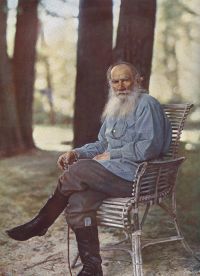 Leo TolstoyFord Madox Ford
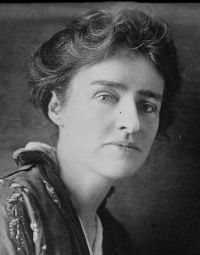 Jean WebsterEdward B. Pollard
 Matilda Betham-EdwardsMrs. Hope
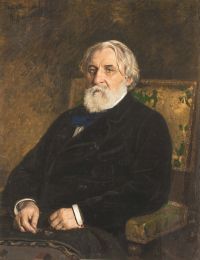 Ivan Sergeevich TurgenevGeorge SturtRachel Harriette BuskArthur Ruhl
 Jacob Grimm
A. M. WilliamsonMary Raymond Shipman AndrewsAbbie Phillips WalkerMartha Foote CrowDio LewisIda Minerva TarbellIsabel Florence HapgoodLeo TolstoyFord Madox FordJean WebsterEdward B. PollardMatilda Betham-EdwardsMrs. HopeIvan Sergeevich TurgenevGeorge SturtRachel Harriette BuskArthur RuhlJacob Grimm