Pentatonic scale

Definition and stakes

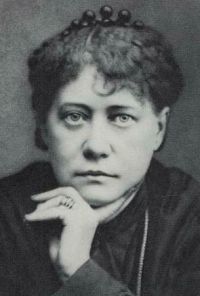
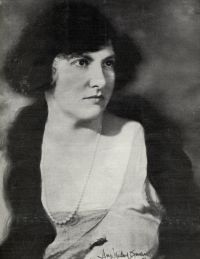
Portrait of Marion Bauer Marion Bauer,  How music grew (1925)

“ It is like our five black keys on the piano, starting with F sharp. This is called the pentatonic scale, (penta, Greek word for five, tonic meaning tones) . This scale is a most amazing traveler, for we meet it in our musical journeys in China, Japan, Arabia, Scotland, Africa, Ireland, ancient Peru and Mexico, Greece and many other places. The reason we find these five tones popular must be because they are natural for the human throat. At any rate we know that it is difficult for the Indian to sing our scale. ”

Source: Gutenberg

Hermann Smith,  The World's Earliest Music

“ I am only concerned with the question of scales from the instrumentalist’s point of view; and I explain the prevalence of the pentatonic scale as growing out of the nature of the instrument,—first for the pipe there was one note, then there were two, and so on. Voices and pipes imitated one another, and the perception of the relation we call an octave seems to have been everywhere an instinctive perception.
I suppose it will generally be conceded that man is naturally lazy. Well, he will not exert his voice more than is necessary for his immediate purpose
”
Source: Gutenberg

James Burt Miner,  Deficiency and Delinquency: An Interpretation of Mental Testing

“ To show that the point scale units are even theoretically equivalent it would seem to be necessary to assume, on the basis of normal distribution of ability, that each unit of the deviation for each age distribution either equaled the same number of scale units or the same proportion of the total distance from lowest to highest ability at each age measured in the point-scale units. ”
Source: Gutenberg

Get perspective with Kwize: daily news enlightened by great literature