Phonetic alphabet

Definition and stakes

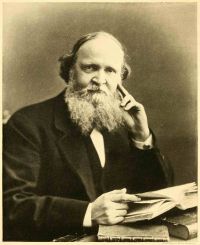
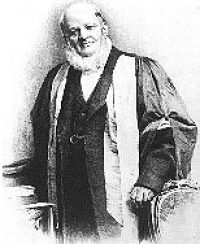
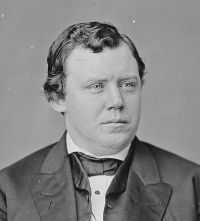
Portrait of Ignatius Donnelly Ignatius Donnelly,  Atlantis: The Antediluvian World (1882)

“ One of the most marvellous inventions for the advancement of mankind is the phonetic alphabet, or a system of signs representing the sounds of human speech. Without it our present civilization could scarcely have been possible.
No solution of the origin of our European alphabet has yet been obtained: we can trace it back from nation to nation, and form to form, until we reach the Egyptians, and the archaic forms of the Phœnicians, Hebrews, and Cushites, but beyond this the light fails us.
”
Source: Wikisource

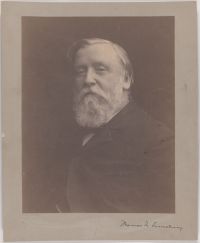
Portrait of Ignatius Donnelly Ignatius Donnelly,  Atlantis: The Antediluvian World (1882)

“ Is there any other country to which we can turn which possessed a phonetic alphabet in any respect kindred to this Phœnician alphabet? It cannot be the Chinese alphabet, which has more signs than words; it cannot be the cuneiform alphabet of Assyria, with its seven hundred arrow-shaped characters, none of which hear the slightest affinity to the Phœnician letters.
It is a surprising fact that we find in Central America a phonetic alphabet.
”
Source: Wikisource

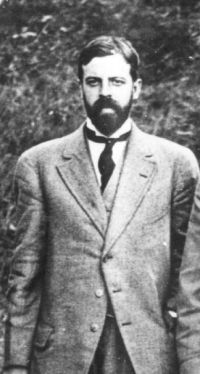
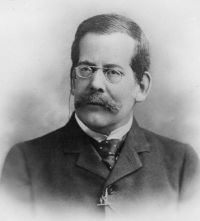
Portrait of Henry Sweet Henry Sweet,  1911 Encyclopædia Britannica (1911)

“ The only consonant-symbols that require special notice are the following:—
All the systems of phonetic notation hitherto considered are based on the Roman alphabet. But although the Roman alphabet has many advantages from a practical point of view, it is evidently impossible to build up a consistent and systematic notation on such an inadequate foundation of arbitrary signs. What is wanted, for scientific purposes especially, is a notation independent of the Roman alphabet, built up systematically—an alphabet in which there is a definite relation between sound and symbol.
”
Source: Wikisource

Get perspective with Kwize: daily news enlightened by great literature