Pitch (sound)

Definition and stakes

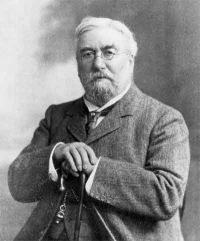
Portrait of John Gray McKendrick John Gray McKendrick,  1911 Encyclopædia Britannica, Volume 28… (1911)

“ The pitch of the note of a musical instrument, however, depends on the pitch of the first or fundamental tone, while the partials are added with greater or less intensity so as to give a special character to the sound; and in the case of a vowel tone the pitch does not appear to depend on that of the fundamental tone but on the pitch of the resonance cavity, as adjusted for the sounding of any particular vowel. When we wish to pronounce or sing a vowel the oral cavity must be adjusted to a certain form, and it is only when it has that form that the vowel can be sounded. ”

Source: Wikisource

Arthur Broadley,  Chats to 'Cello Students

“ I am well aware that a few musicians have this gift of absolute pitch, and perhaps a greater number still, from long practice with one fixed sound—like the singing master with his C tuning fork—are able to guess the pitch of that one sound with moderate success, but for a musician to have the pitch of all the range of sounds so thoroughly established, as to feel a sense of disappointment if an isolated note was sounded either slightly above, or below concert pitch, is almost an impossibility, if such an one does exist he must be considered an exception to the above. ”
Source: Gutenberg

A. E. Dolbear,  The Telephone

“ The pitch of a sound depends wholly upon the number of vibrations per second that produce it; and if one of two sounds consists of twice as many vibrations per second as the other one, they differ in pitch by the interval called in music an octave, this latter term merely signifying the number of intervals into which the larger interval [65] is divided for the ordinary musical scale. The difference between a high and a low sound is simply in the number of vibrations of the air reaching the ear in a given time. ”
Source: Gutenberg

Get perspective with Kwize: daily news enlightened by great literature