Price mechanism

Definition and stakes

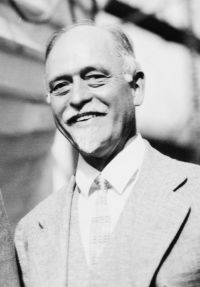
Portrait of Irving Fisher Irving Fisher,  The Purchasing Power of Money…

“ If trade unions seek to raise prices of labor while trusts raise prices of commodities, the general level of everything may rise or fall; but it can rise only by a general decrease in the quantities of commodities, labor, etc., sold, or by an increase of currency, or by an increase in velocities of circulation. If there is neither an increase nor decrease in volume of business, and if the quantity and velocity of circulation of money and its substitutes remain unchanged, the price level cannot change. ”
Source: Wikisource

Portrait of Karl Marx Karl Marx,  Das Kapital (1906)

“ To produce this effect, it is by no means requisite that the prices of all commodities should rise or fall simultaneously. A rise or a fall in the prices of a number of leading articles, is sufficient in the one case to increase, in the other to diminish, the sum of the prices of all commodities, and, therefore, to put more or less money in circulation. Whether the change in the price correspond to an actual change of value in the commodities, or whether it be the result of mere fluctuations in market prices, the effect on the quantity of the medium of circulation remains the same. ”
Source: Wikisource

Portrait of Irving Fisher Irving Fisher,  The Purchasing Power of Money…

“ Those who place such implicit reliance on the competency of supply and demand to fix prices, irrespective of the quantity of money, deposits, velocity, and trade, will have their confidence rudely shaken if they will follow the reasoning as to price causation of separate articles. They will find that there are always just one too few equations to determine the unknown quantities involved.*7 The equation of exchange is needed in each case to supplement the equations of supply and demand. ”
Source: Wikisource

Get perspective with Kwize: daily news enlightened by great literature