“ All these wonders, it was explained, had very simply come about as the results of replacing private capitalism by public capitalism, and organizing the machinery of production and distribution, like the political government, as business of general concern to be carried on for the public benefit instead of private gain. ”
Private capitalism
Definition and stakes
The theme of “private capitalism” has been addressed by authors such as Edward Bellamy, Eugene V. Debs, William English Walling, J. Ellis Barker and George R. Kirkpatrick. It is often associated with terms like capitalist, property, competition, capital and socialism.
Quotes about “private capitalism”
 William English Walling,
Socialism as it is
William English Walling,
Socialism as it is
“ Private capitalism used the State for promoting the private interests of its directors, State capitalism uses it to produce profits for its shareholders, the small farmers, as taxpayers, or in the form of profits distributed among them as consumers. Only as the government begins to take a considerable share of that increased value in land which nearly every public undertaking brings about, will all wisely managed government enterprises produce such profits. ”
“ Under private capitalism, you see, there was no public or governmental system for organizing productive effort and distributing its results. There was no general and unfailing machinery for bringing producers and consumers together. Everybody had to seek his own occupation and maintenance on his own account, and success depended on his finding an opportunity to exchange his labor or possessions for the possessions or labor of others. ”
“ It was not till the close of the eighties that the total and ridiculous failure of twenty years of desperate efforts to reform the abuses of private capitalism had prepared the American people to give serious attention to the idea of dispensing with the capitalist altogether by a public organization of industry to be administered like other common affairs in the common interest. ”
P. V. N. Myers, History as past ethics; an introduction to the history of morals (1913)
“ Still another institution of modern industrialism which has come or is coming under the reprobation of the present-day conscience of a rapidly growing number is private capitalism, that is, private ownership of the instruments of production, together with competition and the wage system, the necessary concomitants of this capitalistic régime. These new ethical feelings and convictions form the real motive force in the propaganda of modern socialism. ”
 W. H. Mallock,
Aristocracy & Evolution
W. H. Mallock,
Aristocracy & Evolution
“ Under the régime of private capitalism this process is simple. The fitness or efficiency of each great man is according to the acceptability to the public of the goods or services which he offers them. If the public are not pleased with these goods and services, they do not buy or demand them; and the capital of the man by whom they are offered, not being renewed by any money received, melts in his hands, and with it his control over other men’s labour. ”
“ Under private capitalism the entire scheme of industry and commerce, involving the employment and livelihood of everybody, was subject to the despotic and irresponsible government of private masters. The very demand for nationalizing industry has resulted wholly from the sufferings of the people under the yoke of the capitalists. ”
 Hilaire Belloc,
The Servile State
Hilaire Belloc,
The Servile State
“ If you say that the evils proceeding from Capitalism are due to the institution of property itself, and not to the dispossession of the many by the few, then you must forbid the private possession of the means of production by any particular and private part of the community: but someone must control the means of production, or we should have nothing to eat. ”
Robert Hunter, Violence and the Labor Movement
“ Without, however, leaving the argument here, it must be said that there are various reasons why the socialist prefers State capitalism to private capitalism. It has certain advantages for the general public. ”
“ The antagonism of the profit system to effective wealth production arose from causes inherent in and inseparable from private capitalism; and so long as private capitalism was retained, those causes must have made the profit system inconsistent with any economic improvement in the condition of the people, even if the capitalists had been, angels. ”
W. H. Mallock,
A Critical Examination of Socialism
“ The state, however, is in reality nothing but a collection of individuals; and if the state, besides being a political body, is to become the sole industrial capitalist also, state capitalism, just like private capitalism, will succeed or fail in proportion to the talents of those to whom capital is intrusted as a means of directing the labourers. ”
 Edward Bellamy,
Equality — Chapter XXII. Economic suicide of the profit system
(1897)
Edward Bellamy,
Equality — Chapter XXII. Economic suicide of the profit system
(1897)
“ The root of the evil lay in the tremendous difficulties, complexities, mistakes, risks, and wastes with which private capitalism necessarily involved the processes of production and distribution, which under public capitalism have become so entirely simple, expeditious, and certain. ”
Edward Bellamy,
Equality — Chapter XXVII. Hostility of a system of vested interests to improvement
(1897)
“ This was, of course, necessarily so because all economic initiative was confined to the capitalists. Our forefathers, observing that inventions when introduced at all were introduced through the machinery of private capitalism, overlooked the fact that usually it was only after exhausting its power as an obstruction to invention that capital lent itself to its advancement. ”
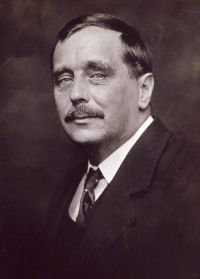 H. G. Wells,
A year of prophesying
(1925)
H. G. Wells,
A year of prophesying
(1925)
“ He insists at several points that a system of Private Capitalism cannot survive without moderation; that if private enterprise will insist upon gambling upon the exchanges and working for profits regardless of any other consideration, the whole system must collapse. ”
Fabian Essays in Socialism (1908)
“ Such concurrent private exploitation, however unrestricted, could not in any case bring back the old evils of capitalism; for any change in the habits of the people or in the methods of industry which made associated production of any commodity on a large scale convenient and profitable, would result at once in the taking over of that industry by the State exactly as the same conditions now in America result at once in the formation of a ring. ”
Edward Bellamy,
Equality — Chapter XXVII. Hostility of a system of vested interests to improvement
(1897)
“ But under the system of private capitalism, which made every person and group economically dependent upon and exclusively concerned in the prosperity of the occupation followed by himself and his group, this ideal was impossible of attainment. ”
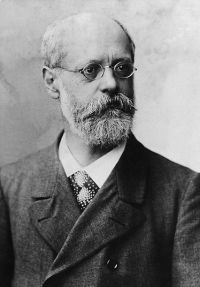 Karl Kautsky,
Georgia: A Social-Democratic Peasant Republic…
(1921)
Karl Kautsky,
Georgia: A Social-Democratic Peasant Republic…
(1921)
“ It is quite impossible to cut away profit from those branches of industry, constantly diminishing in number, where capitalist production still exists, and may continue to exist for the present, before the private character of the ownership of such means of production is altered. ”
 Rosa Luxemburg,
The Accumulation of Capital
Rosa Luxemburg,
The Accumulation of Capital
“ It constitutes the ‘illegitimate’ liabilities, the faux frais of the anarchic economy under capitalism, a peculiar burden for a society based upon private enterprise, which implies the annual expenditure of a considerable amount of labour on the manufacture of products which are neither means of production nor yet consumer goods. This peculiar expenditure of labour by a society producing under capitalism will vanish in a socially planned economy. It is most adequately demonstrated by means of a separate department within the process of reproducing social capital. ”
 Carl Schurz,
Phi Beta Kappa Oration at Harvard
Carl Schurz,
Phi Beta Kappa Oration at Harvard
“ Does it not mean that the laborers say to the capitalists engaged in industrial production virtually this: “If you think that these factories and implements of production are your own exclusive private property in the sense that you can do with them whatever you please, to make them pay you a maximum of profit while leaving to the laborers who help to produce that profit only a minimum of compensation, you disregard our rights which we are bound to protect?” ”
 Eugene V. Debs,
Debs: His Life, Writings and Speeches…
Eugene V. Debs,
Debs: His Life, Writings and Speeches…
“ The capitalist owns the tools he does not use; the worker uses the tools he does not own.The principal tools of production and distribution in the United States—mammoth machines, complex social instruments, made and used co-operatively by millions of workingmen, their very lives, their wives and babes being dependent upon them—are the private property of a few hundred capitalists, and are operated purely to make profits for these capitalists, regardless of the poverty and wretchedness that ensue to the masses. ”
 Samuel Peter Orth,
Socialism and Democracy in Europe
Samuel Peter Orth,
Socialism and Democracy in Europe
“ The fact that a few capitalists are permitted to control all the country's industrial resources and social tools for their individual profit, and to make the [342] production of the necessaries of life the object of competitive private enterprise and speculation is at the bottom of all the social evils of our time. ”
Fabian Essays in Socialism (1908)
“ The great industries, worked as Trusts, are controlled by the State instead of by capitalist rings. The private capitalist, however, will still be in business, producing and distributing on his own account in competition with the communal organisations, which at present will have occupied only part of the industrial field. But apart from a pressure which will be recognised when we come to deal with the remuneration of labor, these private enterprises will be carried on under circumstances of ever-increasing difficulty. ”
John Rae, Contemporary Socialism
“ Interest is just because capital is socially useful, and because the owner of capital, in applying it to productive purposes, renders a service to society which is valuable in the measure of its social utility. Of course the State might perform this service itself. It might compulsorily abstract from the produce of each year a sufficient portion to constitute the raw materials and instruments of future production; but, as a matter of fact, the State does not do so. It leaves the service to be rendered spontaneously by private persons out of their private means. ”
 Karl Marx,
Das Kapital
(1906)
Karl Marx,
Das Kapital
(1906)
“ The capitalist mode of appropriation, the result of the capitalist mode of production, produces capitalist private property. This is the first negation of individual private property, as founded on the labour of the proprietor. But capitalist production begets, with the inexorability of a law of Nature, its own negation. ”
Fabian Essays in Socialism (1908)
“ In face of the orderly communal arrays, playing into each other’s hands, with the credit of the country behind them, the ventures of the private capitalist will be at as great a disadvantage as the cottage industries of the [143] last century in face of the factory industries of our own period. The Trusts have taught us how to drive competing capitals out of the market by associated capitals. The Central Boards or County Councils will be able to utilise this power of association further than any private capitalists. ”
 Bertrand Russell,
Political Ideals
Bertrand Russell,
Political Ideals
“ The economic system we should ultimately wish to see would be one in which the state would be the sole recipient of economic rent, while private capitalistic enterprises should be replaced by self-governing combinations of those who actually do the work. ”
Edward Bellamy,
Looking Backward, 2000 to 1887
“ Could there conceivably be a more conclusive demonstration of the imbecility of the system of private enterprise as a method for enriching a nation than the fact that, in an age of such general poverty and want of everything, capitalists had to throttle one another to find a safe chance to invest their capital and workmen rioted and burned because they could find no work to do? ”
Fabian Essays in Socialism (1908)
“ For co-operative societies supersede individual by social distribution, effecting it without the waste attendant on a number of little shops all competing against each other, the owners of none of which can make a decent living. Co-operation, therefore, well illustrates the economic evolution of the present age.I now come to treat of the latest forms of capitalism, the “ring” and the “trust,” whereby capitalism cancels its own principles, and, as a seller, replaces competition by combination. When capitalism buys labor as a commodity it effects the purchase on the competitive principle. ”
L. G. Chiozza Money, Riches and Poverty (1910)
“ But organization by private hands,—the combination of industrial units into great trusts economizing management, production and distribution,—cannot safely be tolerated. It means the wielding of the chief power in the State by monopolists who will use their power for private ends. The era of private competition is closing. On every hand capital is combining with capital in restraint of competition. ”
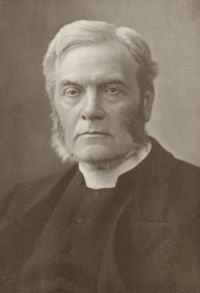 Marcus Dods,
The Expositor's Bible: The First Epistle to the Corinthians
Marcus Dods,
The Expositor's Bible: The First Epistle to the Corinthians
“ Is there any organization or social system which could check the evils resulting from the present competitive system, and secure that every one who is willing to work should be furnished with remunerative employment? Socialists are quite convinced that the whole problem would be solved were private capital to be converted into co-operative or public capital. ”
Joseph Rickaby, Moral Philosophy: Ethics, Deontology and Natural Law
“ Two reasons may be given for turning away from this seductive proposal, and leaving capital (not consumer's wealth merely) in private hands,—and that not only in the hands of what we may call mentally productive capitalists, men who oversee their own enterprises and manage their own workmen, but even of unproductive capitalists, men who have shares in and reap profits out of a business which they never meddle with. ”
Fabian Essays in Socialism (1908)
“ If the syndicate or the trust represents the legitimate outcome of capitalism—if it is necessary to give order to trade and to prevent the ruinous waste of unrestricted competition, how absurd it is for the State to say to the capitalist: “You shall carry your privileges of acquisition just up to the point where competition is likely to ruin you; but there you shall stop. Immediately you and your friends combine to prevent waste, to regulate production and distribution, to apply new methods of manufacture, we shall absolutely prevent you or restrain you by vexatious regulations.” ”
Herbert Feis, The Settlement of Wage Disputes
“ The section of the community which owns and directs the investment of the bulk of these means has received the name of capitalists.Almost all the capital accumulated within the 25 United States is privately owned. Since the beginning of our industrial history the opportunities for accumulation have been left to individuals and the capital which industry has used has been provided by private owners. ”
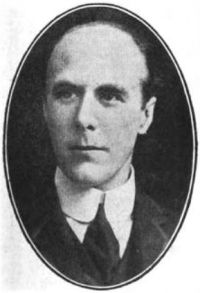 Lynden Livingston Macassey,
Labour policy—false and true
(1922)
Lynden Livingston Macassey,
Labour policy—false and true
(1922)
“ It is plain that so great and so powerful an enterprise affecting every industrial enterprise, and, eventually, every household, must not be allowed to pass into the hands of private capitalists. They are already pressing the Government for the concession, and neither the Liberal nor the Conservative Party has yet made up its mind to a refusal of such a new endowment of profiteering in what will presently be the life-blood of modern productive industry. ”
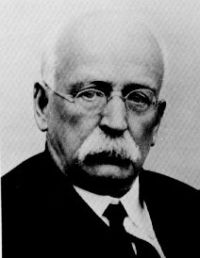 Sir Ebenezer Howard,
Garden Cities of To-Morrow
Sir Ebenezer Howard,
Garden Cities of To-Morrow
“ Nor is the scheme to be regarded as a socialistic experiment. Socialists, who may be regarded as Communists of a more moderate type, advocate common property in land and in all the instruments of production, distribution, and exchange—railways, machinery, factories, docks, banks, and the like; but they would preserve [97] the principle of private ownership in all such things as have passed in the form of wages to the servants of the community, with the proviso, however, that these wages shall not be employed in organised creative effort, involving the employment of more than one person ”
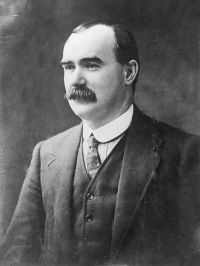 James Connolly,
State Monopoly Versus Socialism
(1899)
James Connolly,
State Monopoly Versus Socialism
(1899)
“ To argue that, since in such enterprises the private property-holder is dispensed with, therefore he can be dispensed with in all other forms of industrial activity, is logical enough and we really fail to see in what manner the advocates of capitalist society can continue to clamour for such state ownership as that alluded to – ownership in which the private capitalist is seen to be superfluous, and yet continue to argue that in all other forms of industry the private capitalist is indispensable. ”
Karl Kautsky,
Georgia: A Social-Democratic Peasant Republic…
(1921)
“ Every kind of social cooperation requires to be directed. But the capitalist becomes a captain of industry because he owns the means of production, and not because the workers and consumers have any confidence in his capacity or experience. ”
Thomas Kirkup, A history of socialism, 4th ed… (1909)
“ In social matters the world is confronted with the question, whether now when property in the direct utilisation of another man no longer exists, such property in his indirect exploitation should continue—that is, whether the free realisation and development of our labour-force should be the exclusive private property of the possessor of capital, and whether the employer as such, and apart from the remuneration of his intellectual labour, should be permitted to appropriate the result of other men’s labours. ”
Related terms
Authors who wrote about “private capitalism”
Edward BellamyEugene V. DebsWilliam English Walling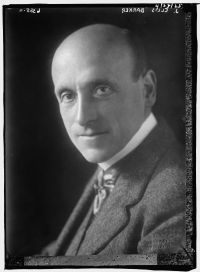 J. Ellis Barker
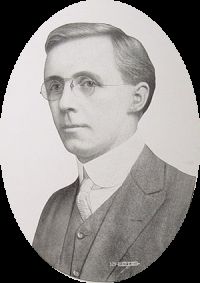 George R. Kirkpatrick
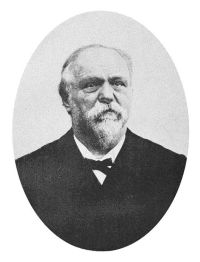 Georges SorelRosa Luxemburg
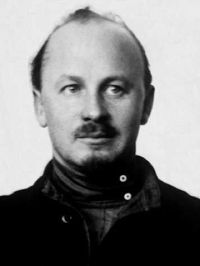 Nikolai Ivanovich BukharinRobert HunterThames WilliamsonThomas KirkupKarl MarxEdmond KellyW. H. MallockSamuel Peter OrthWalter Lyon BleaseMarcus DodsJohn Rae
 Peter KropotkinJoseph Rickaby