Probability theory

Definition and stakes

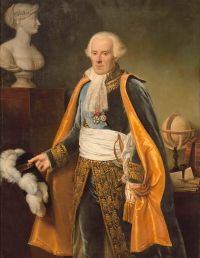
marquis de Pierre Simon Laplace,  A Philosophical Essay on Probabilities

“ The theory of chance consists in reducing all the events of the same kind to a certain number of cases equally possible, that is to say, to such as we may be equally undecided about in regard to their existence, and in determining the number of cases favorable to the event whose probability is sought. The ratio of {7} this number to that of all the cases possible is the measure of this probability, which is thus simply a fraction whose numerator is the number of favorable cases and whose denominator is the number of all the cases possible. ”
Source: Gutenberg

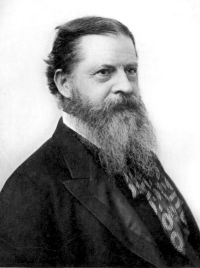
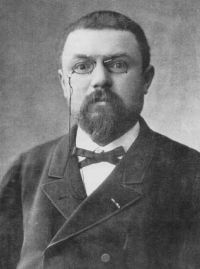
Portrait of Henri Poincaré Henri Poincaré,  Translation:Two Papers of Henri Poincaré on Mathematical Physics (1921)

“ When, in the applications of the probability theory to the molecular theories, we seek the state of a system that presents the maximum of probability, we always find that, thanks to the immense number of the molecules, this maximum is so pronounced that one can neglect the probability of all the states which deviate appreciably from the most probable state. ”
Source: Wikisource

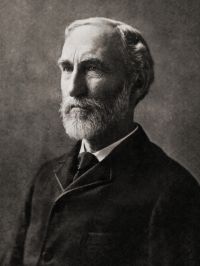
Portrait of John Stuart Mill John Stuart Mill,  A System of Logic: Ratiocinative and Inductive…

“ No reasonable person would lay an even wager in favour of white, against black and red; though against black alone, or red alone, he might do so without imprudence.
The common theory, therefore, of the calculation of chances, appears to be tenable. Even when we know nothing except the number of the possible and mutually excluding contingencies, and are entirely ignorant of their comparative frequency, we may have grounds, and grounds numerically appreciable, for acting on one supposition rather than on another; and this is the meaning of Probability.
”
Source: Gutenberg

Get perspective with Kwize: daily news enlightened by great literature