Paul Klapper, College Teaching
“ At any rate, in this borderland between cultural and professional studies, where the college is merging with the university or professional school, the necessity for the able teacher is a paramount issue. ”
Paul Klapper, College Teaching
“ At any rate, in this borderland between cultural and professional studies, where the college is merging with the university or professional school, the necessity for the able teacher is a paramount issue. ”
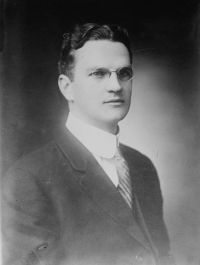 William Trufant Foster,
Should Students Study?
(1917)
William Trufant Foster,
Should Students Study?
(1917)
“ But why strive for high rank in the college? Why not wait for the more "practical" studies of the professional school? Hundreds of boys the country over declare to-day that it makes little difference whether they win high grades or merely passable grades in the liberal arts, since these courses have no definite bearing on their intended life-work. Almost invariably they are ready to admit that they must settle down to serious effort in the studies of law, medicine, engineering—that is to say, in professional schools. ”
Adoniram Judson Ladd, On the Firing Line in Education
“ The next step was the expansion of the department of education into the Teachers College, or School of Education, as it is getting to be called, which is now recognized as a professional school of equal rank with the School of Law or the School of Medicine. An essential element of its equipment is a high school for observation and practise under expert supervision, just as an elementary practise school is an essential part of a well equipt normal school. ”
Frederic Kenyon Brown, Through the school: The experiences of a mill boy in securing an education (1912)
“ Why doesn’t it send them into the world to be useful?”“That’s what a good many people say, about us students,” I replied. “But books and professors and courses of study are only a part of what a student gets in our college, sir. It’s a very peculiar situation. I’m older than most of the students, and have had the advantage [312] of a professional training, and so can look on the college through somewhat serious eyes. You would be astounded, for instance, at the tremendous education that the men receive from purely student affairs.” ”
Various, Popular Science Monthly (1903)
“ The student of the professional school who must complete his work in three years should be permitted to do so, while those who show ability for investigation and independent thought should work both in the professional school and the graduate school, and should be permitted to prepare simultaneously for the professional qualification and for the degree of A.M. or Ph.D., or what they represent. ”
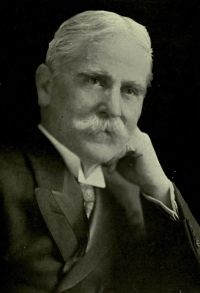 Henry Van Dyke,
The Spirit of America
Henry Van Dyke,
The Spirit of America
“ It is growing more and more difficult to get into a first-class professional school without a collegiate or university degree. Already, if the American student wants system and regularity, he can get a closely articulated course, fitted to his individual needs, from the primary school up to the door of his profession. ”
Florence Converse, The Story of Wellesley
“ Training for citizenship and the preparation of the scholar are then the twofold function of the college. To furnish professional training for lawyers, doctors, ministers, engineers, librarians, is manifestly the work of the university or the technical school, and not the function of the college. Neither is it, in my opinion, the work of the college to prepare its students specifically to be teachers or even wives and husbands, mothers and fathers. ”
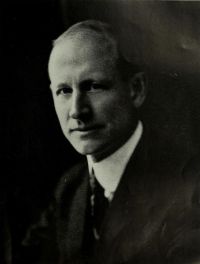 Frank Pierrepont Graves,
A student's history of education
Frank Pierrepont Graves,
A student's history of education
“ In connection with higher education there are such new tendencies as university extension, correspondence courses, summer sessions, university interest in the practical problems of the people, the correlation of the first two years of college with the secondary school, more flexible entrance requirements, an increasing number of fields of professional work, and, above all, the professional training of teachers through Departments of Education, Teachers Colleges, and Schools of Education. ”
 George S. Boutwell,
Thoughts on Educational Topics and Institutions
George S. Boutwell,
Thoughts on Educational Topics and Institutions
“ There must always be a place for classical schools, scientific schools, professional schools, which, in their respective courses of study, either anticipate or follow, in the career of the student, his four years of college life. With these conditions and limitations stated, the point I seek to establish is that a public high school can do the work usually done in such institutions more faithfully, thoroughly, and economically, than it can be done anywhere else. ”
 Anna Garlin Spencer,
The family and its members
Anna Garlin Spencer,
The family and its members
“ The Three Learned Professions.—When there were but three learned professions, law, medicine, and theology, and the man of action, soldier or ruler, thought lightly of them all in comparison with his own field of activity, the higher education could be limited to those of selected classes. Now the social need is for trained talent in a far broader area, and the consequence is that not only 273is the grade-school being made over but the professional goal of college and university is being extended beyond the dreams of old pedagogues. ”
Adoniram Judson Ladd, On the Firing Line in Education
“ It was discovered, also, that, in spite of the efforts being put forth by the normal schools, the higher teaching positions—superintendencies, high school principalships, etc.—were going to men of collegiate attainment, even at the sacrifice of professional training which was then being recognized as very desirable. ”
Various, Popular Science Monthly (1903)
“ But, in the course of study in the common school, it is proper and necessary that the human interest should always be kept somewhat in advance of the physical. This is simply a statement of the fact, admitted by all, that professional training in the special school is the application, in a restricted field, of principles which should be applied in every field and in all studies, whether those characteristic of a profession or those which constitute divisions of a broad, liberal and cultural education. ”
Adoniram Judson Ladd, On the Firing Line in Education
“ The course in methods includes observation and practise teaching of the same subjects in the Model High School under expert supervision. Many of our students voluntarily take more than 20 hours, but that is all that is required. We have cut down the professional requirement to the minimum so as to leave ample opportunity within the course for thoro mastery of the subjects to be taught, and also for general culture and the development of broad-mindedness, not being willing to send teachers into the high schools as narrow specialists. ”
Various, Popular Science Monthly (1894)
“ This is done through teachers' institutes in all the States, summer schools, teachers' training classes in the high schools, normal schools, and departments and chairs of pedagogy in the universities; and by means of these agencies almost every teacher receives more or less professional instruction which enables her to grasp the problem she is to undertake in the management of a school in a more skilled and scientific manner. ”
Various, Popular Science Monthly (1911)
“ But they receive their real social background by the legal obligation of the employer to give to every boy the opportunity to attend these school classes. Compared with the general elementary school, the continuation school is professional, while the other is a humanistic school. On the other hand, compared with the real technical schools both lower and higher, it combines the technical instruction with general education. ”
Adoniram Judson Ladd, On the Firing Line in Education
“ In the School of Education the program is for all [Pg 85] the professional subjects, save general psychology, to be taken after the beginning of the junior year and so immediately prior to the actual work of teaching, and too, when the student is relatively mature. But with the Arts student, it may all be taken much earlier, during relative immaturity and making a long period elapse between it and the work of teaching—quite long enough for the influence of the professional atmosphere, always valuable in such matters, to be wholly lost. ”
Various, Popular Science Monthly (1893)
“ If we regard the university, as is our pride, to be more than an auxiliary to the professional schools, we must also demand an effective interworking of the faculties, a general scientific course by the side of the professional course. ”
George S. Boutwell,
Thoughts on Educational Topics and Institutions
“ As teachers improve, so do schools; and, as schools improve, so do teachers. The influence exerted by teachers is first beneficial to pupils, but, as a result, we soon have a class of better qualified teachers. With these ideas of the importance of the teacher's vocation to primary instruction, and, consequently, to all good learning, it is not strange [Pg 237] that I place a high value upon professional training. A degree of professional training more or less desirable is, no doubt, furnished, by every school ”
Alexander Darroch, The Children: Some Educational Problems
“ The Universities therefore originated as a union of 'technical' schools for ecclesiastics, jurists, and physicians, to which division the faculty of Arts was related as a general preparatory school, until during the nineteenth century it also assumed something of the character of a professional institution for the training of teachers for the Secondary School. ”
Thomas E. Sanders, Twenty Talks to Teachers (1908)
“ The high school course will prepare your boy for the deeper and broader training of the university.—If he is made of the right material he will get the university training for himself, or urge you to help him to secure it. If he does not go to the university the high school course will fit him to become a successful leader in business or lay the foundation for a professional course or career. ”
Amy Blanche Bramwell, The training of teachers in the United States of America (1894)
“ At present one of the most hotly debated questions in connection with Normal Schools relates to the subjects to be included in the curriculum. Shall the Normal School give professional training alone, or shall it also provide instruction in Academic subjects? ”
Charles William Eliot and William Allan Neilson, The Harvard Classics Vol. 51 (1914)
“ This attitude is more general among teachers and principals of elementary schools and among school superintendents than among teachers and masters of secondary schools; among public secondary-school teachers than among private secondary-school teachers; and least general among college teachers. Yet to these latter the call to professional study of the problems of their own work is loudest. They have greatest need to test their results and possibly revise their methods, to reconceive their aims and discover new ways to achieve them. In America the college stands perforce for culture ”
Various, Popular Science Monthly (1910)
“ There are three things that the university would do—represented by the college, the professional schools and the graduate faculty. Through the college it would give men broader interests and wider sympathies, through the professional schools it would teach the routine methods of practise, through the graduate faculty it would improve these methods and enlarge our knowledge. ”
 Irvah Lester Winter,
Public Speaking: Principles and Practice
Irvah Lester Winter,
Public Speaking: Principles and Practice
“ In each of the larger universities, including professional schools and summer schools, the students electing the courses in speaking number well into the hundreds. These courses are now being more generally placed among those counted towards the academic degrees. The demand for trained teachers in the various branches of the work in schools and colleges is far above the present supply. Educators in general look with more favor upon this kind of instruction, recognizing its practical usefulness and its cultural value. ”
James J. Walsh, Education: How Old The New
“ Only when the professional schools are real graduate departments, requiring under-graduate training for admission, is the university doing its work properly. This was the rule in the past--hence the precious lessons for the present in the story of these old-time universities. ”
Various, Popular Science Monthly (1887)
“ About 1100 there arose studia generalia, or what we should now designate as professional schools, called forth, as Professor Laurie believes, by the growth of learning demanding specialization, by the rise of a lay feeling in connection with the work of the physician, the lawyer, and even the theologian, and by the actual specializing of the three leading studies at different centers of instruction. These schools were open to all the world, free from monastic rule, and self-governing. The name university came later. ”
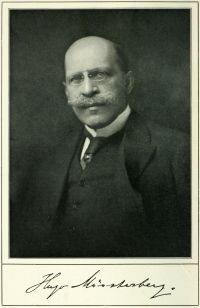 Hugo Münsterberg,
The Americans
Hugo Münsterberg,
The Americans
“ We have seen that the learned professions are fed by professional and very practical schools, which turn out a doctor, lawyer, or preacher without requiring a broad and liberal previous training; and how, on the other hand, the college has been the independent institution for higher culture, and how these two institutions have slowly grown together in the course of time, so that the college course has come at length to be the regular preparation for those who attend professional schools. ”
William Trufant Foster,
Should Students Study?
(1917)
“ The naïve division of all studies into those which are useful and those which are merely ornamental has doomed to confusion from the start much of our modern discussion concerning the relative values of vocational high schools and classical high schools, or colleges of liberal arts, on the one hand, and technical and professional schools, on the other hand. ”
Various, Popular Science Monthly (1913)
“ THE future of higher education in America depends upon the position we shall grant to the college and university professor. The growing conception that the faculty—not buildings, nor advertisements, nor pyrotechnic display—but the faculty, makes the school is bound eventually to be accepted. ”
 Alice Henry,
The Trade Union Woman
Alice Henry,
The Trade Union Woman
“ In so far as the pre-vocational work in primary schools, the manual work and technical training in high schools, the short courses, the extension lectures and the correspondence instruction of universities are meeting this urgent popular need, just so far are they raising all work to a professional standard, just so far are they bringing down to the whole nation the gifts of culture and expert training that have hitherto been the privilege of the few. ”
Adoniram Judson Ladd, On the Firing Line in Education
“ While many of the members of the faculty do, and may continue to, give courses in the other colleges, they have a distinct, organic connection with the teachers college. The teachers college is also getting to have, as a vital part of its equipment, a model high school bearing to it the same relationship that the model, or practise, school bears to our normal schools. ”
“ Consider the influence you may have upon the other institutions of our country, by attaching yourself to some one under the existing organization. If you take an [Pg 231] academy or a private school, constituted and organized like other similar institutions, success in your own, will give you influence over others. A successful teacher of an academy, raises the standard of academic instruction. A college professor, if he brings extraordinary talents to bear upon the regular duties of that office, throws light, universally, upon the whole science of college discipline and instruction. ”
Adoniram Judson Ladd, On the Firing Line in Education
“ What should be the attitude of the university toward the education of teachers? Let us follow the development a little farther.During the last few years another very interesting phase of the movement has begun to show itself. You will recall that as soon as professional preparation demonstrated its usefulness in improving the character of elementary teaching, it was demanded for teachers in the secondary schools. ”
George S. Boutwell,
Thoughts on Educational Topics and Institutions
“ And I am satisfied, beyond all reasonable doubt, that, when the normal schools receive only those whose education is equivalent to that now given in the high schools, a body of teachers will be sent out who will surpass the graduates of any other institution, and whose average professional attainments and practical excellence will meet the highest reasonable public expectation. ”
Paul Klapper, College Teaching
“ A conspicuous tendency in our universities is toward specialization; their spirit and methods are largely derived from the professional and graduate schools which give them their tone and prestige. They look toward research and the advancement of learning as their particular raison d'être, and also toward the practical application of knowledge to actual life and the disciplining of special faculties for definite vocational ends. ”
Mary Schenck Woolman, The Making of a Trade School
“ The many problems connected with obtaining an adequate teaching staff seem at present to have but one solution, i. e., the school has to be its own training school for its faculty to a greater or less extent. ”
George S. BoutwellThomas E. SandersAmy Blanche Bramwell Philip MagnusFrank Pierrepont GravesThomas R. ColeM. Alderton Pink
 Booker T. WashingtonWilliam Trufant FosterFrederic Kenyon BrownVariousPaul Klapper
 Thorstein Veblen
 John DeweyJohn Marshall Barker
 Jacob Abbott
 Henry Adams
 Simon NewcombAlexander Darroch