Rapping (sound)

Definition and stakes

John Delaware Lewis,  Once a Week (1860)

“ Spirits were ordered to rap on the walls, and inside the piano, which they entirely failed to do, rapping all the time unmistakeably under the table, with slight variations of sound. And every time that one of these raps was produced, it was impossible for the younger medium to repress a slight, almost imperceptible, movement of the body, showing plainly that they were caused by her: even if this could for a moment be doubted, after a second request from us that she would leave the table, and suffer us to hear so much as a single rap when she was not there, which she again refused to do. ”

Source: Wikisource

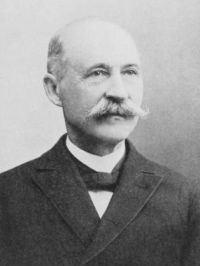
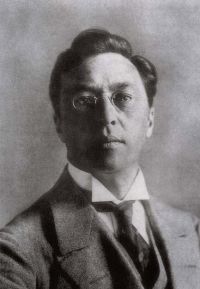
Portrait of Ernst Mach Ernst Mach,  Popular scientific lectures

“ Now that we have made ourselves acquainted with overtones and beats, we may proceed to the answer of our main question, Why do certain relations of pitch produce pleasant sounds, consonances, others unpleasant sounds, dissonances? It will be readily seen that all the unpleasant effects of simultaneous sound-combinations are the result of beats produced by those combinations. Beats are the only sin, the sole evil of music. Consonance is the coalescence of sounds without appreciable beats. ”
Source: Gutenberg

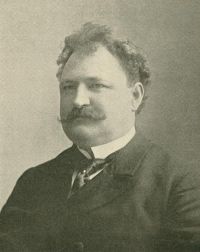
Portrait of Thomas Fillebrown Thomas Fillebrown,  Resonance in Singing and Speaking

“ A great deal of the irrational and injurious "teaching" of singing that prevails everywhere, and of the controversy that befogs the subject, is due to the widely prevalent notion that the little vocal cords are the principal cause of tone, whereas they are in themselves insignificant as sound producers.
It is the vibrations of the air in the resonance chambers of the human instrument, together with the induced vibrations of the instrument itself, which give tone its sonority, its reach, its color, and emotional power.
”
Source: Gutenberg

Get perspective with Kwize: daily news enlightened by great literature