Sacrificer

Definition and stakes

Unknown,  Sacred Books of the East/Volume 1 (1879)

“ Then he sacrifices, saying: 'Adoration to Vâyu (air) , who dwells in the sky, who dwells in the world. Obtain that world for me, the sacrificer! That is the world Tor the sacrificer!'
10. 'I (the sacrificer) shall go thither, when this life is over. Take this! Cast back the bolt!' Having said this, he rises. For him the Rudras fulfil the noon-oblation.
11. Before the beginning of the third oblation, the sacrificer, sitting down behind the Âhavanîya altar, and looking towards the north, sings the Sâman, addressed to the Âdityas and Visve Devas:
12.
”
Source: Wikisource

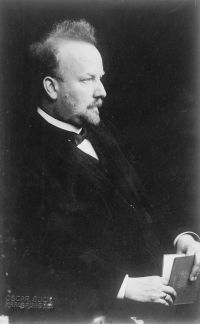
Portrait of Andrew Lang Andrew Lang,  Myth, Ritual and Religion, Vol…

“ The sacrifice and the sacrificer come between gods and men. On the man's side is faith, munificence, a compelling force of prayer and of intentness of will. The sacrifice invigorates the gods to do the will of the sacrificer; it is supposed to be mystically celebrated in heaven as well as on earth—the gods are always sacrificing. ”
Source: Gutenberg

Northcote Whitridge Thomas and Edwin Hatch,  1911 Encyclopædia Britannica (1911)

“ The sacrificer may aim at causing a speedy death or a slow one. The corpse may be burnt, in part or as a whole; portions may be assigned to the priest, the sacriflcer and the gods; the skull, bones, &c., may receive special treatment; the fat or blood may be set aside, and they or the ashes may be singled out as the share of the god, to be offered upon the altar; the skin of the victim may be employed as a covering for the idol or material representative of the god, either permanently or till the next annual sacrifice. ”
Source: Wikisource

Get perspective with Kwize: daily news enlightened by great literature