Scalplock

Definition and stakes

George Warburton,  The Conquest of Canada, Vol. 2

“ The scalping is an operation not calculated of itself to take life, as it only removes the skin, without injuring the bone of the head, and necessarily, to be a genuine scalp, must contain and show the crown and center of the head—that part of the skin which lies directly over what the phrenologists call 'self-esteem,' where the hair divides and radiates from the center, of which they all profess to be strict judges, and able to decide whether an effort has been made to produce two or more scalps from one head. ”
Source: Gutenberg

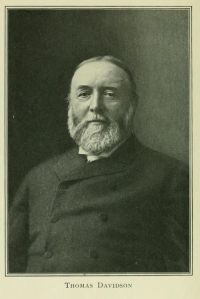
Portrait of Thomas Davidson Thomas Davidson,  Chambers's Twentieth Century Dictionary 1908… (1908)

“ Scalops, skā′lops, n. a genus of American shrew-moles. [Gr. skalops, a mole—skallein, to dig.]
Scalp, skalp, n. the outer covering of the skull or brain-case, including the skin, the expanded tendon of the occipito-frontalis muscle, with intermediate cellular tissue and blood-vessels: the skin on which the hair grows: the skin of the top of the head, together with the hair, torn off as a token of victory by the North American Indians: the skin of the head of a noxious wild animal: (her.)
”
Source: Wikisource

Anna M. Galbraith,  Personal hygiene and physical training for women (1916)

“ In order to have thick, luxuriant, silky hair great attention must be paid to the condition of the scalp, since it is the scalp which contains the blood-vessels that nourish the hair. The scalp should be thick and pliable and move freely over the bones of the skull. If the scalp is drawn tightly over the bones of the skull, it tends to constrict the blood-vessels, and so lessen the supply of blood to the scalp and cause atrophy of the roots of the hair from pressure. ”
Source: Gutenberg

Get perspective with Kwize: daily news enlightened by great literature