
“ Public approval is a most desirable luxury, I grant you—wealth and ease are desirable luxuries, and the favour of those in power—but they're only luxuries. And I know in this matter but one real necessity: my own self-approval. If consciously I preached a polite sermon there, my own soul would accuse me and I should be as a leaf in the wind for power. No, Nance—never urge me to be untrue to that divine Christ-self within me! If I cannot be my best self before God, I am nothing. I must preach Christ and Him crucified, whether it be to the wealthy of St. Antipas or only to believing poverty. ”
Self-approval
Definition and stakes
The theme of “self-approval” has been addressed by authors such as G. A. Johnston, F. H. Bradley, George Herbert Palmer, Ralph Waldo Trine and William De Witt Hyde. It is often associated with terms like praise, virtue, esteem, opinion and social.
Quotes about “self-approval”
 Mark Twain,
Europe and elsewhere
(1923)
“ Morals, religions, politics, get their following from surrounding influences and atmospheres, almost entirely; not from study, not from thinking. A man must and will have his own approval first of all, in each and every moment and circumstance of his life--even if he must repent of a self-approved act the moment after its commission, in order to get his self-approval again: but, speaking in general terms, a man’s self-approval in the large concerns of life has its source in the approval of the peoples about him, and not in a searching personal examination of the matter. ”
 Annie Payson Call,
The Freedom of Life
“ If we were to take away the prop of self-approval entirely and immediately from any one of the habitually self-satisfied people, the probable result would be an entire nervous collapse, or even a painful form of insanity; and, in all changes of state from bondage to freedom, the process is and must be exceedingly slow. No one ever strengthened his character with a wrench of impatience, although we are often given the opportunity for a firm and immediate use of the will which leaves lasting strength behind it. ”
Mark Twain,
Europe and elsewhere
(1923)
“ We know it is a matter of association and sympathy, not reasoning and examination; that hardly a man in the world has an opinion upon morals, politics, or religion which he got otherwise than through his associations and sympathies. Broadly speaking, there are none but corn-pone opinions. And broadly speaking, corn-pone stands for self-approval. Self-approval is acquired mainly from the approval of other people. ”
Mark Twain,
Europe and elsewhere
(1923)
“ But as a rule our self-approval has its source in but one place and not elsewhere--the approval of other people. A person of vast consequences can introduce any kind of novelty in dress and the general world will presently adopt it--moved to do it, in the first place, by the natural instinct to passively yield to that vague something recognized as authority, and in the second place by the human instinct to train with the multitude and have its approval. ”
 Thomas Fowler,
Progressive Morality: An Essay in Ethics
“ We applaud generosity; we censure meanness: but there is a large intermediate class of acts which can neither be designated as generous nor mean. It will be observed that, in my enumeration of the classes of acts to which praise and blame, self-approbation and self-disapprobation attach, I have carefully drawn a distinction between the invariable connexion which obtains between certain acts and the ethical approval of ourselves or others, and the only general connexion which obtains between the omission of those acts and the ethical feeling of disapproval. ”
Max Farrand, The Records of the Federal Convention of 1787 (1911)
“ I was sent to exercise my judgment, and to exercise it was my fixed determination; being instructed by even an imperfect acquaintance with mankind, that self-approbation is the only true reward which a political career can bestow, and that popularity would have been but another name for perfidy, if to secure it, I had given up the freedom of thinking for myself. ”
 Alexander Bain,
Moral Science; a Compendium of Ethics
“ We approve certain conduct in others, and are thus disposed to approve the same conduct in ourselves: what we praise as judges of our fellow-men, we deem praise-worthy, and aspire to realize in our own conduct. Some men may differ from us, and may withhold that praise; we may be pained at the circumstance, but we adhere to our love of the praise-worthy, even when it does not bring the praise. When we obtain the praise we are pleased, and strengthened in our estimate; the approbation that we receive confirms our self-approbation, but does not give birth to it. ”
 Adam Smith,
The Essays of Adam Smith
“ That concerning the principle of approbation can possibly have no such effect. To examine from what contrivance or mechanism within, those different notions or sentiments arise, is a mere matter of philosophical curiosity. CHAP. I.—Of those Systems which deduce the Principle of Approbation from Self-love. THOSE who account for the principle of approbation from self-love, do not all account for it in the same manner, and there is a good deal of confusion and inaccuracy in all their different systems. ”
Richard W. Thompson, The Footprints of the Jesuits
“ Again: "What can be more complete than our submission to the orders of our superiors in everything that concerns our state of life, the places we are to dwell in, the employments, the offices we are to be engaged in." [20] And again, this submission to the will and judgment of the superior, or general, is called "renouncing our own judgment," "the annihilation of self," "complete obedience, entire dependence upon the will of others, perfect abandonment of personal reputation." ”
Malcolm Guthrie, On Mr. Spencer's Data of Ethics
“ But it will be seen that the Will or Free Will mentioned here, and defined as self-assertion and determination to please one's self, is self-assertion as opposed to environment—a self-assertion which, irrespective of the qualities or nature of the motives comprised in that self, determines to work out its own pleasure there and then in spite of all opposition. ”
 William Somerset Maugham,
The Moon and Sixpence
(1919)
“ It affords you then an inordinate amount of self-esteem. You have the self-satisfaction of courage without the inconvenience of danger. But the desire for approbation is perhaps the most deeply seated instinct of civilised man. ”
 John Stuart Blackie,
Four Phases of Morals: Socrates…
“ And that this should be the general feeling of all classes of mankind with regard to the matter is natural enough; for the object of the operation being generally to convince the person operated on that he knows nothing about what he professes to know, and to do this by publicly entangling him in the web of his own arguments, and forcing him into a self-contradiction, it is obvious that self-esteem and love of approbation will, in ninety-nine cases out of the hundred, be strong enough to stir a certain degree of resentment in the breast of the sufferer. ”
Pius a Sp. Sancto, Life of Father Ignatius of St. Paul…
“ Those who are most obviously the slaves of self-will, will, generally, be loudest in their protestations of the purity and excellence of their motives; so that my advice to those who wish to establish in the minds of others a good opinion of their sincerity, would generally be, to say nothing about it, and let their conduct speak for itself. ”
 George Bernard Shaw,
An Unsocial Socialist
(1883)
“ No sensible person can accuse me of exaggerating my own importance because I value my reputation sufficiently to object to my approval being publicly cited in support of a cause with which I have no sympathy. ”
Alexander Bain,
Moral Science; a Compendium of Ethics
“ Take, for example, the qualities useful to ourselves—reason and self-command; we approve the first as just and accurate, before we are aware of its being useful; and as to self-command, we approve it quite as much for its propriety as for its utility; it is the coincidence of our opinion with the opinion of the spectator, and not an estimate of the comparative utility, that affects us. Regarding the qualities useful to others—humanity, generosity, public spirit and justice—he merely repeats his own theory that they are approved by our entering into the view of the impartial spectator. ”
Various, Continental Monthly , Vol. 6, No…
“ Yet such a course presents the serious objection of preventing an impartial judgment through the strong temptation to self-laudation, which is in itself the blinding of reason as well as the counteraction of all aspirations for a still higher good. ”
Thomas Fowler,
Progressive Morality: An Essay in Ethics
“ And I may be the more emboldened in my refusal, when I consider how mixed, or how selfish, are often the motives of those who solicit me, and that the love of notoriety, or the gratification of a feeling of self-importance, or a fussy restlessness, or the craving for preferment is frequently quite as powerful an incentive of their activity as a desire to promote the objects explicitly avowed. ”
G. A. Johnston, An Introduction to Ethics, for Training Colleges… (1915)
“ Unless we like our work, we can do neither it nor ourselves justice. In a word, the calling must be congenial. Only if our vocations are congenial, only if duty and pleasure can be harmonised in them, can we adopt the attitude of loyalty towards them. And unless we are loyal to our vocations we cannot hope to fulfil them well. But, it may be asked, what does loyalty to vocation imply? In being loyal to my vocation, must I practise self-denial, or may I make my vocation the means to my own self-assertion? ”
 Leslie Stephen,
The English Utilitarians, Volume 1…
“ It merely means, in fact, that all conduct has motives. The statement, which I have quoted about the 'self-preference' principle may only mean a doctrine which is perfectly compatible with a belief in 'altruism'—the doctrine, namely, that as a fact most people are chiefly interested by their own affairs. The legislator, he tells us, should try to increase sympathy, but the less he takes sympathy for the 'basis of his arrangements'—that is, the less call he makes upon purely unselfish motives—the greater will be his success. ”
Annie Payson Call,
The Freedom of Life
“ Let us not forget that if we are overpleased—selfishly pleased—at the approval of others, we are just as much in bondage to them as if we were angry at their disapproval. Both approval and disapproval are helpful if we accept them for the use they can be to us, but are equally injurious if we take them to feed our vanity or annoyance. ”
 Thomas Hill Green,
Lectures on the Principles of Political Obligation
“ But though the natural impulses of the will are thus the work of the self-realising principle in us, it is not in their gratification that this principle can find the satisfaction which is only to be found in the consciousness of becoming perfect, of realising what it has it in itself to be. In order to any approach to this satisfaction of itself the self-realising principle must carry its work farther. ”
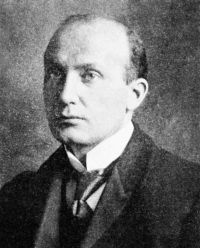 Robert Sessions Woodworth,
Psychology
“ What has happened here is that the individual, having identified himself with his hero or his group, finds in their greatness a means of asserting himself as against other individuals who have not the good fortune to be so identified. This transferred self-assertion is a strong element in loyalty and public spirit, and plays a large and useful part in public affairs. ”
 Ralph Waldo Trine,
What All The World's A-Seeking
“ The man who can't get beyond himself, his own aggrandizement and interests, must of necessity be small, petty, personal, and at once marks his own limitations; while he whose life is a life of service and self-devotion has no limits, for he thus puts himself at once on the side of the Universal, and this more than all else combined gives a tremendous power in oratory. ”
 Agnes Repplier,
Counter-Currents
(1916)
“ Our position has always been a tenable one, and no nation has had any ground on which to censure us; but we have found in it scant encouragement for self-esteem. Even the flowers of domestic oratory, the oft-repeated assertion that our prudence and our wealth make us respected on earth, and blessed in the sight of Heaven, fail to quicken our sad hearts. ”
 Henry Philip Tappan,
A Review of Edwards's "Inquiry into the Freedom of the Will"
“ The personality—the me—the will, a self-moving cause, directs itself by an act of attention to the reason, and receives the laws of its action. The perception of these laws is attended with the conviction of their rectitude and imperative obligation; at the same time, there is the consciousness of power to obey or to disobey them. ”
Joel Tiffany, The Astral World—Higher Occult Powers
“ This principle of action is from its nature finite and antagonistic, upon the principle that that which it seeks to appropriate to its own benefit and make its own, can not at the same time be appropriated by another; and hence the desire of self-appropriation naturally leads the individual into antagonism with others. ”
 Victor Cousin,
Lectures on the true, the beautiful and the good
“ Let us not be in haste to condemn reflection: if it often produces egotism, it also produces devotion. What, in fact, is self-devotion? It is giving ourselves freely, with full knowledge of what we are doing. ”
 F. H. Bradley,
Appearance and Reality — Chapter XXV
(1893)
“ It will then be good, so far as it is regarded solely from this one aspect. The real objection against making approval co-extensive with goodness is that approval implies usually a certain degree of reflection, and suggests the judging from an abstracted and impersonal point of view. In this way approbation may be found, for instance, to be, so far, incompatible with love, and so also with some goodness. But if approbation is taken at a low level of development, and is used to mean no more than the finding anything to be that which gives satisfaction, the objection disappears. ”
Malcolm Guthrie, On Mr. Spencer's Data of Ethics
“ That there exists such a power of self-regulation is a fact recognized in every department of social intercourse—in the attribution of praise or blame, in the teachings of the moralist, in the eye of the law, and in the process of education. ”
Alexander Bain,
Moral Science; a Compendium of Ethics
“ In short, there are two principles at work within us. We are pleased with approbation, and pained by reproach: we are farther pleased if the approbation coincides with what we approve when we are ourselves acting as judges of other men. ”
 Joseph Droz,
The Art of Being Happy
“ Touching the interests which are common to him and other people, he decides for simple justice; and, in so awarding, does not deem that he injures himself, his first possession being his own self-respect. ”
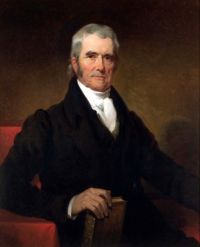 John Marshall,
The Life of George Washington, Vol…
“ Now, justice to myself, and tranquillity of conscience require that I should act a part, if not above imputation, at least capable of vindication. Nor will you conceive me to be too solicitous for reputation. Though I prize as I ought the good opinion of my fellow citizens, yet, if I know myself, I would not seek or retain popularity at the expense of one social duty, or moral virtue. ”
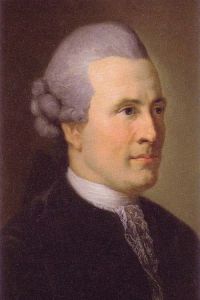 Johann Georg Zimmermann,
Solitude
“ Why, alas! will not men strive to form opinions of their own, rather than submit to be guided by the arbitrary dictates of others? If a work please me, of what importance is it to me whether the beau monde approve of it or not?—What information do I receive from you, ye cold and miserable critics?—Does your approbation make me feel whatever is truly noble, great and good, with higher relish or more refined delight?—How can I submit to the judgment of men who always examine hastily, and generally determine wrong? ”
 Orison Swett Marden,
How to Succeed; Or, Stepping-Stones to Fame and Fortune
“ But self-respect must be accompanied by self-conquest, or our strong feelings may prove but runaway horses. He who would command others must first learn to obey, and he who would command his own powers must learn to be submissive to the still small voice within. Discipline the passions, curb pride and impatience, restrain all hasty impulses. Deny yourself the gratification of any desire not sanctioned by reason. Shame and its consequent degradation follow the loss of our own good opinion rather than the esteem of others. ”
 Ralph Waldo Emerson,
Self-Reliance
(1841)
“ Inasmuch as the soul is present, there will be power not confident but agent. To talk of reliance is a poor external way of speaking. Speak rather of that which relies, because it works and is. Who has more obedience than I masters me, though he should not raise his finger. Round him I must revolve by the gravitation of spirits. We fancy it rhetoric, when we speak of eminent virtue. ”
G. A. Johnston, An Introduction to Ethics, for Training Colleges… (1915)
“ He identifies himself with the ends which he seeks as a loyal servant of his vocation. Thus his real self becomes his family, or his profession, or his state, or his church. When we understand self in this sense, the conflict between the adherents of self-denial and the partisans of self-assertion very largely disappears. ”
Related terms
Authors who wrote about “self-approval”
G. A. JohnstonF. H. BradleyGeorge Herbert PalmerRalph Waldo Trine William De Witt HydeMalcolm Guthrie
 Clarence Day
 Hermann HesseMark TwainThomas FowlerThomas Hill GreenAnnie Payson CallAlexander BainJonathan ElliotWilliam Somerset MaughamRichard W. ThompsonEdmund RandolphGeorge Bernard ShawJohn Stuart BlackiePius a Sp. Sancto
F. H. BradleyGeorge Herbert PalmerRalph Waldo TrineWilliam De Witt HydeMalcolm GuthrieClarence DayHermann HesseMark TwainThomas FowlerThomas Hill GreenAnnie Payson CallAlexander BainJonathan ElliotWilliam Somerset MaughamRichard W. ThompsonEdmund RandolphGeorge Bernard ShawJohn Stuart BlackiePius a Sp. Sancto