Sine (trigonometry)

Definition and stakes

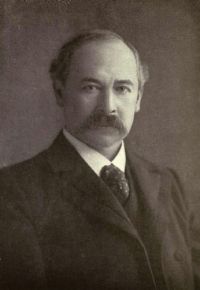
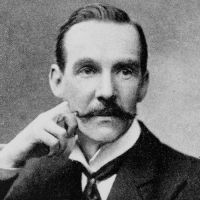
Portrait of Ernest William Hobson Ernest William Hobson,  Encyclopædia Britannica, Ninth Edition (1888)

“ The unit of circular measure is too large to be convenient for practical purposes, but its use introduces a simplification into the series in analytical trigonometry, owing to the fact that the sine of an angle and the angle itself in this measure, when the magnitude of the angle is indefinitely diminished, are ultimately in a ratio of equality. ”

Source: Wikisource

Portrait of Josiah Willard Gibbs Josiah Willard Gibbs,  Scientific Papers of Josiah Willard Gibbs (1906)

“ Now the notations and represent the sine and the cosine of the angle included between and combined in each case with certain other simple notions. But the sine and cosine combined with these auxiliary notions are incomparably more amenable to analytical transformation than the simple sine and cosine of trigonometry, exactly as numerical quantities combined (as in algebra) with the notion of positive or negative quality are incomparably more amenable to analytical transformation than the simple numerical quantities of arithmetic. ”
Source: Wikisource

Get perspective with Kwize: daily news enlightened by great literature