Sound doctrine

Definition and stakes

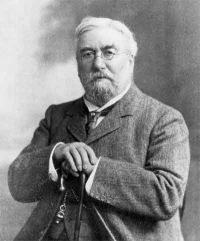
Sir J. A. Fleming,  Waves and ripples in water, air… (1912)

“ We recognize at once a difference between the sound of a vowel, say ah, sung by different persons to the same note of the piano and with the same loudness. There is a personal element, an individuality, about voices which at once arrests our attention, apart altogether from the tone or loudness. This sound-quality is determined by the form of the wave-motion, that is, by the nature of the movement of the air-particle during its little excursion to and fro in which it takes part in producing a zone of compression or rarefaction in the air and so forms a sound wave. ”
Source: Gutenberg

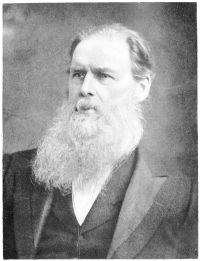
Portrait of Thomas Fillebrown Thomas Fillebrown,  Resonance in Singing and Speaking

“ A great deal of the irrational and injurious "teaching" of singing that prevails everywhere, and of the controversy that befogs the subject, is due to the widely prevalent notion that the little vocal cords are the principal cause of tone, whereas they are in themselves insignificant as sound producers.
It is the vibrations of the air in the resonance chambers of the human instrument, together with the induced vibrations of the instrument itself, which give tone its sonority, its reach, its color, and emotional power.
”
Source: Gutenberg

Portrait of Ernst Mach Ernst Mach,  Popular scientific lectures

“ Now that we have made ourselves acquainted with overtones and beats, we may proceed to the answer of our main question, Why do certain relations of pitch produce pleasant sounds, consonances, others unpleasant sounds, dissonances? It will be readily seen that all the unpleasant effects of simultaneous sound-combinations are the result of beats produced by those combinations. Beats are the only sin, the sole evil of music. Consonance is the coalescence of sounds without appreciable beats. ”
Source: Gutenberg

Get perspective with Kwize: daily news enlightened by great literature