Sphere (geometry)

Definition and stakes

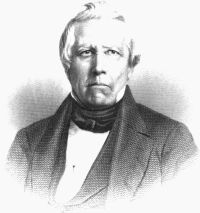
Portrait of Robert Stawell Ball Robert Stawell Ball,  Encyclopædia Britannica, Ninth Edition (1883)

“ In the geometry of two dimensions we can thus have either a plane or a sphere or a pseudosphere which are characterized by the property that a surface may be moved about in all directions without any change either in the lengths of its lines or in the magnitudes of its angles. The axiom which assumes that there is only one geodesic connecting two points marks off the plane and the pseudosphere from the sphere. The axiom that only one parallel can be drawn through a given point to a given line marks off the plane from the pseudosphere. ”
Source: Wikisource

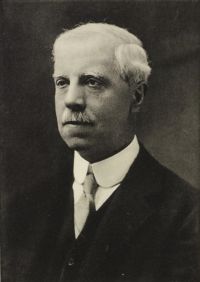
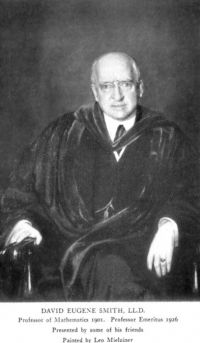
Portrait of David Eugene Smith David Eugene Smith,  The Teaching of Geometry

“ The sphere is less frequently looked upon in geometry as a surface, and in popular usage it is always taken as a solid.
Analogous to the postulate that a circle may be described with any given point as a center and any given line as a radius, is the postulate for constructing a sphere with any given center and any given radius. This postulate is not so essential, however, as the one about the circle, because we are not so concerned with constructions here as we are in plane geometry.
”
Source: Gutenberg

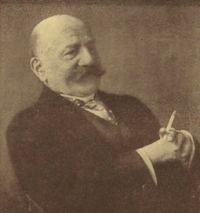
Various,  Encyclopaedia Britannica, 11th Edition…

“ We may, however, ignore the accented letters in translating theorems, for a configuration of lines and its polar with respect to a linear complex have the same projective properties. In Lie’s transformation a linear complex corresponds to the totality of spheres cutting a given sphere at a given angle. A most remarkable result is that lines of curvature in the sphere geometry become asymptotic lines in the line geometry. ”
Source: Gutenberg

Get perspective with Kwize: daily news enlightened by great literature