Splenic fever

Definition and stakes

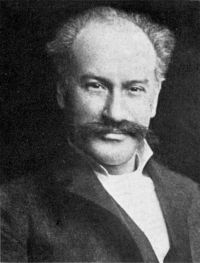
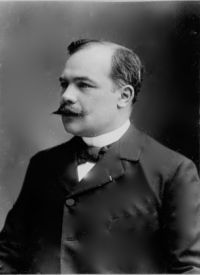
Portrait of René Vallery-Radot René Vallery-Radot,  Louis Pasteur: His Life and Labours

“ As splenic fever was at that time being studied in the laboratory of the École Normale, it was upon this fever that the research was first attempted. But the success of this research, said Pasteur, can only be hoped for if the disease is non-recurrent. It is only in this case that inoculation with the weakened microbe can protect from the deadly splenic fever. Unfortunately, human medicine is dumb as regards this question of non-recurrence. The man who is smitten with malignant pustule rarely recovers. ”
Source: Gutenberg

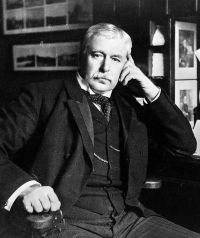
Portrait of René Vallery-Radot René Vallery-Radot,  Louis Pasteur: His Life and Labours

“ May we not now in all confidence assert that, if the cultivators choose, splenic fever may soon be a thing of the past among their animals, their shepherds, and among the butchers and the tanners of the towns, because splenic fever and malignant pustule are never spontaneous? The disease exists only where it has been sown, or where it has been diffused by the unconscious instrumentality of the earth-worm. ”
Source: Gutenberg

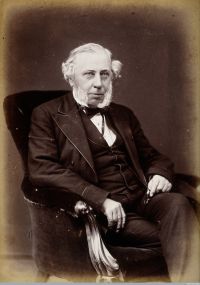
Portrait of René Vallery-Radot René Vallery-Radot,  Louis Pasteur: His Life and Labours

“ Those that died showed all the symptoms of what is called spontaneous splenic fever. The period of incubation lasted as long as eight or ten days, although, in its latter stages, the disease exhibited those startling features which have caused a belief that the incubating period is a very short one—short, that is to say, for those conditions of contagion where the parasite is not deposited in its pure state under the animal's skin. ”
Source: Gutenberg

Get perspective with Kwize: daily news enlightened by great literature