String instrument

Definition and stakes

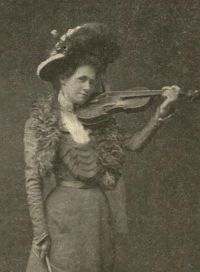
Kathleen Schlesinger,  1911 Encyclopædia Britannica, Volume 25… (1911)

“ Twanging the strings by the fingers is the most primitive method, probably suggested by the feeble note given out by the tense string of the hunters' bow, which was the prototype of the harp. In this ancient instrument, popular in all ages and lands, the strings are stretched à vide between two supports of a frame, the lower of which acts as a soundboard from which the strings rise perpendicularly. The scale of all harp-like instruments is produced by means of one string for each note, difference in pitch being obtained by varying the length of the strings. ”
Source: Wikisource

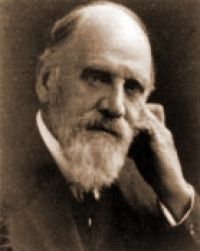
Portrait of G. K. Chesterton G. K. Chesterton,  Fancies versus fads (1923)

“ I should disbelieve it because it is inconsistent with the general nature of a musical instrument, or any instrument. I should disbelieve it long before I had thought of the thousand particular instruments to which it does not apply. I should not primarily need to think of the particular examples, though they are obvious enough. A stringed instrument cannot even be called stringed without two fixed points to hold both ends of the string. ”
Source: Wikisource

George Hart,  The Violin

“ To string a violin correctly is a very difficult undertaking, and requires considerable patience. The first consideration should be the constitution of the Violin: the strings that please one instrument torture another. Neither Cremonese Violins nor old instruments in general require to be heavily strung: the mellowness of the wood and their delicate construction require the stringing to be such as will assist in bringing out that richness of tone which belongs to first-rate instruments. If the bridge and sound-board be heavily weighted with thick strings, vibration will surely be checked. ”
Source: Gutenberg

Get perspective with Kwize: daily news enlightened by great literature