“ Lace collars of a smaller square or rounded shape were in use, but a fall of lace pleated in the centre soon took its place. High-crowned hats with a band and bow in front and a flat, waved, or curved brim, with feathers on either side or all round, were the fashion, the crowns becoming shorter during the reign; the fronts and sometimes the sides of the brim are seen turned up, and so begins to form the three-cornered hat, which remained so long a feature in history. Fig. 75.—Period Charles II.We find with extravagant shapes a happy return of gay colours. ”
Three-cornered hat
Definition and stakes
The theme of “three-cornered hat” has been addressed by authors such as hatter John Thomson, Robert Lloyd, Harry Inwards, Anne C. Goater and Gene Allen Martin. It is often associated with terms like brim, feather, crown, silk and hair.
Quotes about “three-cornered hat”
Oliver Wendell Holmes, The Poetical Works of Oliver Wendell Holmes…
“ I know it is a sin For me to sit and grin At him here; But the old three-cornered hat, And the breeches, and all that, Are so queer! ”
Effie Archer Archer, The Library of Work and Play: Needlecraft
“ A coloured hat is not as practicable as a white one, as the former is apt to fade and may not be as becoming as the white.A baby's buttoned hat is made of two circular pieces scalloped out at the edges, one piece being four or five inches smaller than the other. The large one is used for the brim. The head size is cut out of the direct centre and then bound in tape. Three inches from the crown opening sew a circular row of buttons, a half inch apart. Use a washable linen, lace, or crochet button for this purpose. ”
Various, The Strand Magazine (1891)
“ Of course, if these hats were found satisfactory, they would be worn at all times, and in all places, whenever one had a headache; indeed, a neuralgic person would have a hat-peg fixed over his bed with the hat hung on, ready for instant use. Fig. 6. The next hat is not of such an ambitious nature as the last; it is to be used more as a preventive than a corrective. In the words of the inventor, "It is a cap which ensures safety, ease, and comfort to the wearer when travelling; it consists of one, two, or three air-tight circular tubes to be inflated when required for use." ”
Various, Blackwood's Edinburgh Magazine - Volume 57…
“ The round ladies' hat, however, of the middle and end of the last century, may be seen in its primitive state in those enormous circles of straw, brought from Tuscany, and sold in our milliners' shops, fit to be pinched and cut into the prevailing fashion. The hats, both of men and women—when once they had quitted the becoming costume of the Middle Ages—arose out of one and the same type; a large circle of stuff with a projecting central cap for the skull. Human invention, in the matter of hats, seems for several centuries to have rested in this solitary idea. ”
“ The chief shapes to mark in this century in male head-dress is the increased height of the tall hats which rise to vie with the female fashions. We still see a round hat [96] with a rolled edge and long fall over one side, besides shorter folds in the crown, both scalloped or foliated at the edge, and this shape may be noted till about 1460. Some of these hats were made without a crown, as in Fig. 28 (see p. 94) ; the roll was decorated, as a rule, with jewelled studs. A top hat, something like our present shape, appears, but more belled at the top and also a padded, rolled brim. ”
Gene Allen Martin, Make your own hats
“ A rounded crown can be made flat on top, and a slightly rolling brim can be made into a straight brim by using this method. It is a joy to take an old, discarded, battered straw hat and make it into a fresh-looking and up-to-date hat, a piece of work which any one may well be proud of. ”
Various, Harper's New Monthly Magazine, Volume 1…
“ On those days, he has a hat of modern shape, that has very lately cost him four-and-sixpence; and if he fancy himself rather handsome, or stands well with the women, he cocks it a little on one side, and wears it with a knowing air. ”
James Norman Hall, Faery Lands of the South Seas
“ From a dozen to twenty of these strands—dyed and undyed—are plaited into the flexible braid of which the hat is built up—a task requiring extraordinary patience and skill. Such hats are made only for relatives and close friends; if an unmarried girl gives one to a man the gift has the same significance as the pair of earrings he would give in return. When a native boy appears with a new and gorgeous hat, the origin of which is veiled in doubt, village gossip hums until the truth is known ”
Gene Allen Martin, Make your own hats
“ A black hat is almost a necessity in every woman's wardrobe, and it may always be made becoming by using a facing of some color which is especially becoming to the wearer—black and white is always a smart combination, but very difficult to handle.In regard to lines—it is known that a hat with a drooping brim takes from the height of the wearer and should never be worn by any one having round shoulders or a short neck. A hat turned up at the back would be much better. A narrow brim and high crown add height to the wearer. ”
Elizabeth Karr, The American Horsewoman
“ Long veils, long plumes, hats with very broad brims, or very high crowns, as well as those which are worn perched on the top of the head, should be especially avoided. The hat must always be made secure on the head by means of stout elastic sewn on strongly, and so adjusted that it can pass below the braid or coil of hair at the back of the head. ”
Robert Lloyd, Lloyd's Treatise on Hats, with Twenty-Four Engravings
“ This is a most slovenly practice, as well as a dangerous one, inasmuch as it tends to keep the head in a continual and forced state of perspiration, rendering a liability to "take cold," every time the hat is removed. Yet even this habit is not so bad as sticking the hat on the back of the head, which, of all others, is the most general, and carries with it the greatest impropriety, because such a position not only destroys the shape, but by lodging on the coat collar, the hind part, from friction, becomes greasy, and the binding is always in a state of raggedness ”
Constance Belcher Larymore, A Resident's wife in Nigeria (1908)
“ The same may be said of what was once described to me as a ‘human’ hat, unless it is of the very plainest; for some reason which I cannot quite define, but can nevertheless thoroughly appreciate, a ‘smart’ hat looks absolutely ludicrous out here: in fact, any tendency to over-dressing has only one effect, that of making your company, usually a few hard-working men, feel thoroughly uncomfortable. All one wants, after all, is to appear fresh, spotless and dainty, which can be best accomplished by a clean linen frock, a shady simple straw hat, a sensible sunshade and garden gloves. ”
Robert Lloyd, Lloyd's Treatise on Hats, with Twenty-Four Engravings
“ WEARING A HAT. There is no part of a man's dress that makes or mars his appearance so much as his hat; not that it is its striking beauty when new, or a want of it when old, that is most materially concerned in producing either of the above effects; the grand point is the form, and the position which it is made to assume on the head; yet how few there are who give the least attention to either, except indeed military men, and they in general are uncommonly tasty, affording the best example of the precise style in which a hat should be worn. ”
Isabel De Nyse Conover, A Complete Course in Dressmaking (1922)
“ Top coats that have set-in sleeves and are belted at a low waistline with a narrow belt are far more becoming than a voluminous wrap or flaring unbelted coat. Your hat is an important item. You are one of the women who can wear a small hat unless your face is round. Medium hats, too, will become you. Avoid a shallow crown hat. A hat with a medium high crown is better. A decided mushroom brim is another style which makes a person look shorter. On the other hand, a hat with an off-the-face brim or with the brim rolled on one side gives height. ”
Various, Punch, or the London Charivari…
“ It was the duty of a hat to afford not only covering for the head but shelter for the eyes, and no topper did this. A hat should have a flexible brim, which neither topper nor bowler possessed. It was absurd to wear a hat which could not sustain damage without showing it. Let there be a revival in the silk-hat industry by all means, but there must be no [pg 487] imposition of any one kind of hat on the public. The individual must be allowed perfect freedom to wear what he liked. ”
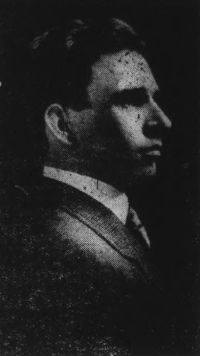 Clarence Hamilton Poe,
Where Half The World Is Waking Up
“ Men wear enormous straw hats as a badge of mourning, but the usual style of head-dress is to shave the extreme summit of the head, while the rest of the hair grows long and is braided up in a sort of topknot with a little bird-cage hat above it. This hat is then tied under the chin as an American woman would tie hers. ”
Robert Lloyd, Lloyd's Treatise on Hats, with Twenty-Four Engravings
“ THE SHALLOW. A Hat more admired for the ease and simplicity of style than for any peculiar character in its general appearance; being low in the crown, it is worn to most advantage by tall thin gentlemen with very large heads; and as the fore and hind part of the brim is set nearly horizontal from the base of the crown, it has two great advantages; the first of which is, that it may be conveniently worn over a wig ”
Harry Inwards, Straw Hats: Their history and manufacture
“ Some plaits with prominent heads or fancy embellishments require two or more “strainers” or even a thickness of flannel [98] between the iron and the hat to prevent bruising, but plaits such as these are generally “blocked” by being “steamed” (trade term) , that is the shaping on the block is entirely done by the hand of the operator after the material has been softened in the “steampot.” When hats are, as they always were till about 1885, of “one piece” make, the crown having been finished, is taken off the wooden block and placed head downward in the “curler” or “brimmer” of wood. ”
Gene Allen Martin, Make your own hats
“ FOREWORD Hat-making is an art which may be acquired by any one possessing patience and ordinary ability. To make a hat for the trade is not as difficult as to make one for an individual; neither is it so high a phase of art.Many rules are given for crown-height, brim-width, and color, as being suited to different types of faces, but they are so often misleading that it seems best to consider only a few, since the becomingness of a hat almost invariably depends upon minor characteristics of the individual for which there are no rules. ”
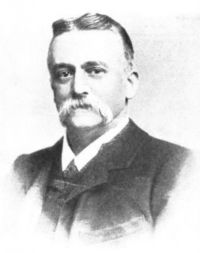 William Senior,
Lines in Pleasant Places: Being the Aftermath of an Old Angler
“ The best hat for me has been one with a moderately soft and wide brim that may be turned down like a roof, to shoot off the rain behind, or to shelter the eyes from the sun in front. The felt fly-band is a very serviceable affair, but, to avoid taking off the hat, the user of eyed hooks may have a band of felt stitched round the upper part of the left arm. ”
Dion Clayton Calthrop, English Costume
“ Sometimes this steeple hat is worn over a hood, the cape of which is tucked into the dress. Some of these hats have a jutting, upturned piece in front, and they are also covered with all manner of coloured stuffs, but not commonly so. All persons having an income of £10 a year and over will have that black velvet loop, the frontlet, sewn into their hats. There is another new shape for hats, varying in height from 8 to 18 inches. It is a cylinder, broader at the top than the bottom, the crown sometimes flat and sometimes rounded into the hat itself ”
Various, Punch, or the London Charivari…
“ The only correct head-covering will be the tall hat, which I hear will be bulgier than ever this year. The smartest will have open crowns and little or no brims. There has been some attempt to revive the old straw hat, though only with a black ribbon, but I have not heard of this being adopted by Guys with any pretensions to dressiness. ”
Gene Allen Martin, Make your own hats
“ Before making a hat, the entire wardrobe should be carefully looked over to see with what the hat must be worn, and the kind of service we are going to expect from it. Every article of a costume should be related and harmonious as to color, outline, and suitability. The result should be a perfect whole without a single discord. How often we see a green skirt, mustard-colored coat, and a bright blue hat—each article pleasing by itself, but atrocious when worn collectively. Bright, gay little hats are pleasing when seen seldom, but we soon tire of one if it must be worn daily. ”
Various, Blackwood's Edinburgh Magazine…
“ The very idea of a hat is that of utility—something to keep off the sun and the rain—any thing will do for warmth that will aid the hair in keeping in the natural caloric of a man's head; and hence we much doubt whether the Irish, that hot-headed nation, ever wore hats in early times. From the want of shade being early felt by civilized nations, more than shelter from rain, and from hat-shapes being found on early southern monuments, we are inclined to think that the hat was more extensively worn in Southern than in Northern Europe ”
Robert Lloyd, Lloyd's Treatise on Hats, with Twenty-Four Engravings
“ THE TALLY-HO. A very comfortable and convenient hunting Hat, partaking in some degree the natural formation of the head: has many advantages over the old fashioned cap; is light, though strong-porous, which allows the heat of the head, arising from exertion, to fly off-and elastic, the effect of which is to sit close without pressure; but, above all, it has a most gentlemanly appearance, which it never fails to communicate to the wearer, particularly if he be a true sportsman. ”
Gene Allen Martin, Make your own hats
“ A hat with slightly drooping brim faced with some shade of rose will add color to the cheeks. No reds should be worn unless the skin is clear. No shade of purple or heliotrope should be worn by any one having blue eyes—it seems to make the blue paler.Any one having auburn hair, blue eyes, and a clear skin may wear browns, grays, greens, tan, blue, and black. Black should not be worn next the face unless the skin is brilliant. It is, however, very becoming to blondes, and to women whose hair has become quite white. ”
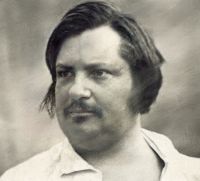 Honoré de Balzac,
Letters of Two Brides
(1841)
“ It has no distinction, no beauty of color or romance; it appeals neither to the senses, nor the mind, nor the eye, and it must be very uncomfortable. It is meagre and stunted. The hat, above all, struck me; it is a sort of truncated column, and does not adapt itself in the least to the shape of the head; but I am told it is easier to bring about a revolution than to invent a graceful hat. Courage in Paris recoils before the thought of appearing in a round felt; and for lack of one day's daring, men stick all their lives to this ridiculous headpiece. ”
“ The men wear their hair in a big knob at the back like a woman, and on the top of that is fastened a comb, shaped like a half-circle, with the ends pointed to the face. The whole costume is a mixture of native and English fashions. The usual hat is a little round felt one, such as you may see any day on boys at home, and which you have perhaps yourself. The next garment is also what you might expect to see on a man ”
 Victor Hugo,
Les Misérables
(1862)
“ I have an old hat which is not worth three francs, I have a coat which lacks buttons in front, my shirt is all ragged, my elbows are torn, my boots let in the water; for the last six weeks I have not thought about it, and I have not told you about it. You only see me at night, and you give me your love; if you were to see me in the daytime, you would give me a sou! ”
Parthenia Antoinette Hague, A Blockaded Family: Life in Southern Alabama during the Civil War
“ The straw of oats or wheat and corn husks were braided and made into hats. Hats which were almost everlasting, we used to think, were made of pine straw. Hats were made of cloth also. I remember one in particular of gray jeans, stitched in small diamonds with black silk thread. It was as perfect a hat as was ever moulded by the [59] hatter, but the oddness of that hat consisted in its being stitched on the sewing-machine with silk thread. ”
Harry Inwards, Straw Hats: Their history and manufacture
“ The making of these hats for men has nearly always been accompanied by the trimming; and when, about 1880, women commenced to wear “sailors,” many of them were dispatched from the St. Albans factories with some trimming. About 1890 the makers of ladies’ shaped hats of simple form began to add some little adornment to them, and these were designated as “semi-trimmed.” It is, therefore, quite inside the history of the straw hat to include some account of men’s boaters, ladies’ sailors, and “semi-trimmed” or ready-to-wear hats. ”
Related terms
Authors who wrote about “three-cornered hat”
hatter John ThomsonRobert LloydHarry InwardsAnne C. GoaterGene Allen Martin William Tufts BrighamTalbot HughesRobert Cortes HollidayDorothy Quigley
 James Joyce
 Charles DickensWilfred Mark WebbReginald Harvey ArnoldDion Clayton CalthropHenry W. DonaldVarious
 George O. SmithIsabel De Nyse Conover
 William ShakespeareOliver Wendell Holmes
William Tufts BrighamTalbot HughesRobert Cortes HollidayDorothy QuigleyJames JoyceCharles DickensWilfred Mark WebbReginald Harvey ArnoldDion Clayton CalthropHenry W. DonaldVariousGeorge O. SmithIsabel De Nyse ConoverWilliam ShakespeareOliver Wendell Holmes