Train signal

Definition and stakes

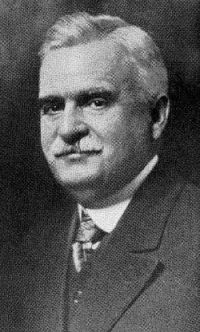
Portrait of Burton Egbert Stevenson Burton Egbert Stevenson,  The Young Train Dispatcher

“ The engineer who « 78 » fails to run on time, either through timidity or overcaution, is very soon relegated to the work-train or the yard-engine—a humiliating fall for the master of the queenly flyer.
As Byers was a junction, there were two signals there for the government of trains, one a train-signal on the front of the shanty, and the other a semaphore just outside the door. The train-signal was merely an arm or signal-blade, operated by a lever inside the shanty.
”
Source: Gutenberg

Portrait of Burton Egbert Stevenson Burton Egbert Stevenson,  The Young Train Dispatcher

“ In fact, the first rule under the “Use of Signals” is that a signal imperfectly displayed, or the absence of a signal from a place where one is usually shown, must be regarded as a stop signal.
The railroads are trying all the time to find some « 77 » third colour which can be used satisfactorily in signalling. Red for danger and green for safety are very well, as far as they go; but a caution signal is badly needed—one which will not absolutely stop a train, but which will warn the engineer to get it under control and proceed carefully.
”
Source: Gutenberg

Charles Francis Adams,  Notes on Railroad Accidents

“ When the electric bell is silent there is no train within half a mile and the crossing is safe; it is not safe while the bell is ringing. As it now stands the law usually provides that the prescribed signals, either bell or whistle, shall be given from the locomotive as it approaches the highway, and at a fixed distance from it. The signal, therefore, is given at a distance of several hundred yards, more or less, from the point of danger. ”
Source: Gutenberg

Get perspective with Kwize: daily news enlightened by great literature