Transit telescope

Definition and stakes

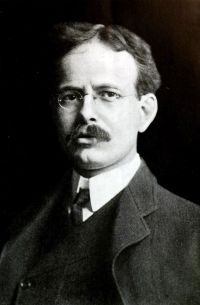
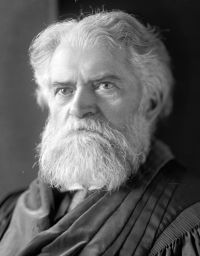
Portrait of E. Walter Maunder E. Walter Maunder,  The Royal Observatory, Greenwich…

“ The present transit is the fourth which the Observatory has possessed, and its three predecessors, known as Halley's, Bradley's, and Troughton's, respectively, are still preserved and hang on the walls of the transit room, affording by their comparison an interesting object-lesson in the evolution of a modern astronomical instrument.
The watcher who wishes to observe the passing of a star must note two things: he must know in what direction to point his telescope, and at what time to look for the star.
”
Source: Gutenberg

Alexander Ross Clarke and Friedrich Robert Helmert,  1911 Encyclopædia Britannica, Volume 11… (1911)

“ In a very excellent portable transit used on the Ordnance Survey, the uprights carrying the telescope are constructed of mahogany, each upright being built of several pieces glued and screwed together; the base, which is a solid and heavy plate of iron, carries a reversing apparatus for lifting the telescope out of its bearings, reversing it and letting it down again. Thus is avoided the change of temperature which the telescope would incur by being lifted by the hands of the observer. ”
Source: Wikisource

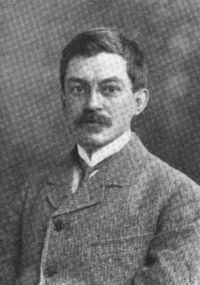
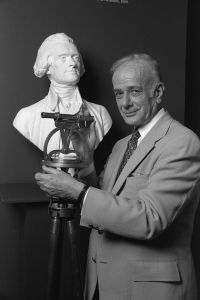
Portrait of Silvio A. Bedini Silvio A. Bedini,  Early American Scientific Instruments and Their Makers

“ Figure 3.—Transit telescope made by David Rittenhouse and used by him for the observation of the transit of Venus in 1769. Brass, 33-1/2-in. tube on a 25-in. axis, with an aperture of 1-3/4 in. and a focal length of 32 in. Photo courtesy the American Philosophical Society.
[Pg 12]
Figure 4.—Surveying compass marked "Potts and Rittenhouse."
”
Source: Gutenberg

Get perspective with Kwize: daily news enlightened by great literature