Uranium-235

Definition and stakes

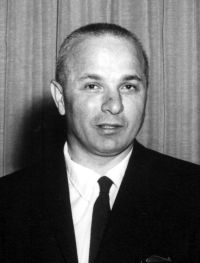
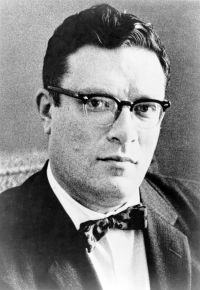
Portrait of Isaac Asimov Isaac Asimov,  Worlds Within Worlds: The Story of Nuclear Energy…

“ The world appeared to have far greater sources of energy than had been expected. The “fossil fuels”—coal, oil and natural gas—were being used at such a rate that many speculated that the gas and oil would be gone in decades and the coal in centuries. Was it possible that uranium might now serve as a new source that would last indefinitely?
It was rather disappointing that it was uranium-235 which underwent fission, because that isotope made up only 0.7% of the uranium that existed.
”

Source: Gutenberg

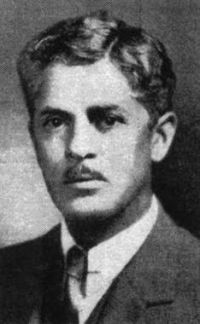
Carl R. Maag,  Project Trinity, 1945-1946

“ Then, in March 1941, the element plutonium was isolated, and the plutonium-239 isotope was found to fission as readily as the scarce uranium isotope, uranium-235. The plutonium, produced in a uranium-fueled nuclear reactor, provided the United States with an additional source of material for nuclear weapons (7; 12) .
In the summer of 1941, the British Government published a report written by the Committee for Military Application of Uranium Detonation (MAUD) . This report stated that a nuclear weapon was possible and concluded that its construction should begin immediately.
”
Source: Gutenberg

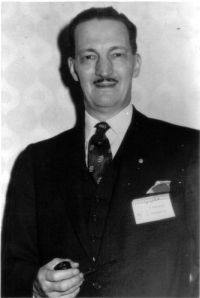
Henry Faul,  Nuclear Clocks

“ When a neutron strikes the nucleus of uranium-235 (235U) or plutonium-239 (239Pu) , it may cause the nucleus to split into two roughly equal fragments, releasing neutrons and energy. This is the well-known process of neutron-induced fission, the method in which nuclear energy is produced in both reactors and bombs. [14] The most common uranium isotope, 238U, also breaks up by fission, but does so all by itself, without the need for any external neutrons. That process is spontaneous fission and it goes on at random, very much like radioactive decay. ”
Source: Gutenberg

Get perspective with Kwize: daily news enlightened by great literature