Utility industry

Definition and stakes

Portrait of Frank A. Fetter Frank A. Fetter,  The Principles of Economics, with Applications to Practical Problems

“ The providing of apparatus for extinguishing fires is always a public duty; the conveyance of waste water is increasingly a public function; and the supply of pure water, while often a private enterprise in villages, and sometimes in large cities, is increasingly undertaken by public agencies. Public ownership of gas and electric lighting is less common, as the utility supplied is not so essential and the industry is somewhat less subject to monopoly; but the difference is one of degree only. Street-railroads are often under public ownership in Europe ”

Source: Gutenberg

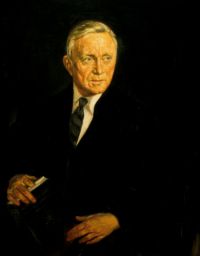
William J. Brennan, Jr.,  Gainesville Utilities Department v…

“ In consequence, the utility builds certain 'reserves' of generating capacity in excess of peak load requirements into its system. [2] The practice of a utility that relies completely on its own generating resources (an 'isolated' system in industry jargon) is to maintain equipment capable of producing its peak load requirements plus equipment that produces a 'reserve' capacity equal to the capacity of its largest generating unit.
The major importance of an interconnection is that it reduces the need for the 'isolated' utility to build and maintain 'reserve' generating capacity.
”
Source: Wikisource

Get perspective with Kwize: daily news enlightened by great literature