Value (economics)

Definition and stakes

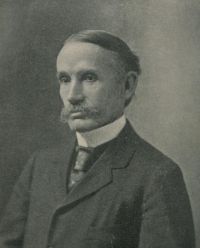
Portrait of Louis F. Post Louis F. Post,  The basic facts of economics (1927)

“ The most conspicuous method yet suggested for realizing such a Value level takes the specific form of a proposal to determine Money standards by frequent comparisons with the Price level of simple types of Wealth. Resting nominally upon the Value in Trade of such staples, this method rests fundamentally upon the Economic fact that Labor, as the continuous producer of all Wealth, is the real source and regulator at all times of all Values in the channels of Trade, and that Money is the measuring rod and its terms the language. ”
Source: Gutenberg

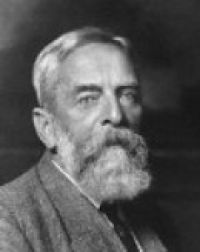
Portrait of Louis F. Post Louis F. Post,  The basic facts of economics (1927)

“ THE BASIC FACTS The purpose of the preceding Lessons has been to pierce through the surface and the immediate subsurface of Economics down to the Basic Facts. On the surface, as we have seen, Economics appears to be the science of making Money, whereas Money is in fact only the medium and measure of Value in Trade. We have further seen that the immediate subsurface, Trade, consists apparently in exchanges of tangible commodities but essentially in interchanges of human service. ”
Source: Gutenberg

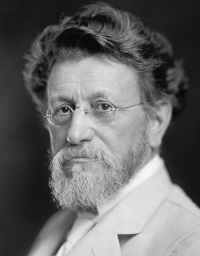
Portrait of Louis F. Post Louis F. Post,  The basic facts of economics (1927)

“ Yet all commodities—whether in the Wealth class, as a house or food; or the Land class, as a natural building-site, or an ore deposit, or soil fertility, or the sun to the degree that its light and heat are owned through ownership of Land—have Utility, Value and Price. The last of the three is expressed in terms of Money.
Money is the common medium of Trade. Where and when Money is in use, he who wishes to trade a hat for shoes need not hunt for somebody who has shoes but wants a hat instead; all he need do is first to find some one who has shoes and wants Money.
”
Source: Gutenberg

Get perspective with Kwize: daily news enlightened by great literature