Valve gear

Definition and stakes

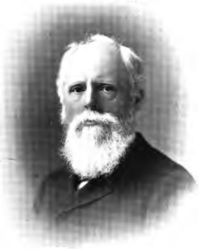
Portrait of Joshua Rose Joshua Rose,  Modern Machine-Shop Practice, Volumes I and II

“ The valve motion for an oscillating engine consists of an ordinary eccentric gear or motion, with the addition of various mechanical arrangements to accommodate the valve gear to the vibrating motion of the valve chest.
The stuffing box of an oscillating engine is made deeper than usual because the gland bore has more strain on it, and extra wearing surface is therefore required to prevent its wearing oval.
Geared engines are those with gear wheels to increase the revolutions of the shaft above those of the engine, and thus obtain a high propeller speed without a high piston speed.
”
Source: Gutenberg

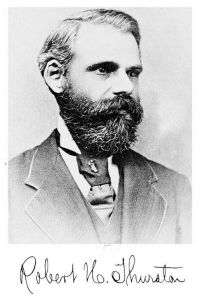
Portrait of Robert Henry Thurston Robert Henry Thurston,  Popular Science Monthly (1877)

“ The valve-gear of this engine is peculiarly well adapted to this type of engine. There is no fly-wheel, and the motion of each of the two independent engines, which together form the pair, is controlled by its neighbor, the valve-gear of the one being moved by the piston of the other. This ingenious combination permits each piston to move from end to end of its cylinder, holds it stationary an instant while the pump-cylinders come completely filled and their valves closed, and then sets it in motion on the return-stroke. ”
Source: Wikisource

Hubert E. Collins,  Steam Turbines

“ The Mechanical Valve-Gear
Fig. 17 shows plainly the operation of the mechanical valve-gear. The valves are located in the steam chests, which are bolted to the top of the casing directly [23] over the first sets of expansion nozzles. The chests, two in number, are on opposite sides of the machine. The valve-stems extend upward through ordinary stuffing-boxes, and are attached to the notched cross-heads by means of a threaded end which is prevented [24] from screwing in or out by a compression nut on the lower end of the cross-head.
”
Source: Gutenberg

Get perspective with Kwize: daily news enlightened by great literature