Variety (botany)

Definition and stakes

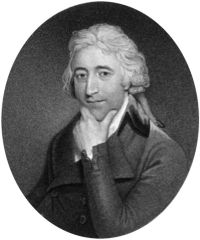
Portrait of James Edward Smith James Edward Smith,  An introduction to physiological and systematical botany (1807)

“ By buds indeed, as we well know, plants are propagated, and in that sense each bud is a separate being, or a young plant in itself; but such propagation is only the extension of an individual, and not a reproduction of the species as by seed. Accordingly, all plants increased by buds, cuttings, layers or roots, retain precisely the peculiar qualities of the individual to which they owe their origin. If those qualities differ from what are common to the species, sufficiently to constitute what is called a variety, that variety is perpetuated through all the progeny thus obtained. ”
Source: Wikisource

Norman Taylor,  Botany: The Science of Plant Life

“ Perhaps there is no feature of plant life that shows such an amazing amount of variation as the forms of flowers, and while only a few of the simplest deviations from the normal have been discussed here, it must not be forgotten that this infinite variety is a reflection of the ingeniousness of nature in securing a plentiful supply of seed. ”
Source: Gutenberg

Asa Gray,  The Elements of Botany, For Beginners and For Schools

“ Variety comes in upon occasion. For, although a species may have no recognized varieties, a genus implies at least one species belonging to it; every genus is of some order, and every order of some class.
533. But these grades by no means exhaust the resources of classification, nor suffice for the elucidation of all the distinctions which botanists recognize. In the first place, a higher grade than that of class is needful for the most comprehensive of divisions, that of all plants into the two Series of Phanerogamous and Cryptogamous (6)
”
Source: Gutenberg

Get perspective with Kwize: daily news enlightened by great literature