 William Shakespeare,
Love's Labour's Lost
(1598)
William Shakespeare,
Love's Labour's Lost
(1598)
“ He draweth out the thread of his verbosity finer than the staple of his argument. ”
William Shakespeare,
Love's Labour's Lost
(1598)
“ He draweth out the thread of his verbosity finer than the staple of his argument. ”
Joseph M. Bachelor, The Century Vocabulary Builder
“ As a precaution against slovenliness you should cultivate freshness and accuracy. But to display spontaneity, daring, freshness, accuracy you must have or acquire a large stock, a wide range, of words. Now this possession, like any other, brings with it temptation. If we have words, we like to use them. Nor do we wait for an indulgence in this luxury until we have consciously set to work to amass a vocabulary.Verbosity is, in truth, the besetting linguistic sin. Most people are lavish with words, as most people are lavish with money. ”
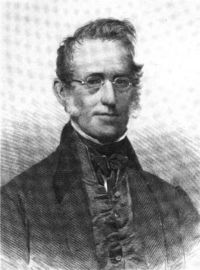 Goold Brown,
The Grammar of English Grammars
(1882)
Goold Brown,
The Grammar of English Grammars
(1882)
“ This sentence contains eighty-seven words, "of which sixty-one are entirely unnecessary to the expression of the author's idea, if idea it can be called."--Holden's Review. OBSERVATION. Verbosity, as well as tautology, is not so directly opposite to precision, as to conciseness, or brevity. From the manner in which lawyers usually multiply terms in order to express their facts precisely, it would seem that, with them, precision consists rather in the use of many words than of few. But the ordinary style of legal instruments no popular writer can imitate without becoming ridiculous. ”
Ralcy Husted Bell, The Mystery of Words (1924)
“ We may excuse faulty attire, forgive the social slips of those who have forgotten from their little book on etiquette—in a word, we can overlook almost all shortcomings and errors of conduct save those only of speech. There is something in a man’s words that marks him with the mark of Cain or puts the halo around his brow. Yet, what a curious thing is language? Words are the least part of it. Their aptness, inflections, tones, pronunciations, stresses, and combinations—their parallelisms and contrasts—all these are immeasurably greater than the mere words themselves. ”
William Addleman Ganoe, The English of military communications (1918)
“ All the way along there has been a decided blank space between decision in the mind and embodiment in language.Whether slang, profanity, or colloquialisms have cut into our ordinary speech to such an extent as to keep us at a loss for the apt word, or whether we have grown careless or slovenly in our habits of expression, is a matter with which we are not concerned here. We do know that we are continually hampered by our inability to state absolutely our meaning. ”
Goold Brown,
The Grammar of English Grammars…
“ When a Verb with its Accusative case, is equivalent to a single verb, it may take this accusative after it in the passive voice; as, 'This has been put an end to.'"--Fowler's English Language, 8vo, §552. Now what is this, but an effort to teach bad English by rule?--and by such a rule, too, as is vastly more general than even the great class of terms which it was designed to include? And yet this rule, broad as it is, does not apply at all to the example given! For "put an end," without the important word "to," is not equivalent to stop or terminate. Nor is the example right. ”
Edmund William Gosse, 1911 Encyclopædia Britannica (1911)
“ In every language grammatical correctness is obligatory. Here we see a distinction between mere conversation, which is loose, fragmentary and often, even in the lips of highly educated persons, slightly ungrammatical; and prose, which is bound to weed away whatever is slovenly and incorrect, and to watch very closely lest merely colloquial expressions, which cannot be defended, should slip into careful speech. ”
Samuel Butler, The Humour of Homer and Other Essays
“ Is it metaphor to say that the boy asked the servant to do this, or is it not rather pedantry to insist on the letter of a bond and deny its spirit, by denying that language passed, on the ground that the symbols covenanted upon and assented to by both were uttered and received by eyes and not by mouth and ears? When the lady drank to the gentleman only with her eyes, and he pledged with his, was there no conversation because there was neither noun nor verb? Eyes are verbs, and glasses of wine are good nouns enough as between those who understand one another. ”
Edwin W. Bowen, Questions at Issue in Our English Speech (1909)
“ The history of language is the history of corruptions—using that term in the sense in which it is constantly employed by those who are stigmatizing by it the new words and phrases and constructions to which they take exception. Every one of us is to-day employing expressions which either outrage the rules of strict grammar, or disregard the principles of analogy, or belong by their origin to what we now deem the worst sort of vulgarisms. These so-called corruptions are found everywhere in the vocabulary, and in nearly all the parts of speech. ”
 Daniel Defoe,
An Essay Upon Projects
Daniel Defoe,
An Essay Upon Projects
“ I ask leave here for a thought or two about that inundation custom has made upon our language and discourse by familiar swearing; and I place it here, because custom has so far prevailed in this foolish vice that a man’s discourse is hardly agreeable without it; and some have taken upon them to say it is pity it should not be lawful, it is such a grace in a man’s speech, and adds so much vigour to his language. ”
Stephen Fovargue, A New Catalogue of Vulgar Errors (1767)
“ Fine Words, in the Mouths of the Ignorant, are as unbecoming as Gold Lace upon the Back of a Porter.—And not only the Ignorant are guilty of this Error, but even those who do know the Meaning of the Words they use, are apt, by affecting an elegant Diction, to run themselves into Obscurity; and while they are attending to their Language, and studying hard Words, neglect the Matter of their Discourse; to explain which is the sole End of Speaking. The Use of Words being only to convey our Ideas to each other. ”
Henry Davenport Northrop, New Century Speaker and Writer… (1901)
“ Having pointed out the importance of correct grammar and the right choice of language, I wish now to furnish you with some practical suggestions for the construction of sentences. Remember that a good thought often suffers from a weak and faulty expression of it.Your sentences will certainly shape themselves after the structure of your own mind. If your thoughts are vivid and definite, so will be your language; if dreamy and hazy, so will your composition be obscure. Your speech, whether oral or written, can be but the expression of yourself; and what you are, that speech will be. ”
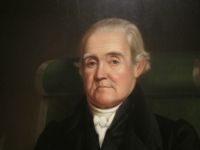 Noah Webster,
Dissertations on the English Language…
Noah Webster,
Dissertations on the English Language…
“ To the same class of words belong pains, news, and perhaps some others. Every person who has read good English authors, or lived where the language is spoken in purity, must have observed that the word pains is usually preceded by much, and followed by a verb in the singular number; much pains was taken. If the word is a plural noun, it should neither be followed by a singular verb, nor preceded by much; for we never prefix much to plurals. The most untutored ear would be offended at much papers, much labors. But do we not always say much pains? ”
G. F. Graham, A Book About Words
“ This perversity of human nature in turning words into an opposite and unfavourable meaning may also be seen in many familiar and every-day forms of speech. It is not uncommon to hear an abandoned fellow spoken of as a ‘precious’ scoundrel, or some absurdity referred to as ‘blessed’ nonsense. This perversion is not confined to English. The French often use the word ‘sacré’ in a sense diametrically opposed, to ‘holy,’ a meaning which existed in Latin, from which French is derived. ”
 Herbert Spencer,
First Principles
Herbert Spencer,
First Principles
“ Being, as they are, objective products of subjective processes, they must display corresponding changes; and that they do this, the cases of Language, of Science, of Art, clearly prove.If we strike out from our sentences everything but nouns and verbs, we shall perceive how extremely vague is the expression of ideas in undeveloped tongues. When we note how each inflection of a verb or addition by which the case of a noun is marked, serves to limit the conditions of action or of existence, we see that these constituents of speech enable men more precisely to communicate their thoughts. ”
Gurajada Apparao, Minute of Dissent (2012)
“ A vulgarism and the corresponding standard or polite expression are equally grammatical each in its own sphere - if only they are in general use. But whenever usage is not fixed - whenever we hesitate between different ways of expression, or have to find a new way of expression then grammar comes in, and helps us to decide which expression is most in accordance with the genius of the language, least ambiguous, most concise, or in any other way better fitted to express what is required. ”
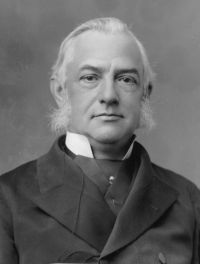 F. Max Müller,
Chips from a German Workshop, Volume 1
F. Max Müller,
Chips from a German Workshop, Volume 1
“ From this state of grammatical numbness, languages recover by a secondary formation, which grows up slowly and imperceptibly at first in the speech of the people; till at last the reviving spirit rises upwards, and sweeps away, like the waters in spring, the frozen surface of an effete government, priesthood, literature, and grammar. ”
“ Why do words differing in origin coalesce in the same sound though retaining their differences of meaning? Why are some verbs impersonal? Why are there only so many parts of speech, and on what principle are they divided? These are a few crucial questions which give us an insight from different points of view into the true nature of language. (6) Thus far we have been endeavouring to strip off from language the false appearances in which grammar and philology, or the love of system generally, have clothed it. ”
Huber Gray Buehler, Practical Exercises in English
“ Each of these expressions is common at the present time, and its meaning is instantly clear to any one who speaks English. But these expressions, not being used by well-informed and careful speakers, produce in the mind of a well-informed bearer an impression of vulgarity like that which we get from seeing a person eat with his knife. In language, as in manners and fashions, the law is found in the custom of the best people; and persons who wish to be classed as cultivated people must speak and write like cultivated people. ”
 Thomas Braidwood Wilson,
Narrative of a Voyage Round the World
(1835)
Thomas Braidwood Wilson,
Narrative of a Voyage Round the World
(1835)
“ My chief maxim is, never to permit the slightest slang expression to be used, nor flash songs to be sung, nor swearing; while indecent language is punished with unrelenting severity, and the individual so degrading himself is, in a variety of ways, exposed to contempt and scorn. It may be imagined, that to effect this salutary change among those, who have been so long accustomed to hear and use language, interlarded with horrid and senseless oaths, would be a work of difficulty; but it is astonishing how soon, by proper management, it may be accomplished. ”
F. Max Müller,
Lectures on the Science of Language
“ As soon as phonetic corruption shows itself in a language, that language has lost what we considered to be the most essential character of all human speech, namely, that every part of it should have a meaning. ”
Goold Brown,
The Grammar of English Grammars
“ Humbler people yielded through fear of offence; and the practice extended, in time, to all ranks of society: so that at present the customary mode of familiar as well as complimentary address, is altogether plural; both the verb and the pronoun being used in that form. [237] This practice, which confounds one of the most important distinctions of the language, affords a striking instance of the power of fashion. It has made propriety itself seem improper. But shall it be allowed, in the present state of things, to confound our conjugations and overturn our grammar? ”
Walton Burgess, Five Hundred Mistakes of Daily Occurrence in Speaking…
“ Custom—which, when crystallized, becomes grammar—allows expressions like “The linen tears,” and “The meadow plows well,” although they should not be frequently employed, and should be more seldom coined.A fruitful source of mistakes in language, is in the linking together of two or more inappropriate tenses, or in the misuse of one. Many among the learned and refined commit blunders of these kinds. A few corrected examples of such are here given:“His text was, that God was love;” the sentence should be written, “His text was, that God is love.” ”
Joseph M. Bachelor, The Century Vocabulary Builder
“ Unless, therefore, you wish your intellectual processes to be as hazy and haphazard as those of mental shirkers and loafers, you must eschew, not necessarily all slang, but all heedless, all habitual use of it. Now and then a touch of slang, judiciously chosen, is effective; now and then it fulfils a legitimate purpose of language. But normally you should express yourself as befits one who has at his disposal the rich treasuries of the dictionary instead of a mere stock of greasy counterfeit phrases. ”
“ What an excellent lesson against jumping to conclusions is seen in this, "Stay till the lame messenger come, if you will know the truth of the thing," against concluding too hastily that the work we are engaged upon is finished, for "One flower does not make a garland."The evil wrought by the tongue is a constant and perennial theme of the moralist, and the makers of proverbs are in complete accord, "The tongue talks at the head's cost." "More have repented speech than silence." ”
 Potter Stewart,
Hoffman v. Blaski Sullivan/Concurrence Stewart…
Potter Stewart,
Hoffman v. Blaski Sullivan/Concurrence Stewart…
“ One would have to be singularly unmindful of the treachery and versatility of our language to deny that as a mere matter of English the words 'where it might have been brought' may carry more than one meaning. ”
G. F. Graham, A Book About Words
“ Among the many signs of the corruption of the English language, one, which is not the least remarkable, is the prevalent use of slang words and phrases. That certain terms should be peculiar to certain callings, trades, or professions, may be naturally expected, but that these should be extended into general conversation, is a corroborative proof of the strong liking people now have for any thing unusual or out-of-the-way. ”
Conversation: Its Faults and Its Graces
“ Imperfect tense. [68] In such sentences as these, wherein the verb is used reflectively,—"If I lay myself down on the grass I shall catch cold," "He laid himself down on the green sward,"—the verb "to lay" is with propriety substituted for the verb "to lie;" for the addition of the emphatic pronoun myself, or himself, constituting an objective case, and coming immediately after the verb, without the intervention of a preposition, renders it necessary that the verb employed should be active, not neuter, because "active verbs govern the objective case." ”
Noah Webster,
Dissertations on the English Language…
“ I do not remember to have heard once in the course of my life, an improper use of the verbs will and shall, among the unmixed English descendants in the eastern states.But of all the errors or inaccuracies in speaking or writing the English language, the most numerous class appear in the improper use of verbs in the subjunctive mode. Not only illiterate men, but authors of the first rank, often use the pres [Pg 241] ent tense for the future, the future for the present, and the past for both. ”
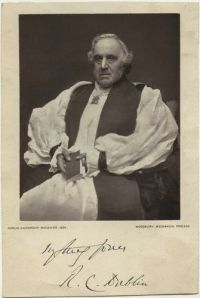 Richard Chenevix Trench,
English Past and Present
Richard Chenevix Trench,
English Past and Present
“ Notice another example of this willingness to dispense with inflection, of this endeavour on the part of the speakers of a language to reduce its forms to the fewest possible, consistent with the accurate communication of thought. Of our adjectives in ‘en’, formed on substantives, and expressing the material or substance of a thing, some have gone, others are going, out of use; while we content ourselves with the bare juxtaposition of the substantive itself, as sufficiently expressing our meaning. ”
 Edwin Abbott Abbott,
How to Write Clearly: Rules and Exercises on English Composition
Edwin Abbott Abbott,
How to Write Clearly: Rules and Exercises on English Composition
“ Crust of bread may be an exaggeration; on the other hand, if the speaker is destitute not only of bread, but also of shelter and clothing, then crust of bread is an imperfect expression of the meaning.In philosophy and science, where the language ought very often to be inclusive and brief, general and not particular terms must be used.*11 a. Avoid Verbal Nouns where Verbs can be used instead.* The disadvantage of the use of Verbal Nouns is this, that, unless they are immediately preceded by prepositions, they are sometimes liable to be confounded with participles. ”

