“ Witnesses of most weddings can scarcely imagine that a wedding march is a march at all; more often than not, the heads of ushers and bridesmaids bob up and down like something boiling in a pan. A perfectly drilled wedding procession, like a military one, should move forward in perfect step, rising and falling in a block or unit. To secure perfection of detail, the bars of the processional may be counted so that the music comes to an end at precisely the moment the bride and groom stand side by side at the chancel steps. ”
Wedding march
Definition and stakes
Quotes about “wedding march”
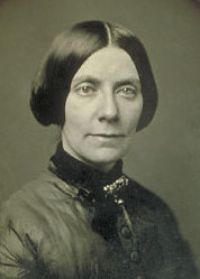
Elizabeth Cady Stanton,
Eighty Years and More; Reminiscences 1815-1897
“ Strange lovers now whisper their vows of faith and trust under the tree where a most charming wedding ceremony—that of my daughter Margaret—was solemnized one bright October day. All Nature seemed to do her utmost to heighten the beauty of the occasion. The verdure was brilliant with autumnal tints, the hazy noonday sun lent a peculiar softness to every shadow—even the birds and insects were hushed to silence. As the wedding march rose soft and clear, two stately ushers led the way; then a group of Vassar classmates, gayly decked in silks of different colors, followed by the bride and groom. ”
“ How appalling must the wedding march sound to a waiting bridegroom who sees the bride, that he no longer looks at except with distaste and estrangement, coming nearer and nearer to him up the aisle! A funeral march would be gayer than that music, I should think! The thought came to me to break out bluntly and say to him: “Countermand the cake! She’s only playing with you while that yachtsman is making up his mind.” But there could be but one outcome of such advice to John Mayrant: two people, instead of one, would be in bed suffering from contusions. ”
“ The beginning of the wedding march should sound just as the usher returns to the head of the aisle. To repeat: No other person should be seated after the mother of the bride. Guests who arrive later must stand in the vestibule or go into the gallery.The sound of the music is also the cue for the clergyman to enter the chancel, followed by the groom and his best man. The two latter wear gloves but have left their hats and sticks in the vestry-room. ”
Florence Howe Hall,
Good Form for All Occasions
“ The procession then forms, the doors of the central aisle are thrown open, and the organist plays the wedding march. The ushers come first, walking in pairs; the bridesmaids follow, then the maid of honor, and last of all the bride with her father. The bridegroom comes forward, takes the bride’s hand, and leads her before the clergyman. Half the bridesmaids and ushers now turn to the left and take up their places near the bridal couple, the other half do the same on the right, the girls standing on the inside, the men on the outside. ”
“ At the appointed hour, the clergyman appears at the altar rail; the groom, accompanied by his best man, emerges from the vestry, and takes his place at the right, awaiting the arrival of the bride. At this instant, the organist stops dreaming, wakes up, and starts boldly into the wedding march, as the bridal party move up the aisle, in the following order: First, the ushers, in pairs, then the bridesmaids, also in pairs. Sometimes a little "maid of honor," carrying flowers, precedes the bride. The bride, leaning on the arm of her father, comes last. ”
William Dean Howells,
Their Silver Wedding Journey — Volume 1
“ A nice-looking boy of thirteen or fourteen, who had the place on the left of the lady in the sofa seat under the port, bowed with almost magisterial gravity, and made the lady on the sofa smile, as if she were his mother and understood him. March decided that she had been some time a widow; and he easily divined that the young couple on her right had been so little time husband and wife that they would rather not have it known. ”
William Dean Howells,
Their Silver Wedding Journey — Complete
“ March could not forbear, and the other ladies were affected as deeply as she could wish. Perhaps they were the more affected because it presently appeared that they had cousins in New York whom she knew of, and that they were acquainted with an American family that had passed the winter in Berlin. Life likes to do these things handsomely, and it easily turned out that this was a family of intimate friendship with the Marches; the names, familiarly spoken, abolished all strangeness between the travellers ”
William Dean Howells,
Their Silver Wedding Journey — Complete
“ March made his wife observe that the tables and sofas and easy-chairs, which seemed so carelessly scattered about, were all suggestively screwed fast to the floor against rough weather; and he amused himself with the heavy German browns and greens and coppers in the decorations, which he said must have been studied in color from sausage, beer, and spinach, to the effect of those large march-panes in the roof. She laughed with him at the tastelessness of the race which they were destined to marvel at more and more ”
William Dean Howells,
Their Silver Wedding Journey — Complete
“ It seemed all to be as exciting for them, and it was as tedious for the witnesses, as any gala of students and bicyclers at home.Mrs. March remained with an unrequited curiosity concerning their different colors and different caps, and she tried to make her husband find out what they severally meant; he pretended a superior interest in the nature of a people who had such a passion for uniforms that they were not content with its gratification in their immense army, but indulged it in every pleasure and employment of civil life. ”
William Dean Howells,
Their Silver Wedding Journey — Volume 2
“ March assented. "He's the only unmarried one that wasn't in danger of turning up a lover on my hands; if there had been some rather old girl, or some rather light matron in our acquaintance, I'm not sure that I should have been safe even from Rose. Carlsbad has been an interruption to our silver wedding journey, my dear ”
William Dean Howells,
Their Silver Wedding Journey — Volume 2
“ March. "She is very light, don't you think? I don't know, after all, whether it wouldn't be a good thing for her to marry Kenby. She is very easygoing, and she will be sure to marry somebody."She had fallen into a tone of musing censure, and he said, "You might put these ideas to her." ”
Anne Lynch Botta,
Memoirs of Anne C. L. Botta — To Nettie
(1894)
“ The earth has put her wedding-garment on, And, robed in light, with flowers and verdure crowned, Comes forth in joy to meet the bridegroom sun. Thou, too, in thy young life's first bloom and pride, Joyous as spring, fresh as the morning air, Fair as the flowers of May, comest forth a bride, And bowest thy head, Love's golden chain to wear. Were mine the power, thy course of life should be Serene and tranquil as the summer sky. No wintry blast should rudely visit thee, No tear of sorrow ever dim thine eye. ”
A. M. Williamson,
The guests of Hercules
“ But in the landau which had waited was a pretty young bride and a tall-hatted bridegroom, with bridesmaid and "best man." They were evidently beginning the honeymoon, which would consist of a long drive in wedding finery and flowers, then a dinner, and perhaps the grand finale of a dance. At sight of the funeral coming out from the mule path and passing directly in front of their horses, the bride let fall her huge bouquet, and regardless of tulle veil and fluffy laces, cast herself into her husband's arms, hiding her face on his shoulder. ”
Charlotte M. Yonge,
The Long Vacation
“ Francie’s elder sisters declined being bridesmaids, so that Phyllis and Mysie were the chief, and the three young sisters, Wilmet, Alda, and Joan, with two little Underwoods and two small Harewoods, all in white frocks and sashes, were to attend and make a half-circle round the bride. All took effect as had been purposed, each party being equally desirous that it should be truly a Christian wedding, such as might be a fit emblem of the great Marriage Feast, and bring a blessing—joyous and happy, yet avoiding the empty pomp and foolish mirth that might destroy the higher thoughts. ”
Florence Howe Hall,
Good Form for All Occasions
“ Should a young woman give a luncheon or a dinner to her bridesmaids? The idea of thus gathering her mates around her for the last time before she enters upon a new, joyous, and yet serious phase of her life is a very happy one, provided always that the occasion does not furnish the proverbial last straw of the camel’s load. The preparations for a modern church wedding are so many and so extensive that a bride may go to the altar utterly worn out and looking not her best, but her worst. ”
Bjørnstjerne Bjørnson,
The Bridal March; One Day
“ This was when the bride and bride [Pg 115] groom, and after them the bride's parents, came out, with the players going before them, to get into the carriages. At some great moments in our lives all the omens are propitious; to-day the bridal party drove away from Tingvold in glorious spring weather. The crowd at the church was so great that no one remembered having seen the like of it, on any occasion. And in this gathering each person knew the story of the family, and its connection with the Bridal March which was sounding exultantly in the sunshine over the heads of bride and bridegroom. ”
May Agnes Fleming,
Kate Danton, or, Captain Danton's Daughters…
“ Such a lovely December day, brilliant, cloudless, warm—just the day for a wedding. The little village church was crowded with the rich and the poor, long before the carriages from the Hall arrived. Very lovely looked the young bride, in her silken robe of virgin white, her misty veil, and drooping, flower-crowned head. Very sweet, and fair, and innocent, and as pale as her snowy dress, the centre of all eyes, as she moved up the aisle, on her father's arm. There were four bride-maids; the Demoiselles La Touche came from Ottawa for the occasion. Miss Emily Howard, and Miss La Favre. ”
Emma Dorothy Eliza Nevitte Southworth,
The bride's fate
(1885)
“ Three times Anna’s marriage has been appointed to take place in November, and three times it has been defeated—twice by death, and once—but we will say no more of that. Let us change the month and even the season, dear sir. Let the marriage come off in May—this next May it is now beautiful spring—the best season in the year for a wedding and a wedding tour. Let them marry and go; and you and I 64and little Leonard will stay here and have a good time this summer. ”
Lillian Eichler,
Book of Etiquette
(1921)
“ Beautiful indeed is the celebration of the golden wedding. With her children and grandchildren and friends grouped around her, with her husband at her side, doing her every honor he might pay a newly-won bride, the bride of fifty years can be naught but inexpressibly happy—though memories of lost youth rise constantly to haunt her. It is glorious—this reaching fifty years of married life—and any couple may well be proud to commemorate its occasion. ”
James Grant, The Mysteries of All Nations
“ All fast-days and vigils should also be avoided as marriage-days, they being considered inauspicious. The first day of May continues in many lands to be held in great esteem, and the 12th of that month is a high day among the witches. At that time they may be seen dancing on the surface of lakes, brushing the dew off the grass, milking cows in their folds, and flying through the air, or escaping from pursuers in the shape of hares.If a married woman lose her wedding ring, she has reason to fear the estrangement of her husband's affections. ”
Martha Finley,
Mildred's New Daughter
“ The next few days seemed taken up by a whirl of pleasurable excitement—introductions to new friends, soon to become relatives, the reception of many beautiful presents, the rehearsals of those who were to take part in the ceremony, the trimming of the house with flowers, the trying on of wedding finery, and selecting of flowers—orange blossoms—for the adornment of the brides. ”
Baroness Emmuska Orczy Orczy, A Bride of the Plains
“ After the banquet, dancing would begin and would be kept up half the night. Then the next morning was the wedding-day. The wedding Mass in the morning, then the breakfast, more dancing, more revelling, more jollification, also kept up throughout the night. For it is only on the day following, that the bridegroom goes to fetch his bride out of her home, to conduct her to his own with all the pomp and circumstance which his wealth allows. So many carts, so many oxen, so many friends in the carts, and so many gipsies to make music while the procession slowly passes up the village street. ”
Various, The Continental Monthly, Vol. 5…
“ It shines with innumerable lights. The terraced gardens with their walks and perfumed shrubs lie so silently in the bright moonlight, they seem dreaming of the bridal bliss, the echo of the wedding music cradling them to sweeter sleep. The flying footsteps of the chieftain are suddenly arrested—he thinks he hears the opening chant of the bridesmaids' song, though so distant it seems rather dream than reality. ”
Louis A. Boettiger, Armenian Legends and Festivals
“ Reviewing them from the standpoint of their social or festival value, it is obvious that the marriage celebration easily takes first place, the betrothal festivities second, baptism and funeral third. There is the rather uncouth, perhaps, but none the less spontaneous gaiety of the friends of the bridegroom, not only on the eve of the wedding-day when they go to the bath, but also on the morning of the wedding-day when the unfortunate youth is assuredly cured of any addiction he might have to the use of perfumes. ”
Maud C. Cooke, Twentieth Century Culture and Deportment
“ A widow, re-marrying, no matter how youthful she may be, is prohibited from wearing the white gown, veil and orange-blossoms of the bride. Neither may she surround herself with a bevy of bridemaids. Her wedding, to be absolutely correct, should be quietly solemnized and her garb a traveling dress. ”
Lillian Eichler Watson,
Book of Etiquette, Volume I
“ There is an old superstition which says that Friday is an unlucky day for a wedding, but the prejudice that rose from it has so largely been done away with that the only choice among the days of the week is that which rises from the bride's personal convenience and desire. ”
Richard Marsh, A Master of Deception
“ Say Thursday--next?""Rodney! How can you?""Then make it Friday--if you've no prejudice against the day.""I'll never be married on a Friday.""Then postpone it to that far-off date, Saturday, or even Monday. I don't know if you want a smart wedding; if you do, what indefinite postponement may the conventions require?""I don't want a smart wedding.""That sounds hopeful. You're all I want; I don't know if I'm all you want.""Well; you are one thing.""Am I? Thanks--you have a nice way. I tell you what, I'll get a special licence--hang the expense--and we'll be married on Monday." ”
Louis A. Boettiger, Armenian Legends and Festivals
“ Elaborate and gay as are the festivities of betrothal, the celebrations of marriage are so much more so that one is inclined to look upon the essential religious ceremony as a pretext for the merry-making.9 The interval of a month which ordinarily intervenes between engagement and marriage is devoted to making the necessary preparations for the wedding. The bridegroom must get ready the promised ornaments, a white wedding-dress for his bride, a fine veil to cover her face, and a pair of shoes, a rather strange combination of gifts. ”
Elizabeth Mary Wright, Rustic Speech and Folk-Lore
“ In Devonshire a bride is supposed to further her chances of prosperity by carrying with her to church a few sprigs of rue, and of rosemary, and a little garlic in her pocket. Omens at Weddings It is a very unlucky omen for a bride on her way to church if a cat or a toad should meet her on the road; if a raven should hover over her; or if a dog, a cat, or a hare should run between her and the bridegroom; if the bridal procession should encounter a funeral; or if a cripple should cross their path. It is unlucky for a widow to be present at the wedding (Shr.) ”
Edith B. Ordway, The Etiquette of To-day
“ When the ceremony is over the clergyman congratulates the couple and withdraws, and they, turning, face their friends, who then come to wish them happiness.Whether the wedding take place in the home or at the church, the bridal pageant has only one object in view,—it is wholly for the sake [203] of the bridegroom. Every woman desires to come to her husband in all the glory of her womanhood and of her social position. By all custom the bridegroom does not see his bride upon the wedding day until she approaches him as he stands at the altar. ”