Wounding

Definition and stakes

Henry Harvey Littlejohn and Thomas Allan Ingram,  1911 Encyclopædia Britannica (1911)

“ In cases of fatal wounding, among the points to be noted, which will help to decide the question, are the situation, direction and extent of the wound, the position in which the body and any weapon may be found, together with the presence and distribution of any blood marks and the signs of a struggle. In wounds caused by firearms the injury, if suicidal, is usually situated in a vital and accessible part of the body, the temple, mouth, and chest being the favourite situations ”
Source: Wikisource

Fannie A. Beers,  Memories

“ They were shot in every conceivable manner, showing shattered heads, broken and bleeding limbs, and protruding entrails. They would not yield quietly to death, but continually raised their heads or struggled half-way to their feet, uttering cries of pain, while their distorted eyes seemed to reveal their suffering and implore relief. I saw a soldier shoot one of these poor animals, and felt truly glad to know that his agony was at an end.
The dead lay around us on every side, singly and in groups and piles; men and horses, in some cases, apparently inextricably mingled.
”
Source: Gutenberg

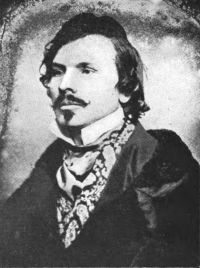
Portrait of Walter Scott Walter Scott,  The Talisman

“ Thou art wounded—and with a poisoned weapon, I warrant me, for by force of stab so weak an animal as that could scarce hope to do more than raze the lion's hide.—Suck the poison from his wound one of you—the venom is harmless on the lips, though fatal when it mingles with the blood. ”
Source: Gutenberg

Get perspective with Kwize: daily news enlightened by great literature