Bence Jones

Biographical details

Bence Jones,  The Royal Institution: Its Founder and First Professors

“ No man could have made the immortal discoveries of Newton unless he had first thrown up the ridiculous doctrines of Des Cartes. To attend to our errors and own them, to sacrifice all selfishness to the science, not to support errors for the sake of vanity, ought to be the leading precepts of a philosopher. He should turn his endeavour to the advancement of science and not to the increase of his reputation. Let him fix steps for others to rise on, and he does more real good to science than if he had spent years in controversy on an equivocal point. ”
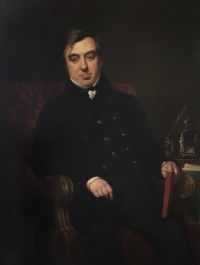
Source: Gutenberg

Bence Jones,  The Royal Institution: Its Founder and First Professors

“ It is not our intention to invite them to assist in the laboratories, but to partake of that healthy and refined amusement which results from a perception of the variety, order, and harmony existing in all the kingdoms of nature, and to encourage the study of those more elegant departments of science which at once tend to exalt the understanding and purify the heart.
‘The leisure of the higher female classes is so great, and their influence in society so strong, that it is almost a duty that they should endeavour to awaken and keep alive a love of improvement and instruction.
”
Source: Gutenberg

Bence Jones,  The Royal Institution: Its Founder and First Professors

“ The age of danger has passed away; there are in the intellectual being of all men permanent elements, certain habits and passions that cannot change. I am a lover of nature with an ungratified imagination; I shall continue to search for untasted charms, for hidden beauties.
My real, my waking existence is amongst the objects of scientific research; common amusements and enjoyments are necessary to me only as dreams to interrupt the flow of thoughts too nearly analogous to enlighten and to vivify. Coleridge has left London for Keswick.
”
Source: Gutenberg

Get perspective with Kwize: daily news enlightened by great literature