Summary

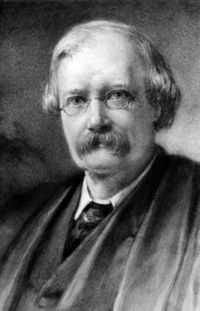
Portrait of John Churton Collins John Churton Collins Ephemera Critica; Or, Plain Truths About Current Literature

There is probably no review or newspaper in London which does not number among its contributors men of the first order of ability and intelligence, men who are real scholars and real critics, men who see through all that I have been describing and are sick of it. Let them not remain an impotent minority, but combine, and become influential. If popular Literature aspires to be ambitious, and trespasses on the domains of scholarship and criticism, let them submit it to the tests which it invites, let them try it by the standards which it exacts.
Source: Gutenberg

Portrait of John Churton Collins John Churton Collins Ephemera Critica; Or, Plain Truths About Current Literature

Scholars are beginning to see that what Socrates did for Philosophy must now be done for Greek, if Greek is to hold its own. Thus, it has preserved, and no doubt may preserve, its esoteric side; but that which constitutes its chief, its real importance—which justifies its retention in modern education—is not what appeals, and can only appeal, in each generation, to a small circle of "specialists"—its philological interest, but what appeals to liberal intelligence, to men as men, to the poet, to the philosopher, to the orator, to the critic.
Source: Gutenberg

Portrait of John Churton Collins John Churton Collins Ephemera Critica; Or, Plain Truths About Current Literature

Perhaps the best thing in this world is youth, and the poetry of Catullus is its very incarnation. The "young Catullus" he was to his contemporaries, and the young Catullus he will be to the end of time. To turn over his pages is to recall the days when all within and all without conspire to make existence a perpetual feast, when life's lord is pleasure, its end enjoyment, its law impulse, before experience and satiety have disillusioned and disgusted, and we are still in Dante's phrase, "trattando l'ombre come cosa salda." And the poet of youth had the good fortune not to survive youth
Source: Gutenberg

Get perspective with Kwize: daily news enlightened by great literature